
Living Room Throw Pillows: Combos, Sizes and Colors
The fastest way to change a living room is to restyle the living room throw pillows on your sofa. No paint, no new furniture, and a full refresh costs about $100 to $200 if you buy smart. The catch is that most sofas look “off” for the same few reasons: pillows that are too small, too many that match, and no mix of texture.
This guide gives you the numbers first (sizes, counts, insert types, costs), then the living room throw pillow combinations that work on real sofas, then color formulas by sofa color. Use it as a shopping list and a styling plan in one.
How Many Throw Pillows Does a Living Room Sofa Need?
Match the count to the sofa length, not to a fixed rule. Measure from arm to arm across the front.
| Sofa type | Length | Pillows | Back-layer size |
|---|---|---|---|
| Loveseat | 50 to 65 in | 2 to 3 | 18 in square |
| Standard 3-seater | 72 to 84 in | 3 to 5 | 20 in square |
| Large 3-seater | 85 to 96 in | 5 | 22 in square |
| Sectional or deep sofa | 96 in and up | 5 to 7 | 22 to 24 in square |
Deep seats (over 38 in) swallow small pillows. If your sofa is deep, go up one size in the table. If your living room is small, go down one size and drop one pillow, so the seat stays usable.
Throw Pillow Sizes and Shapes
Pillow size has a bigger effect than color. Small pillows on a big sofa look lost, and oversized ones crowd a loveseat.
| Pillow type | Common size | Best use |
|---|---|---|
| Large square | 22 to 24 in | Back layer on large and deep sofas |
| Standard square | 18 to 20 in | Front layer, or the main size on a loveseat |
| Lumbar | 12 x 20 in to 14 x 36 in | Center of the sofa or the front layer |
| Extra-long lumbar | 14 x 40 in and up | Spanning a loveseat, or the middle of a long sofa |
| Round or ball | 14 to 16 in | One soft shape to break up all the straight edges |
Pillows under 18 in square look underwhelming on any standard sofa. If you only change one thing, replace small pillows with 20 in ones.
Feather vs Down-Alternative Inserts (and the One-Size-Up Rule)
The insert matters more than the cover. A cheap cover on a full insert looks expensive. A designer cover on a flat insert looks sad.
Buy the insert one size up. For a 20 in cover, use a 22 in insert. The extra 2 inches fills the corners and gives the plump, slightly crushable look you see in styled photos.
| Insert | Look and feel | Typical price (20 to 22 in) | Best for |
|---|---|---|---|
| Feather-down blend | Full, soft, holds a “karate chop” or slouches naturally. Needs fluffing | $20 to $40 | Main living room sofa, back layer |
| Down-alternative (polyester fill) | Firmer, springs back, easy to wash. Less luxe slump | $10 to $20 | Kids, pets, allergies, budget builds |
| Foam or fiberfill core | Stays square, does not slump | $12 to $25 | Outdoor-style or very formal looks |
Prices are typical US retail ranges and move with sales, so treat them as a guide. If you have allergies, choose down-alternative. Otherwise, a feather-blend insert for the back layer and down-alternative for the front is a good split.
How to Arrange Pillows on a Couch
Start with the biggest pillows at the arms and work toward the center. These are the two layouts that work on most sofas.
The 2-2-1 layout (symmetrical, five pillows)
Two large squares against the arms, two medium squares in front of them, and one lumbar in the center. It feels classic and planned. It suits standard and large three-seaters.
The 3-2 layout (asymmetrical, five pillows)
Three pillows stacked at one end (large square, medium square, lumbar) and two at the other (large square, medium square). It reads more relaxed and modern, and it leaves more seat free on one side.
For loveseats and sectionals
On a loveseat, use two 18 in squares and one lumbar, nothing more. On a sectional, put a pair of large squares in the corner to anchor it, then repeat a smaller pair at each end. A small room? See these small den room design ideas for space-smart styling.
Skip the sharp karate-chop dent if you want a lived-in look. A soft slump on a feather insert looks more natural, and it keeps the pillow comfortable to lean on.
Throw Pillow Color Formulas That Always Work
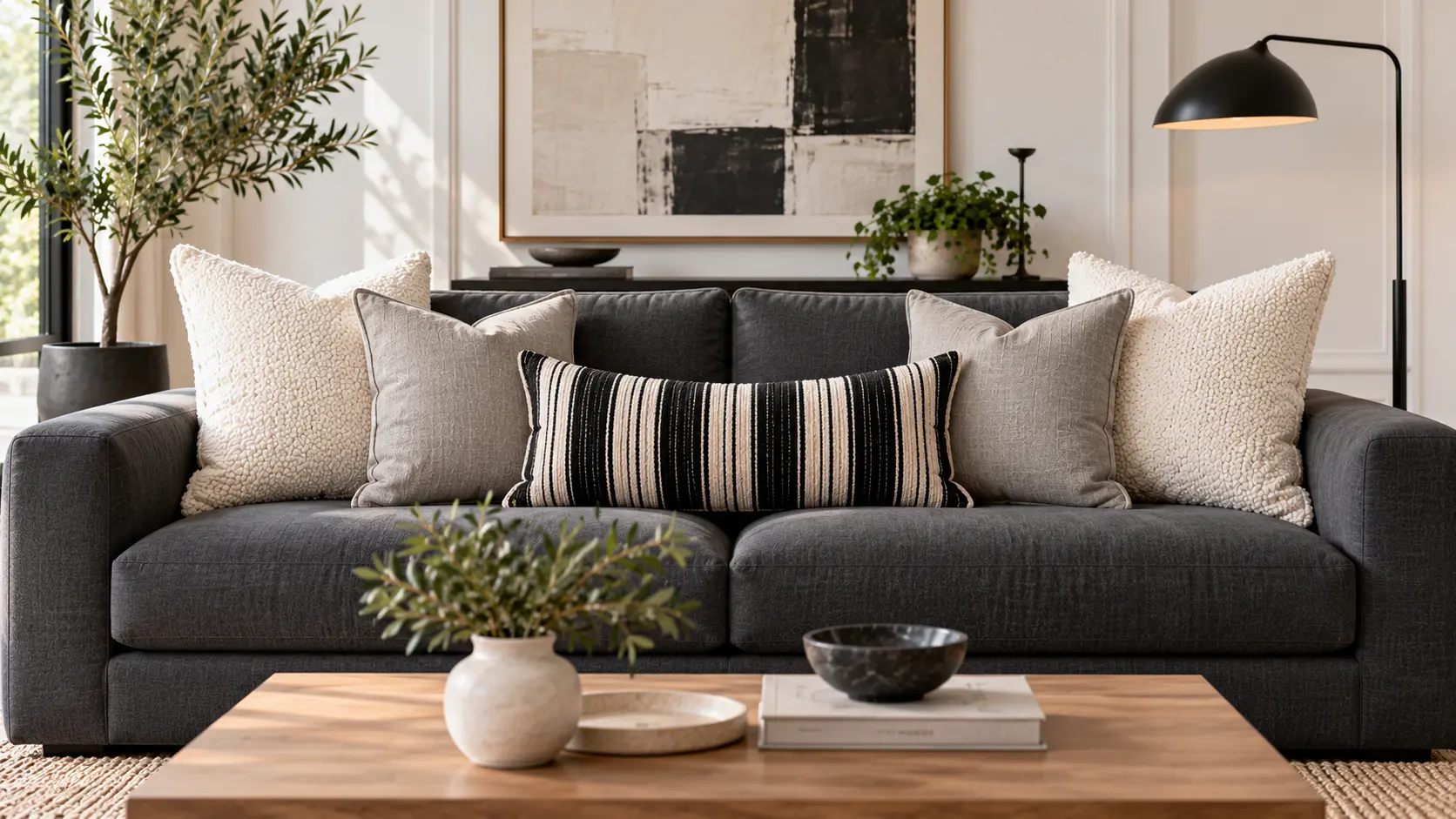
Use a ratio so you are not guessing. The 60-30-10 rule works well on a sofa:
- 60% base: pillows in a color close to your sofa or walls (two pillows out of five).
- 30% secondary: a second color or a pattern that repeats it (two pillows).
- 10% accent: one bold pillow, usually the lumbar or the ball (one pillow).
Pull every color from something already in the room, such as the rug, art, curtains or plants. If you want to check which shades pair well, the Adobe color wheel shows complementary and analogous hues. Not sure which palette is yours? Start with how to find your home decor style.
Best Throw Pillow Colors by Sofa Color
| Sofa color | Pillow colors that work | Why |
|---|---|---|
| Gray | Terracotta, mustard, chocolate brown, cream | Warm tones stop gray rooms feeling cold |
| Beige or cream | Sage green, deep olive, dusty rose | Quiet color on a neutral base |
| White | Oat, greige, warm white in mixed textures | Texture does the work, so the room stays calm |
| Navy or charcoal | Cream, camel, blush | Light and warm tones lift a dark sofa |
| Brown or cognac leather | Linen, knit and velvet in rust, cream or olive | Soft fabrics contrast with smooth leather |
| Patterned | Solids or very subtle prints that pull one color from the sofa | Gives the eye a place to rest |
10 Living Room Throw Pillow Combinations for Your Couch
1. Classic neutrals for a timeless look
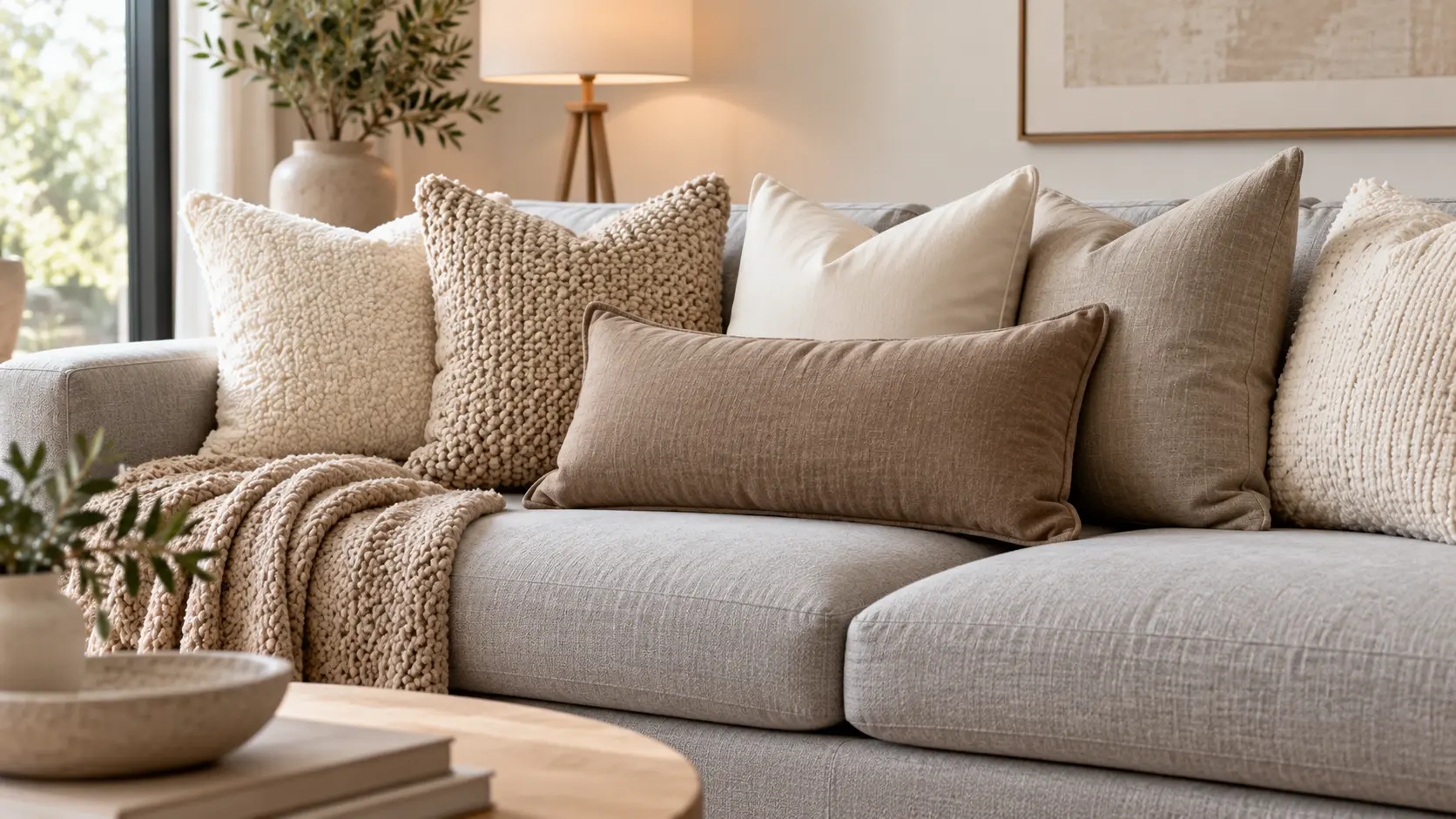
Neutrals are the safest start, but they should not look flat. Work with several close shades: cream, ivory, beige, taupe and oatmeal. Pair a smooth cream cotton pillow with a chunky oatmeal knit, a taupe linen cover and a nubby ivory bouclé. These suit gray, white and light linen sofas.
Styling tip: add one darker anchor, such as a mushroom or warm taupe lumbar in the center. It stops an all-neutral set from washing out against a pale sofa.
2. Blue and white for a fresh, relaxed room
Blue and white feels clean and easy to live with. Combine navy, denim, chambray and crisp white, then add a thin ticking stripe or a small-scale floral. Keep at least one solid so the patterns can breathe. It looks best on white, cream, light gray and natural linen sofas. On a navy couch, lean to lighter blues and white so the pillows do not disappear. To carry the palette further, see these blue and white home accessories.
3. Terracotta and olive green for an earthy room
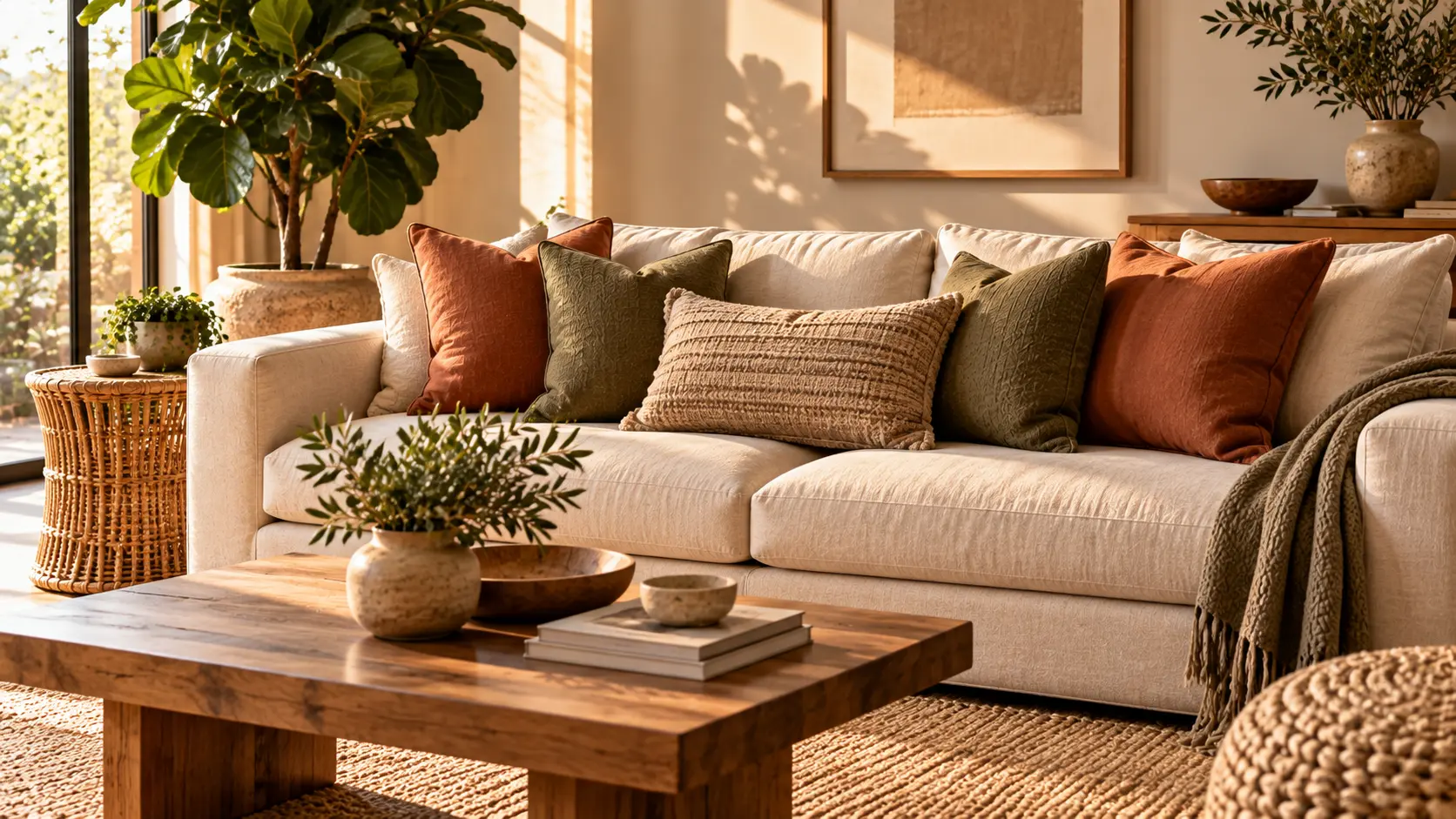
Terracotta brings warmth, olive adds calm. Choose woven fabrics, slubby linen and visible-weave cotton, and add a cream or sand pillow to soften the transition. It pairs with cream, camel and warm gray sofas, and with cognac leather. Wood, rattan and plants make it feel even more cohesive. Chocolate brown, sage green and mustard also sit well in this family.
4. Black, white and gray for a modern minimalist sofa
A good formula is two light pillows, one mid-gray and one black or charcoal accent. Keep patterns restrained: a graphic stripe or a simple grid. Add texture, because minimal rooms need it more: a charcoal velvet cushion, a white bouclé pillow and a gray waffle-weave cover. It suits gray, white and black sofas in sleek, Scandinavian-style rooms.
5. Velvet and linen for a rich textural mix
Velvet reflects light and feels plush. Linen is matte and slightly rumpled. Together, even a two-color palette looks rich: emerald velvet with natural flax linen, or dusty rose velvet with white linen. Use velvet on the larger back pillows and layer linen in front. Add a bouclé or knit pillow in a neutral shade for a third texture.
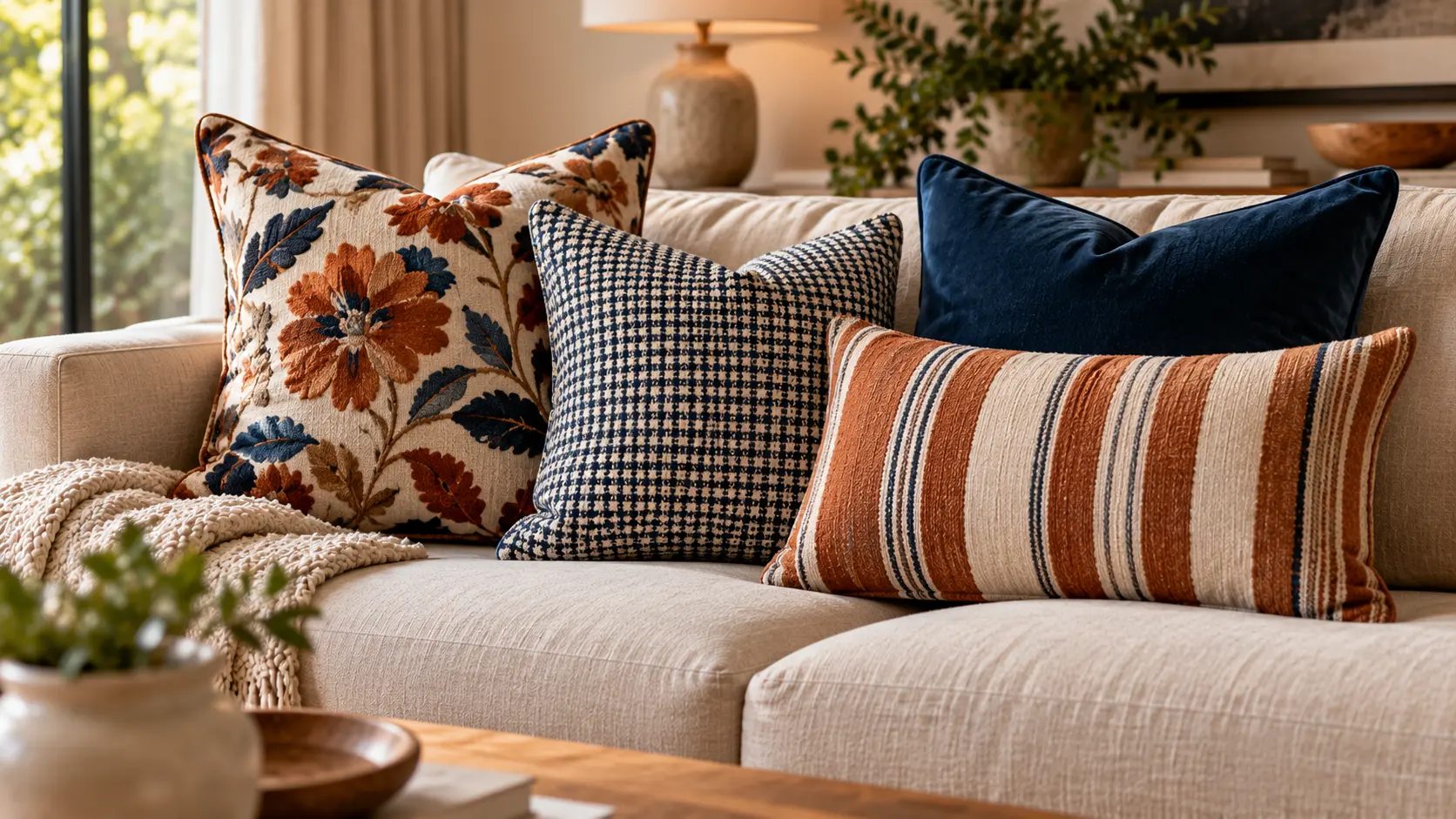
6. Mixed patterns without the busy look
Vary the scale of each pattern and keep one shared color running through all of them.
- One large-scale pattern (bold floral, oversized geometric). This is the statement pillow.
- One small-scale print that repeats a color from the large one (tiny check, dots).
- One stripe or linear pattern for structure.
- One or two solids in an accent color pulled from the patterns.
If the statement pillow includes rust, navy and cream, make sure the stripe and small print use some of those shades. The same idea works when you mix modern and vintage decor across a whole room.
7. Lumbar and ball pillows for a designer finish
A lumbar pillow at the front of the arrangement adds a horizontal shape that breaks up the squares and makes the whole group look planned. Woven sage or terracotta lumbars, pale embroidered linen, and chocolate or plum velvet are easy to find. One ball or round pillow adds a soft curve against the straight lines of the sofa. One of each is plenty.
8. Warm autumn colors for a cozy room
For fall and winter, choose muted rust, caramel, burgundy and soft mustard instead of bright versions. Try a rust velvet pillow, a caramel faux suede cushion, a burgundy and cream plaid and a mustard knit, plus one cream pillow so the warm tones do not overwhelm. It looks best on brown leather, camel, cream and charcoal sofas. Shearling and faux fur add instant softness in winter. The same tones carry into the bedroom, as in these warm aesthetic cozy bedroom ideas, and into holiday rooms like our Christmas living room decor ideas.
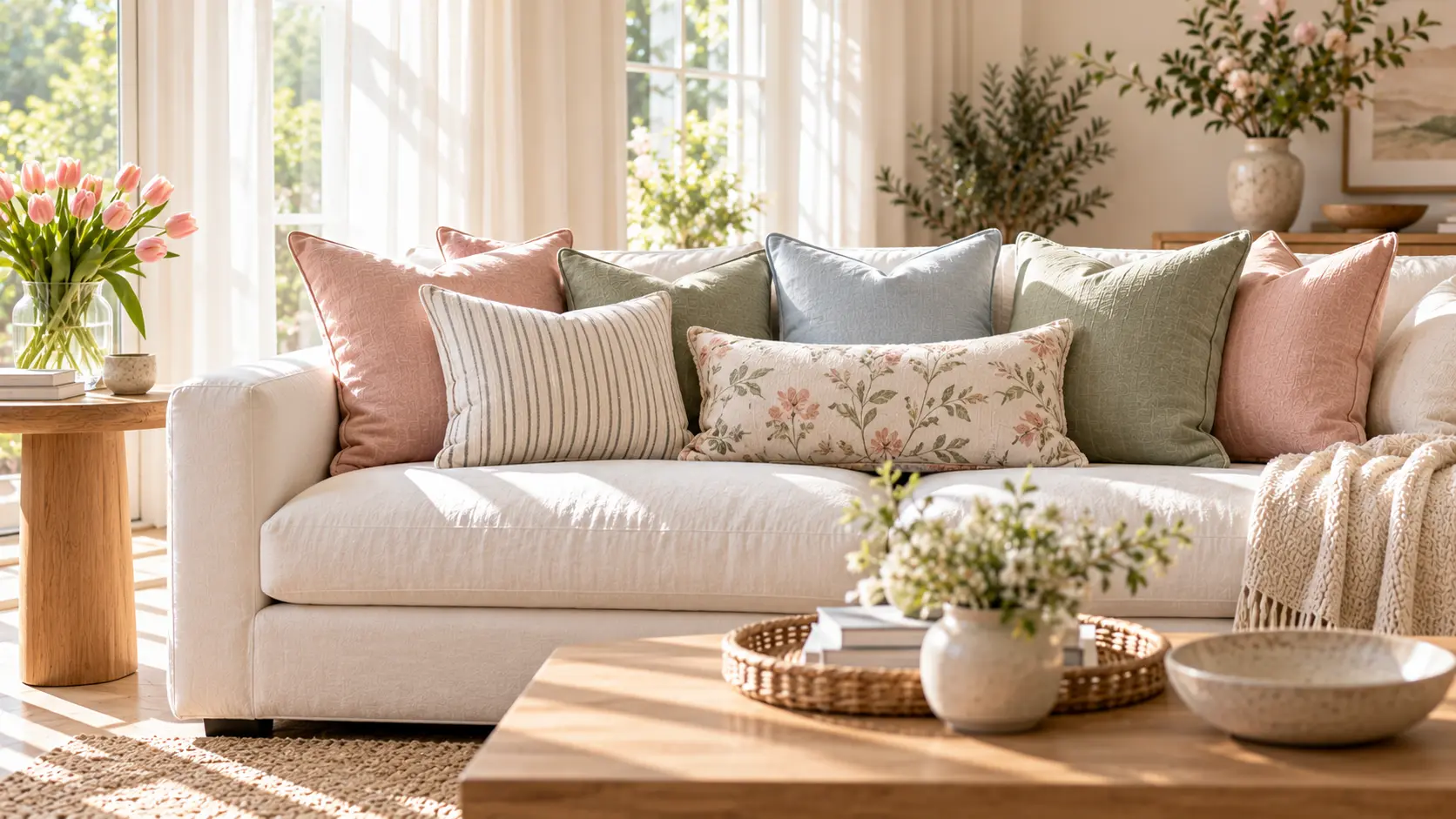
9. Soft pastels for a light, airy space
Blush, sage, pale blue and warm white feel calm rather than sugary. Use linen and cotton, and choose delicate stripes or faded florals to keep it grown-up. They pair with white, light gray and natural linen sofas. On a darker sofa, add one deeper tone, such as dusty sage or muted rose, to bridge the gap. If you love blush, these pink home accessories ideas repeat it across the room.
10. Budget combinations that look expensive
You do not need to spend much to get a polished couch. A complete five-pillow set can come in around $120 to $200 using this split (typical US prices):
- Two 22 in feather-blend inserts: about $50 to $70
- Two 20 in down-alternative inserts: about $25 to $35
- One lumbar insert: about $12 to $20
- Five covers at $10 to $25 each: about $50 to $125
Then follow these rules:
- Invest in inserts, save on covers. Good inserts are reusable and make inexpensive covers look fuller.
- Keep a tight color story. Two or three colors look more intentional than a random mix of bargain finds.
- Add one standout. Pair basic solid covers with one velvet, embroidered or textured pillow.
- Choose premium-looking fabrics. Linen-look, velvet and bouclé usually read as more expensive than shiny synthetics.
- Swap covers with the seasons instead of buying new pillows. Local markets, small makers and charity shops are good sources. For more ideas, browse our budget decor ideas.
Best Fabrics and Textures for Living Room Pillows
Mix at least two textures in every arrangement. It matters more than color.
- Linen: the most versatile. Casual but refined, and it wears well.
- Velvet: adds depth in chocolate, plum or forest green.
- Bouclé: a looped, soft texture that suits warm modern rooms. See our interior design trends for what else is current.
- Faux fur and shearling: cozy winter layers.
- Organic linen, recycled wool and naturally dyed cotton: good eco-friendly choices. Removable, washable covers also help the insert last longer.
Common Throw Pillow Mistakes
- Buying one matching set. It makes a room look flat and mass-produced. Match the color family, not the exact pillow.
- Going too small. Anything under 18 in looks dwarfed on a standard sofa.
- Skipping texture. Different colors in the same fabric still look flat.
- Using a flat insert. Insert the same size as the cover and the pillow droops. Go up one size.
- Too many pillows. If you must move them all to sit down, remove two.
Frequently Asked Questions
How many throw pillows should I put on a couch?
For a standard three-seat sofa, three to five pillows look balanced. A loveseat needs two or three, and a large sectional can handle five to seven. Keep enough free seat space to actually sit.
Should throw pillows match the couch?
No. They look better when they contrast with or complement the upholstery. Use pillows to add the color, texture or pattern the sofa does not have.
What size throw pillows look best on a sofa?
For most standard sofas, use 20 to 22 in squares in the back and a lumbar in front. Deep or oversized sofas can take 24 in squares. Loveseats suit 18 in pillows.
What size insert should I buy for a throw pillow cover?
Buy an insert about 2 inches larger than the cover. A 20 in cover gets a 22 in insert, which fills the corners.
What color throw pillows go with a gray couch?
Warm tones work best: terracotta, mustard, chocolate brown and cream. They stop gray from feeling cold. Sage and olive also work if you want a calmer look.
How do I mix patterns on throw pillows?
Use patterns in different scales (one large, one small, one stripe), make sure they share at least one color, and add solids to balance the look.
Are feather or down-alternative inserts better?
Feather-blend inserts look fuller and slouch naturally, but they need fluffing and are not suitable for allergies. Down-alternative inserts cost less, wash easily and spring back. Many people use feather for the back layer and down-alternative for the front.
How often should I replace throw pillows?
You do not need to replace the whole pillow. Swap the covers when you want a new look, often once or twice a year, and replace inserts when they stay flat after fluffing. Washable covers last for many years.
Final Thoughts
Good pillow styling comes down to balance. Pick a palette from what is already in the room, use the right sizes for your sofa length, buy inserts one size up, and mix at least two textures. Then adjust with the seasons by changing only the covers.
For more living room ideas, see how to style living room floor tile, an Art Deco living room, a cottagecore living room and this pink and green living room makeover, or browse more cool room ideas.