Blue and White Home Accessories: 25+Timeless Decor Ideas
Blue and white home accessories have earned a permanent place in interior design, and for good reason. This pairing works in a beach cottage, a city apartment, and a formal traditional home without ever feeling forced. Few color combinations offer that kind of range.
After more than a decade of styling homes, I keep returning to this palette when clients want something that feels fresh now and still looks right ten years later. Blue brings calm and depth. White brings light and breathing room. Together they create balance that trend-driven palettes rarely match.
This guide covers everything you need to style your home with confidence: how to choose the right shades of blue, which accessories work best in each room, styling tips I use with clients, and the mistakes that quietly ruin an otherwise beautiful scheme.
Why Blue and White Is a Timeless Color Combination
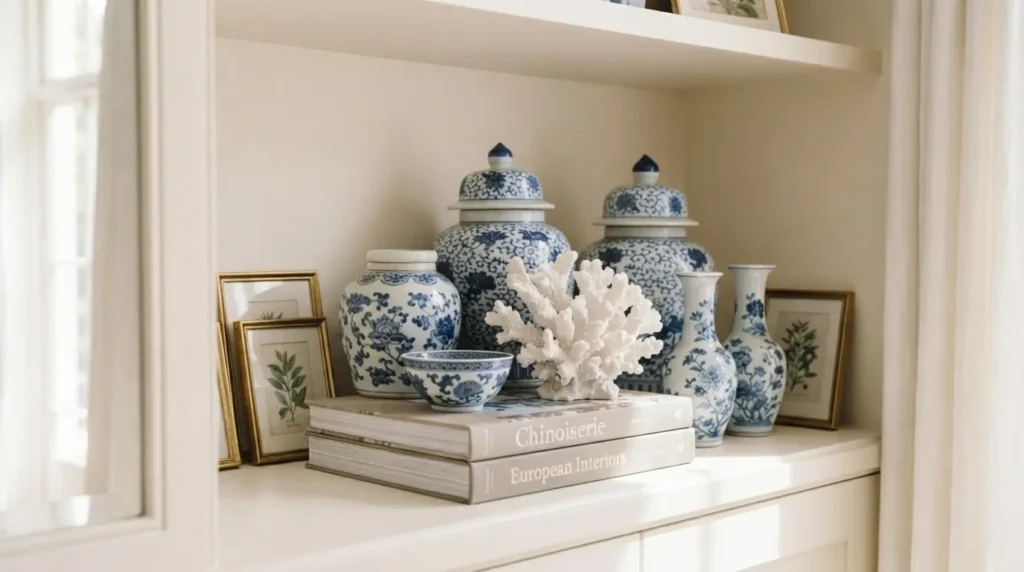
The blue and white pairing has centuries of history behind it. Chinese porcelain from the Ming dynasty, Portuguese azulejo tiles, Dutch Delftware, and Greek island architecture all built entire visual traditions around these two colors. When a palette survives that long across that many cultures, it has proven something trends cannot.
There is also a practical reason this combination keeps winning. Blue is the most universally liked color in consumer research, and white reflects light better than any other neutral. Put them together and rooms feel larger, brighter, and calmer at the same time.
Classic blue interiors also play well with almost everything you already own. Warm wood furniture, brass hardware, rattan baskets, black accents, and even soft pinks or greens sit comfortably against blue and white. That flexibility means your accessories keep working even when you change sofas, repaint walls, or move house.
Designer’s note: because the palette is so forgiving, blue and white decorating ideas are ideal for beginners. It is genuinely difficult to make this combination look bad, which is not something you can say about most color schemes.
Choosing the Right Shades of Blue for Your Home
Not all blues behave the same way. The shade you choose sets the entire mood of a room, so this decision comes before any shopping. Here is how the main families of blue perform in real homes.
Navy and Indigo
Navy blue home decor reads as sophisticated, grounded, and slightly formal. It anchors a room the way black does, but with more warmth. Navy works beautifully in living rooms, home offices, and dining spaces where you want a sense of weight and permanence.
Cobalt and Royal Blue
These saturated mid-tones bring energy. A cobalt lamp or royal blue throw becomes an instant focal point against white walls. Use them in small doses; one or two strong cobalt pieces per room is usually enough.
Sky Blue and Powder Blue
Lighter blues feel airy, relaxed, and slightly coastal. They suit bedrooms, bathrooms, and any space meant for rest. Sky blue accessories also photograph beautifully in bright rooms, which matters if you love sharing your home online.
Teal and Blue-Green
Sitting between blue and green, teal adds a modern, collected feel. It pairs especially well with brass and warm woods. Treat it as an accent within a broader blue and white scheme rather than the foundation.
The comparison below shows how the two most popular shade families differ in practice.
| Factor | Navy Blue Accessories | Sky Blue Accessories |
|---|---|---|
| Mood | Formal, grounded, dramatic | Airy, calm, casual |
| Best Rooms | Living room, office, dining | Bedroom, bathroom, nursery |
| Light Needs | Needs good natural light | Works in any light level |
| Pairs Well With | Brass, camel leather, white marble | Rattan, linen, light oak |
| Style Direction | Classic, traditional, modern luxe | Coastal, Scandinavian, farmhouse |
| Risk Factor | Can feel heavy if overused | Can feel washed out alone |
Table 1: Navy blue vs sky blue accessories at a glance.
The Best Blue and White Home Accessories for the Living Room
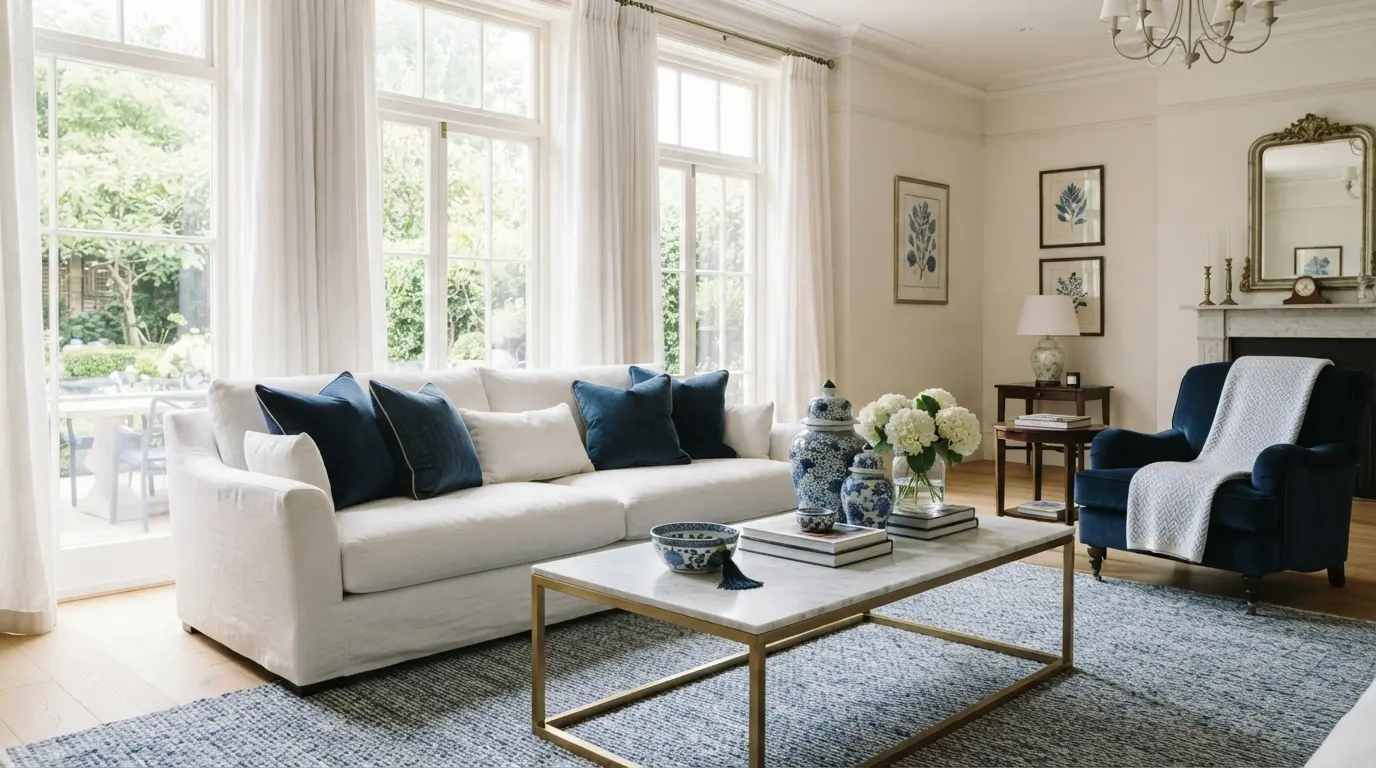
The living room is where most people start, and pillows are the natural entry point. A white sofa with three or four blue decorative pillows in mixed patterns, one solid navy, one striped, one botanical or ikat print, instantly looks designed rather than decorated.
Ceramic blue vases and ginger jars deserve special mention. A pair of blue and white porcelain jars on a console or mantel is one of the oldest tricks in traditional design, and it still works. Vary the heights and group in odd numbers for a natural, collected look.
Round out the room with these proven pieces:
- A blue-patterned area rug to ground the seating zone and hide everyday wear
- A soft throw blanket in navy or chambray draped over one arm of the sofa
- White ceramic table lamps with navy shades, or the reverse
- Blue-spined coffee table books stacked with a small white object on top
- Woven baskets in natural tones to keep the palette from feeling flat
A modern blue and white living room needs roughly 60 percent white or neutral, 30 percent blue, and 10 percent warm texture such as wood, rattan, or brass. That last ten percent is what keeps the room from feeling cold.
Blue and White Bedroom Decor Ideas
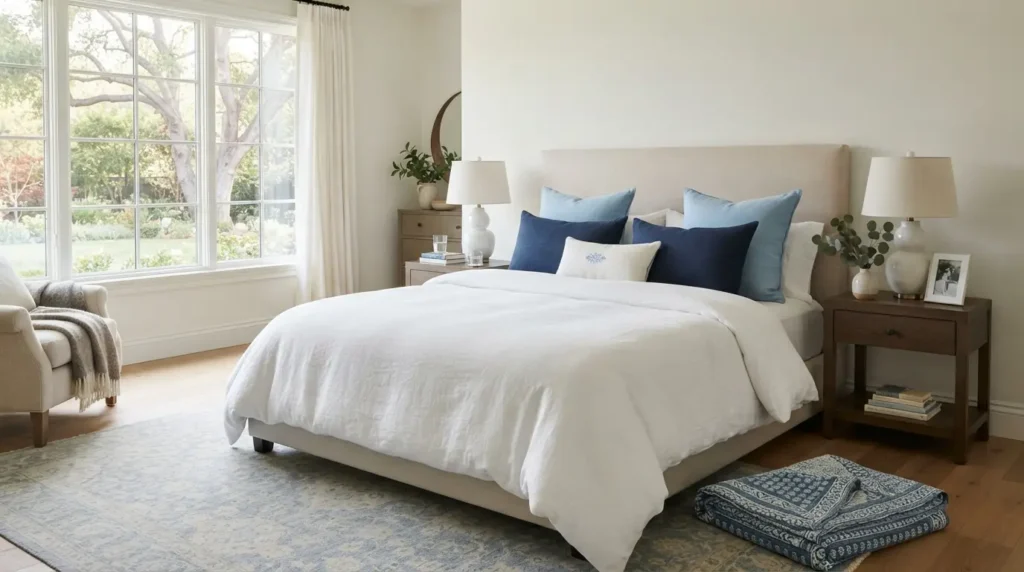
Blue is scientifically associated with lower heart rates and better sleep quality, which makes blue and white bedroom decor one of the smartest choices you can make in the home. Start with crisp white bedding as your base; it always looks clean and lets accessories carry the color.
Layer from there. A blue quilt folded at the foot of the bed, two euro shams in a blue block print, and a lumbar pillow in a contrasting blue pattern build depth without clutter. Keep the mix to two or three distinct blues so the bed reads intentional.
Beyond the bed, consider a sky blue upholstered bench, white ceramic bedside lamps, blue-and-white patterned curtains, and a small gallery of blue-toned art above the headboard. A soft blue rug that extends at least 18 inches beyond each side of the bed finishes the room properly.
Kitchen and Dining Accessories That Earn Their Place
Kitchens reward blue and white accessories because the palette reads as clean, which is exactly what you want in a cooking space. Open shelving styled with blue and white dinnerware turns everyday plates into decor.
The highest-impact pieces for kitchens and dining rooms include:
- Blue and white patterned dinnerware displayed on open shelves or a plate rack
- A striped or block-print table runner that dresses the table between meals
- Ceramic canisters and utensil holders in classic blue and white patterns
- Linen napkins in chambray or navy paired with white plates
- A blue glass pendant light or blue-shaded fixture above the island or table
- Blue and white tea towels, the cheapest refresh in the entire home
If your kitchen is all-white, one generous gesture works better than many small ones. A large blue and white bowl filled with lemons on the island does more than a dozen scattered trinkets.
Bathroom Styling Inspiration
Bathrooms are the easiest room to transform because the accessories are inexpensive and the white base is usually already there. Swap in navy or sky blue towels, a blue-striped shower curtain, and a blue soap dispenser set, and the room changes character in an afternoon.
For a more finished look, add a small blue-patterned bath mat, a white orchid or eucalyptus stems in a blue ceramic vessel, and one piece of framed blue-toned art. Woven storage baskets in natural fibers soften all the hard surfaces and keep necessities hidden.
White decorative accessories matter just as much here. Fluffy white towels stacked on a shelf, a white marble tray corralling perfumes, and white candles give the blue elements something to contrast against.
Entryway Decoration Ideas That Set the Tone
Your entryway is a preview of the whole home, and it needs only three or four pieces to make the statement. A blue and white lamp on the console, a large blue-patterned bowl for keys, and a striking piece of blue art or a round mirror above cover the essentials.
A blue and white runner rug handles the practical side, hiding tracked-in dirt while pulling the scheme underfoot. If you have floor space, a large blue and white porcelain planter with a fiddle leaf fig or olive tree adds height and life. Finish with a woven basket for shoes, and the space works as hard as it looks.
Wall Decor, Artwork, and Lighting
Walls are where blue and white schemes either come alive or fall flat. Decorative plates arranged in a loose cluster above a console is a classic move that has returned in a big way; mix sizes and patterns but keep every plate within the blue and white family.
For artwork, abstract seascapes, indigo-dyed textile art, blue botanical prints, and black-and-white photography with blue mats all work. Choose pieces where blue is the dominant note but not the only one; a little warmth inside the art keeps the wall from feeling monochrome.
Lighting fixtures are the most overlooked blue and white accessory. A pair of blue and white ceramic lamps is often the single fastest upgrade in a living room. Consider these options across the home:
- Gourd or ginger jar lamps in classic blue and white porcelain for consoles and side tables
- White linen drum shades on navy ceramic bases for bedrooms
- Blue glass table lamps that glow beautifully at night
- Rattan or white woven pendants that add texture without competing with the palette
Curtains and rugs complete the envelope of the room. White linen curtains with a navy border trim look custom for a fraction of the price, and a blue Persian-style or striped rug ties floors into the scheme instantly.
Coastal vs Modern: Two Ways to Style Blue and White
The same palette can produce two completely different homes depending on execution. Coastal home decor leans on lighter blues, natural textures, and relaxed patterns like stripes. Modern blue and white interiors favor deeper navy, cleaner lines, graphic patterns, and glossier finishes.
Neither approach is better; the right one depends on your architecture, your light, and honestly, your laundry tolerance, since slipcovered coastal furniture demands more upkeep than tailored modern pieces. Most of my clients land somewhere in between, and the room-by-room guide below shows how each style translates in practice.
| Room | Coastal Approach | Modern Approach |
|---|---|---|
| Living Room | Striped pillows, rattan, driftwood, sky blue throws | Navy velvet pillows, abstract art, brass and marble |
| Bedroom | Whitewashed wood, airy linens, powder blue quilt | Charcoal-navy bedding accents, sculptural white lamps |
| Kitchen | Open shelves, striped runners, mason jar storage | Cobalt glass pendants, geometric tea towels |
| Bathroom | Rope mirrors, seagrass baskets, striped towels | Navy Turkish towels, matte white accessories |
| Entryway | Woven bench, blue lantern, jute runner | Round black-framed mirror, single bold blue vase |
Table 2: Room-by-room decor guide for coastal and modern blue and white styling.
Budget-Friendly vs Luxury Blue and White Accessories
Good news: this palette does not require a designer budget. Because blue and white is so established, excellent affordable versions of nearly every accessory exist. The skill lies in knowing where budget pieces pass and where quality genuinely shows.
Spend on the pieces you touch daily and the ones at eye level: rugs, lamps, and one statement ceramic. Save on pillow covers, throws, baskets, and seasonal accents, which you will want to rotate anyway.
| Accessory | Budget Option | Luxury Option | Where Quality Shows |
|---|---|---|---|
| Ceramic Vases | $15–$40 stoneware | $150–$600 hand-painted porcelain | Glaze depth, hand detail |
| Throw Pillows | $10–$25 printed covers | $80–$250 embroidered or ikat | Fabric weight, insert quality |
| Area Rugs | $100–$300 machine-made | $800+ hand-knotted wool | Underfoot feel, aging |
| Table Lamps | $40–$80 ceramic look | $250–$700 porcelain with linen shade | Base finish, shade fabric |
| Curtains | $30–$60 ready-made panels | $200+ custom lined linen | Drape, fullness, trim |
| Dinnerware | $40–$80 per set | $300+ heritage patterns | Rim detail, durability |
Table 3: Budget vs luxury blue and white accessories and where to invest.
Seasonal Decorating Tips for a Blue and White Home
One underrated strength of this palette is how easily it shifts with the calendar. In spring and summer, lean lighter: swap to sky blue pillow covers, add fresh white hydrangeas or blue delphiniums, and let sheer white curtains do the work.
In autumn and winter, deepen everything. Bring in navy velvet and wool textures, layer a chunky white knit throw, add brass candlesticks and warm amber lighting, and trade botanical patterns for plaids and solids. The bones of the room never change; only the top layer rotates, which keeps seasonal refreshes cheap and fast.
Home decor trends for 2026 favor this exact approach. Designers are moving away from full-room makeovers toward permanent neutral foundations with rotating accessory layers, and blue and white is repeatedly cited as the most durable base palette for it.
Expert Styling Tips From a Decade of Client Projects
These are the home styling accessories rules I repeat most often in real projects:
- Mix at least three patterns in the same blue family: one large-scale, one medium, one small or solid. Matching sets look like showrooms, not homes.
- Repeat each blue at least twice across the room so the eye travels. A single blue object reads as an accident.
- Add 10 percent warmth through wood, rattan, brass, or camel leather. This is the difference between crisp and cold.
- Vary your whites deliberately. Bright white ceramics against ivory linen against warm white walls creates depth that a single white never does.
- Group accessories in odd numbers and vary heights within each grouping by at least 30 percent.
- Buy vintage where you can. Old blue and white porcelain is abundant at estate sales, often cheaper than new reproductions, and instantly adds character.
Common Blue and White Decorating Mistakes to Avoid
The same errors appear in almost every struggling blue and white room I am asked to fix:
- Using too many different blues. Beyond three distinct shades, rooms stop looking curated and start looking accidental.
- Forgetting texture. All-smooth surfaces in any palette feel sterile. Balance ceramics and cotton with rattan, wool, and raw wood.
- Going fifty-fifty. Equal parts blue and white creates visual competition. Let white dominate and blue punctuate.
- Ignoring undertones. Warm blues (leaning green) and cool blues (leaning purple) fight each other in the same room. Check pieces side by side in daylight before committing.
- Scattering small objects everywhere. Ten tiny blue accents read as clutter. Three substantial pieces read as design.
- Skipping the walls and floor. If every blue element sits at sofa height, the scheme feels like a stripe through the room. Distribute color from rug to art.
Conclusion
Blue and white home accessories succeed because they solve the hardest problem in decorating: looking current without an expiration date. From navy velvet pillows in the living room to porcelain jars in the entryway and striped towels in the bath, the palette adapts to every room and nearly every budget.
Start small. Choose your dominant shade of blue, buy one or two quality ceramics, layer in textiles, and repeat your blues around the room. Keep white in charge, add a measure of warm texture, and edit ruthlessly. Follow those principles and your blue and white accessories for the home will still look intentional and fresh years from now, no repainting required.
Frequently Asked Questions
What colors go well with blue and white home accessories?
Warm neutrals are the safest companions: camel, tan, natural wood, and rattan all soften the palette beautifully. Metallics work too, with brass and gold adding warmth and chrome keeping things modern. For a bolder look, coral, soft pink, or leafy green accents pop against blue and white without overwhelming it. The key is keeping any third color to about ten percent of the room.
How do I style blue and white accessories without my home looking too coastal?
Choose deeper shades like navy and indigo instead of aqua and turquoise, and avoid literal beach motifs such as anchors, shells, and rope. Pair your blues with tailored shapes, geometric patterns, brass hardware, and dark wood rather than whitewashed or distressed finishes. Ikat, chinoiserie, and Persian-inspired patterns read as classic and worldly rather than seaside.
Are blue and white accessories still in style for 2026?
Yes, and arguably more than ever. Designer trend reports for 2026 consistently highlight heritage patterns, hand-painted ceramics, and classic blue interiors as part of the broader shift toward timeless, collected homes. Because the palette has centuries of history, it never truly cycles out; only the specific patterns and shades rotate in prominence, which makes these accessories a safe long-term investment.
What is the easiest first purchase for a blue and white color scheme?
Start with a pair of blue and white ceramic vases or ginger jars, ideally between 10 and 16 inches tall. They work in any room, on nearly any surface, and instantly signal the palette. Pillow covers are the close second choice because they deliver maximum color for minimal cost and can be swapped seasonally. Either option lets you test the scheme before committing to larger pieces like rugs or curtains.dec