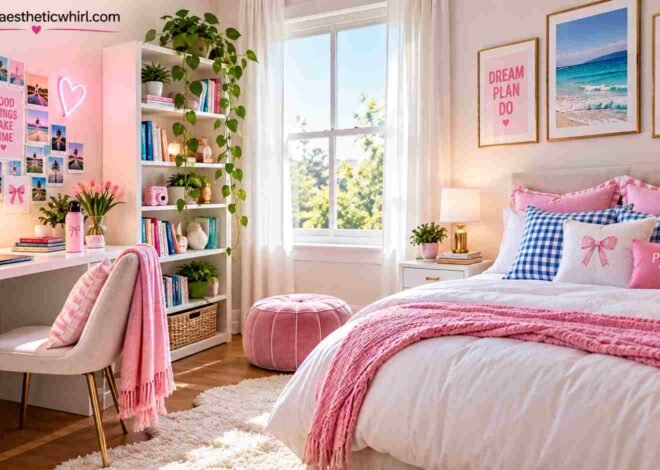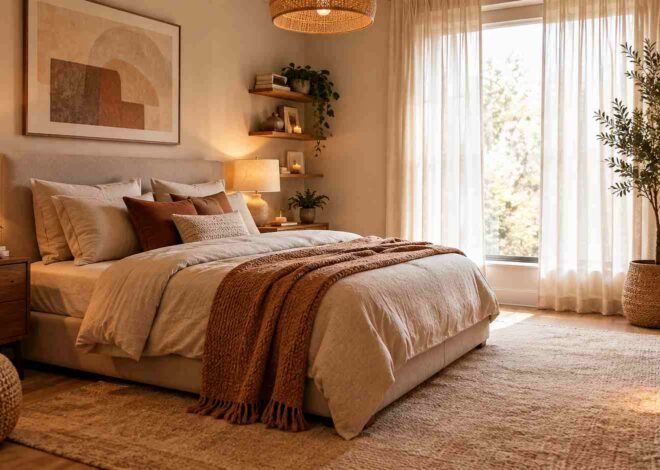
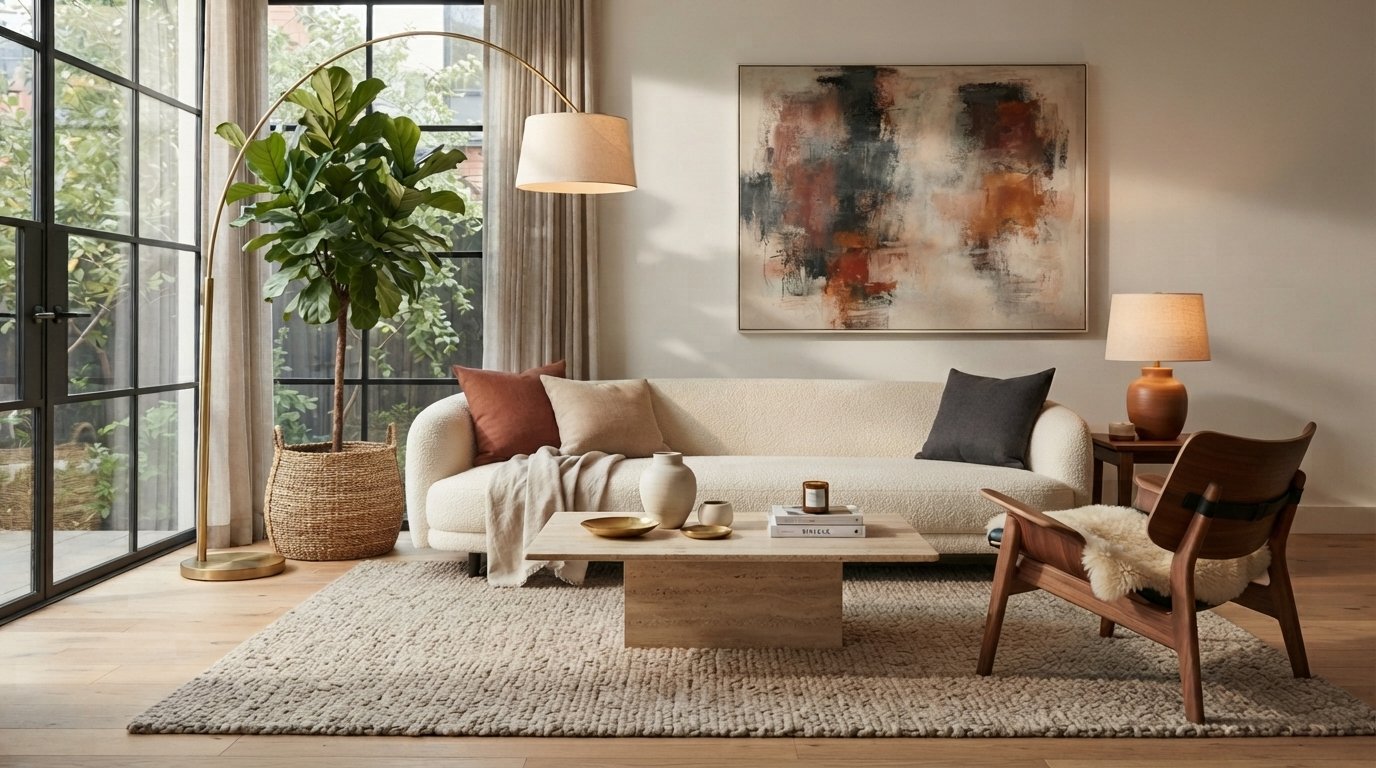
Cool Room Ideas: Stylish Ways to Design Any Room in 2026
The coolest room I have ever worked in belonged to a postgraduate student with a second-hand sofa, one very good floor lamp, and a wall of black-and-white prints she had collected over six years. Nothing was new. Nothing was expensive. And almost everyone who walked through the door stopped in the doorway for a second before saying anything.
That reaction is the real test, and it is the part most cool room ideas leave out. A space does not become interesting because you added the item everyone is posting about this month. It becomes interesting when the pieces inside it look like they were chosen by a specific human being with specific taste, and then arranged by someone who understood scale, light, and how people actually move through a room.
I have spent more than a decade styling rooms for homeowners, renters, and photographers, and the pattern repeats itself. The rooms that photograph well and feel good to sit in share four things: a clear personality, visual balance, genuine comfort, and enough function that the owner never has to fight the space to use it. Miss any one of those and the room reads as a showroom, a storage unit, or a mood board that escaped into real life.
The other thing worth saying up front: cool is not a budget category. Some of the flattest, most forgettable rooms I have seen cost a fortune, because everything was bought at once from one place and none of it had a story. Meanwhile, a rented bedroom with warm lighting, one oversized piece of art, and a good rug can look like an editorial feature.
What follows is a working guide rather than a wish list. You will find how to choose a style you will still like in three years, how to build a colour palette that holds together, how to layer lighting properly, and how to handle the two rooms people ask about most: the living room and the game room. Every recommendation comes with the reasoning behind it, because knowing why something works is what lets you adapt it to your own square footage and budget.
What Are Some Cool Room Ideas?
The best cool room ideas combine one bold focal point with restrained supporting details: an accent wall, layered lighting instead of a single ceiling bulb, oversized artwork, a textured rug, and personal objects displayed with breathing room. Add greenery, hide cables and clutter, and keep the colour palette to three tones for a stylish, cohesive result.
What Makes Cool Room Ideas Actually Work
Before any shopping happens, it helps to name the qualities you are actually chasing. The cool room ideas that survive contact with real life all deliver the same four things. Most people say they want a cool room and mean four separate things at once, and those four things are what every good scheme quietly delivers.
Personality Comes Before Product
A room reads as generic when every object in it could belong to anyone. The fix is not more decor, it is more specific decor. One framed concert poster you actually queued for beats three abstract prints chosen because the colours matched the cushions.
I usually ask clients to find five objects they already own and genuinely like, then design the room to make those five look good. It sounds backwards, but it produces personalised room decor that no catalogue can replicate, and it stops the space from drifting into showroom neutrality.
Visual Balance Keeps It From Looking Chaotic
Balance is about distributing weight, not making things symmetrical. A heavy sofa on one side of a room needs something with visual mass opposite it: a tall bookcase, a large mirror, a dark accent wall. Otherwise the room tips, and people feel it even if they cannot explain it.
The same applies vertically. If everything sits at hip height, the upper half of the room feels empty and the whole scheme looks unfinished. Tall plants, pendant lights, and artwork hung slightly higher than instinct suggests all pull the eye upward and make ceilings feel taller.
Comfort Is Not Optional
A room nobody wants to sit in is a set, not a space. Hard-edged furniture, thin rugs, and cold overhead lighting all photograph acceptably and feel terrible in practice. Cosy room ideas are not the opposite of stylish ones; softness is what makes a bold room liveable.
Practically, that means at least one seat you can sink into, at least one soft floor surface, and at least one light source at eye level or lower. Those three additions do more for the feel of a room than almost any decorative purchase.
Function Decides Whether the Look Survives
Every beautiful room I have seen fall apart failed for the same reason: there was nowhere to put things. Chargers, controllers, post, blankets, and shoes will accumulate, and if the room has no plan for them they end up on the surfaces you carefully styled.
Functional room design means deciding, in advance, where each category of mess lives. Closed storage for the ugly items, open shelving for the ones worth showing. Get that right and the room stays looking the way it did on day one.
Cool Room Style Comparison
| Style | Defining Features | Best Suited To | Common Pitfall |
|---|---|---|---|
| Modern | Clean lines, low-profile furniture, restrained palette, mixed metals | Open-plan rooms and apartments with good natural light | Reads cold without texture and warm lighting |
| Minimalist | Few objects, generous empty space, hidden storage, neutral base | Small rooms and anyone who dislikes visual noise | Becomes bare rather than calm if nothing has character |
| Industrial | Exposed brick or concrete, black metal, leather, raw wood, cage lighting | Lofts, converted spaces, high ceilings | Hard surfaces make the room echo and feel unwelcoming |
| Eclectic | Deliberate mixing of eras, patterns, and materials with a repeated colour thread | Collectors and anyone who has inherited pieces | Turns into clutter without one unifying element |
| Retro | Warm woods, curved forms, saturated seventies tones, vintage lighting | Living rooms and dens with room for statement furniture | Tipping into costume rather than design |
| Cosy and Warm | Layered textiles, low lighting, deep tones, rounded shapes | Bedrooms, snugs, north-facing rooms | Heaviness if every surface is soft and dark |
| Gaming | Dark walls, RGB accents, ergonomic seating, screen-first layout | Dedicated game rooms, spare bedrooms, basements | Over-lighting and visible cable chaos |
| Maximalist | Bold pattern, dense gallery walls, saturated colour, layered rugs | Rooms with strong architecture and confident owners | No resting space for the eye |
Choosing a Style You Will Still Like in Three Years
Style choice is where most schemes go wrong, because people pick from images rather than from how they live. A room that looks magnificent in a photograph and irritates you every evening is a failed room.
Test the Style Before You Commit to It
Collect twenty images you like, then strip out the ones you like for the wrong reason. The view, the ceiling height, the light in that particular photograph. What remains is usually a much narrower and more honest set of preferences.
Then look for repetition. If eighteen of your remaining images contain warm wood and only two contain chrome, you have your answer. Modern room ideas can absolutely include vintage pieces, but the base material palette should be consistent enough to feel intentional.
Mixing Styles Without Making a Mess
Combining two styles works when one leads and the other supports, roughly seventy to thirty. A modern room with three well-chosen vintage objects looks curated. A room split evenly between the two looks undecided.
The connective tissue is usually colour or material. Repeat one tone across both halves of the scheme, or repeat one material such as brass, oak, or black metal, and the mix stops reading as an accident.
Building a Colour Palette That Holds Together
Colour is the single fastest way to make a room look considered, and the single fastest way to make it look chaotic. The rooms that feel calm almost always follow a simple ratio.
The Sixty, Thirty, Ten Split
Give roughly sixty per cent of the room to a dominant tone, usually walls and large furniture. Thirty per cent goes to a secondary tone across textiles, curtains, and a rug. The final ten per cent is the accent, and this is where you can be genuinely bold.
Because the accent is small, you can pick something strong: a rust armchair, a cobalt lamp, a run of terracotta cushions. Colourful room decor works best when the loud colour is concentrated rather than sprinkled evenly around the space.
Where Colour Schemes Usually Fail
- Too many accent colours, so nothing reads as the main event
- Choosing paint before choosing the large textiles, which are far harder to match
- Ignoring the direction the room faces, which changes how every tone reads
- Forgetting that wood, metal, and greenery are colours too
- Testing paint on a white wall instead of a primed board you can move around the room
Accent Walls and Statement Walls That Earn Their Place
An accent wall is the highest-impact, lowest-cost change available to most people. It is also the change most frequently applied to the wrong wall.
Choosing the Right Wall
The accent should land on the wall your eye naturally goes to when you enter, which is usually the one behind the bed, the sofa, or the television. Painting a wall you never look at simply makes the room feel unbalanced.
Avoid walls broken up by two doors and a radiator. Fragmented surfaces do not carry bold colour well, and the effect looks patchy rather than deliberate.
Beyond Paint
Texture holds attention longer than colour does. Slatted timber panelling, limewash, tongue-and-groove, tiled fireplace surrounds, and large-format wallpaper all give the wall depth that a flat coat of paint cannot.
In rentals, peel-and-stick panelling, tension-rod fabric hangings, and a dense gallery wall achieve a similar focal effect without touching the paintwork. Unique room decor often comes down to treating one surface as a feature rather than a background.
Cool Lighting Ideas: Layers Beat Brightness
If you change one thing after reading this, change the lighting. A single ceiling fixture flattens every surface, kills shadow, and makes good furniture look cheap. Every room that feels atmospheric is running at least three light sources.
The Three Layers
Ambient lighting fills the room and sets the base level. Task lighting handles reading, cooking, gaming, and desk work. Accent lighting picks out artwork, shelves, plants, and architectural details, and it is the layer most people skip entirely.
Run all three on separate switches or smart controls so you can drop to accent-only in the evening. That single ability changes the character of a room more than any piece of furniture will.
LED and Neon-Inspired Lighting Without the Nightclub Effect
LED room lighting has a reputation problem because it is usually installed at full brightness in a saturated colour. Used properly, it is indirect: hidden behind a headboard, under a floating shelf, along the back of a monitor, or tucked into a cove.
Choose a warm white or a single restrained colour rather than cycling rainbows, and keep the strip itself out of sight so you see the glow and not the diodes. A neon-style wall sign works on the same principle, one small bright object against a dark surface.
Pendants, Floor Lamps, and Table Lamps
Pendant lights work hardest over a defined zone: a dining table, a bedside, a kitchen island. Hung too high they become ceiling decoration; roughly thirty inches above a table surface is the range that feels right in most rooms.
Floor lamps solve the corner problem, and an arced model can bring light over a seating area without needing a ceiling fixture. Table lamps at eye level do the emotional work, filling the room with pools of warm light instead of one flat wash.
Room Lighting Guide
| Light Source | Primary Job | Best Placement | Designer Note |
|---|---|---|---|
| LED strips | Accent glow and depth | Behind headboards, under shelves, along desk edges | Hide the strip; a visible diode line looks unfinished |
| Floor lamps | Ambient fill in dark corners | Beside seating, behind an armchair, next to a plant | Arced models light a sofa without ceiling wiring |
| Table lamps | Warm eye-level pools of light | Side tables, consoles, desks, bedside | Two lamps at similar heights balance a room instantly |
| Pendant lights | Defining a zone | Over tables, islands, or paired beside a bed | Hang around thirty inches above a table surface |
| Wall lights and sconces | Directional accent, space saving | Flanking a bed, beside artwork, along a hallway | Ideal where floor and surface space is limited |
| Smart bulbs | Scene control and flexibility | Any existing fitting | Set three saved scenes and stop adjusting nightly |
Cool Wall Decor: Art, Gallery Walls, Mirrors, and Shelving
Walls are the largest uninterrupted surfaces in a room and the most commonly wasted. Filling them well is what separates a decorated room from a furnished one.
Go Bigger With Artwork Than Feels Comfortable
The most common mistake in wall decor ideas is scale. Art above a sofa should span roughly two-thirds of the sofa width, and it should hang so the centre sits around fifty-seven inches from the floor, which is standard gallery eye level.
One oversized piece almost always outperforms four small ones. If budget is the constraint, an engineered print in a good frame, or a large textile hung on a slim rod, delivers the same visual weight for a fraction of the price.
Gallery Walls That Look Curated
- Lay the whole arrangement out on the floor first and photograph it before touching a nail.
- Keep spacing consistent, usually two to three inches between frames, so the group reads as one object.
- Repeat one element throughout: a frame colour, a mount width, or a shared subject.
- Anchor the group around one larger piece rather than treating every frame equally.
- Include something that is not a print, such as a small mirror, a plate, or a woven piece, for texture.
Mirrors Do Two Jobs at Once
A mirror positioned opposite or perpendicular to a window doubles the daylight in a room, which is why they are the standard fix for small room ideas. Positioned facing a blank wall, they simply reflect emptiness.
An oversized leaning mirror also acts as a statement object in its own right, and in a narrow room it creates the illusion of a second doorway, which visually extends the space.
Shelving as Display, Not Storage
Open shelving looks best when it is roughly seventy per cent full. Pack it and it reads as storage; leave it too empty and it looks unloved. Group objects in odd numbers and vary heights so the eye moves along the shelf.
Turn a few books spine-inward or stack them horizontally to create platforms for smaller objects. Mixing books, ceramics, and one plant per shelf is the reliable formula for room accessories that look styled rather than stored.
Statement Furniture, Rugs, and Textiles
Furniture sets the tone of a room long before any accessory does, and one strong piece will carry a whole scheme.
Pick One Hero Piece
Every memorable room has a single item that would be worth photographing on its own: a curved bouclé sofa, a burl wood cabinet, a genuinely beautiful accent chair. Everything else can be quiet and inexpensive in support of it.
Spreading the budget evenly across eight items produces a room where nothing stands out. Concentrating it on one piece of statement furniture, and shopping second-hand for the rest, produces a room with a clear point of view.
Rugs Are Almost Always Too Small
A rug should be large enough that at least the front legs of every major seat sit on it. Anything smaller floats in the middle of the floor and visually shrinks the room rather than grounding it.
In a bedroom, a rug that extends around two feet beyond the sides and foot of the bed feels generous and warm underfoot. Layering a smaller patterned rug over a large natural jute base is the cheaper route to the same effect.
Curtains, Bedding, Pillows, and Throws
Hang curtains close to the ceiling and wide enough that they clear the window frame when open. This single adjustment makes windows look larger and ceilings higher, and it costs nothing beyond moving a rail.
For soft furnishings, mix at least three textures: something woven, something smooth, something with pile. Two large cushions read as more deliberate than five small ones, and one heavy throw with visible weave adds more than three thin ones.
Cool Living Room Ideas That Work in Real Homes
The living room carries more competing demands than any other space. It has to seat guests, hide technology, survive daily use, and still look good from the doorway. The best cool living room ideas solve all four at once rather than treating decoration as a separate layer applied at the end.
Start With Arrangement, Not Accessories
Push all the furniture against the walls and the room feels like a waiting area. Pulling the sofa forward even six inches, with a console or a slim table behind it, immediately makes the layout look intentional.
Seats should sit close enough for conversation without shouting, roughly eight feet apart at most, and there needs to be a clear walking route around the arrangement. Traffic flow is invisible when it works and constantly irritating when it does not.
Statement Seating and the Third Chair
A modern living room that consists only of a sofa and a television feels unfinished. Adding a single sculptural accent chair, angled rather than squared to the room, breaks the grid and gives the eye somewhere else to go.
It does not need to match the sofa, and it is generally better if it does not. Contrast in material, a leather chair against a fabric sofa, is what stops the room reading as a suite bought in one transaction.
Coffee Table Styling in Three Moves
Use one tall element, one stack, and one organic item. A vase or candle for height, two or three books for the stack, and a bowl, tray, or small plant to soften the group. Tie them together on a tray so the arrangement has an edge.
Leave at least half the surface clear. A coffee table you cannot put a cup on is a decorative object, and it will be cleared and never restyled within a fortnight.
Entertainment Setups Without a Black Rectangle Problem
A television on a bare wall dominates everything. Surround it with a low media unit, flanking shelves, or a loose gallery arrangement, and it becomes part of a composition rather than the only thing in it.
Painting the wall behind the screen in a deep tone helps the black frame recede dramatically. Add a bias-lighting strip behind the panel for evening viewing, hide the console boxes in closed storage, and route the cables through a trunking channel or behind the unit.
Small and Budget-Friendly Living Rooms
In a small living room, choose furniture on legs. Seeing floor beneath a sofa makes the room read as larger, and a glass or slim-profile coffee table takes up almost no visual space at all.
On a tight budget, the priority order is reliable: lighting first, then a properly sized rug, then one large piece of art, then textiles. Mixing a modern sofa with vintage side tables from a local market gives instant character, and stylish living room schemes rarely look better than when half the pieces have history.
Plants finish the job. Two large floor plants in decent baskets do more for a living room than a dozen small pots scattered across surfaces, and they add the height most rooms are missing.
Cool Game Room Ideas: Style and Function Together
Game rooms fail for predictable reasons. Too much light, too many cables, and no thought given to what the room looks like when nothing is switched on. The strongest cool game room ideas treat the space as a proper room that happens to be optimised for play.
Desk, Screen, and Seating Placement
Position the desk perpendicular to a window rather than facing it or backing onto it. Facing a window means glare and eye strain; backing onto it puts a bright rectangle behind your head on every camera call.
For a television-based gaming setup, seating should sit at roughly one and a half times the screen diagonal for comfortable viewing. Mount the screen so the centre is at seated eye level, which is lower than most people instinctively install it.
Invest in the chair before anything else. An ergonomic chair with genuine lumbar support is the piece you will feel every day, and a well-made office chair often looks better in a room than a racing-style one covered in logos.
Lighting, Wall Graphics, and Atmosphere
Dark walls are the gaming room advantage. A deep charcoal, navy, or forest tone reduces screen reflection, hides fingerprints, and makes every light source in the room look more dramatic.
Run indirect LED behind the monitor and under the desk edge, then add one warm lamp elsewhere in the room so the space is usable when the machines are off. Keep the palette to one or two colours; cycling every hue at once is what makes gaming room ideas look juvenile rather than considered.
For walls, a single large piece of game-inspired art, an oversized map, or a framed print works better than a wall covered in small posters. Acoustic felt panels in a geometric arrangement give texture, cut echo, and look intentional.
Storage, Collectibles, and Cable Management
Cables are the difference between a setup and a mess. Use a cable tray under the desk, a single power strip mounted off the floor, velcro ties every eight inches, and adhesive channels along skirting. Budget an afternoon for it and the room looks twice as expensive afterwards.
- Closed cupboards for spare peripherals, boxes, and charging bricks
- A shallow display shelf at eye level for the collectibles worth seeing
- Labelled drawer inserts for cartridges, discs, and controllers
- A vertical console stand to reclaim shelf depth
- One deep basket for blankets and headsets that never get put away properly
Display collections in one concentrated area rather than distributing them across every surface. Twenty figures grouped on a single lit shelf read as a collection; the same twenty spread around the room read as clutter.
Small Game Rooms and Multiplayer Spaces
In a small room, a wall-mounted floating desk frees the floor and makes the space feel considerably larger. A pair of floor cushions or a compact loveseat handles guests without permanently eating square footage.
If two people will play together, plan the seating first and the screen second. An L-shaped desk arrangement or a sofa placed at the correct viewing distance solves more problems than any accessory, and it keeps the entertainment room usable for people who are just watching.
Game Room Build Tiers
| Tier | Typical Spend | Where the Money Goes | Realistic Outcome |
|---|---|---|---|
| Starter | Under 300 USD | Dark paint, indirect LED strip, cable tray, one lamp | A tidy, atmospheric room that looks deliberate |
| Considered | 300 to 900 USD | Ergonomic chair, monitor arm, closed storage, rug | Comfortable for long sessions and visually cohesive |
| Premium | 900 USD and above | Acoustic panelling, custom shelving, smart lighting, seating | A dedicated entertainment room that works when idle too |
Cool Room Ideas by Room Type
Every room has a different job, and the same decorating instinct will not serve all of them. What follows is the shortcut version, then a table for quick reference.
Bedrooms
Cool bedroom ideas start behind the bed. A panelled, painted, or upholstered headboard wall creates the focal point, and flanking wall lights free the bedside tables entirely. Keep the palette softer than you would in a living room, because contrast is stimulating and bedrooms should not be.
Teen Rooms
Teen room ideas need to survive changing taste. Keep the expensive layer neutral, the walls, the bed, the storage, and let personality live in the removable layer: posters, LED accents, bedding, and a pinboard wall that can be restyled in an afternoon.
Study and Work Rooms
A study needs one very good task lamp, a chair that will not wreck your back, and closed storage for paperwork. Position the desk so you look at something other than a blank wall, and keep one shelf purely decorative so the room does not feel like an office annex.
Apartments and Rentals
Apartment rooms reward removable impact: peel-and-stick panelling, freestanding shelving, plug-in wall lights, and rugs that define zones in open-plan layouts. Nothing here damages a deposit, and all of it moves with you.
Cool Room Ideas by Room Type
| Room Type | Natural Focal Point | Lighting Priority | Upgrade That Pays Off Most |
|---|---|---|---|
| Bedroom | The wall behind the bed | Bedside sconces plus a dimmable ambient source | Full-length curtains hung high and wide |
| Living room | Seating arrangement or fireplace | Layered lamps rather than a ceiling fixture | A correctly sized rug |
| Game room | Screen and desk zone | Indirect LED plus one warm lamp | Ergonomic chair and cable management |
| Study | Desk and shelving wall | Focused task lighting at the work surface | Closed storage for paperwork |
| Teen room | Bed wall or display area | Adjustable, colour-changeable accent lighting | A neutral base that survives changing taste |
| Entertainment room | Screen wall and seating | Dimmable ambient with bias lighting behind the screen | Acoustic treatment and hidden equipment storage |
Budget-Friendly Cool Room Ideas and DIY Projects
Money accelerates a scheme but it does not create one. The rooms that look expensive on a small budget follow the same rule every time: fewer things, better chosen, better lit.
Where a Small Budget Goes Furthest
- Paint, which changes the entire room for the price of a single accessory
- Warm bulbs, ideally 2700K, replacing every cold white bulb in the room
- One oversized print in a simple frame instead of several small ones
- Second-hand solid wood furniture, which usually beats new particleboard
- A large natural-fibre rug as a base layer you can build on later
DIY Projects Worth the Weekend
- Slatted timber panelling behind a bed or television, cut to size and glued to a painted backing board.
- A picture rail or narrow ledge for leaning art, which lets you restyle without new holes.
- Painted colour-block shapes behind a desk or dressing table as a low-cost accent wall.
- Reupholstering a charity-shop chair seat in a heavy weave fabric.
- Building a simple plywood plinth to raise a plant or sculpture to the right height.
Budget Decorating Guide
| Budget | Priority Spend | Expected Result |
|---|---|---|
| Under 100 USD | Warm bulbs, one large print, plants, decluttering | Noticeably warmer, more considered atmosphere |
| 100 to 300 USD | Accent wall paint, a table lamp, cushions and a throw | A clear focal point and layered evening lighting |
| 300 to 700 USD | Correctly sized rug, floor lamp, open shelving | The room begins to look professionally styled |
| 700 to 1,500 USD | One statement furniture piece, curtains, framed artwork | A cohesive scheme with a genuine point of view |
| 1,500 USD and above | Custom joinery, panelling, quality seating, smart lighting | A finished, magazine-standard room |
Plants, Objects, and the Things You Collect
Decorative objects are where personality lives, and where clutter starts. The difference between the two is editing.
Greenery is the most reliable upgrade in decorating because it introduces irregular shape into a room full of straight lines. One large plant beats five small ones, and a decent basket or ceramic pot matters more than the species inside it. For low light, cast iron plants, snake plants, and pothos survive conditions that kill everything else.
For books and collectibles, work in groups of three, vary the heights, and keep at least a third of every surface empty. Rotate seasonally instead of displaying everything at once; storing half your objects and swapping them twice a year keeps the room feeling fresh without any spending.
Decor Item Impact Guide
| Item | Visual Impact | Practical Value | Cost to Impact Ratio |
|---|---|---|---|
| Lighting | Very high | Very high | Excellent, especially bulb upgrades |
| Rugs | High | High, defines zones and adds warmth | Good, if correctly sized |
| Artwork | Very high | Low | Excellent when scaled generously |
| Mirrors | High | High in small or dark rooms | Very good |
| Plants | Medium to high | Medium, improves atmosphere | Outstanding |
| Shelving | Medium | Very high | Good, doubles as storage and display |
| Accent furniture | Very high | Medium to high | Moderate, but defines the whole scheme |
Technology, Smart Features, and Hidden Storage
Technology only looks cool when the infrastructure disappears. Smart bulbs with three saved scenes, a motion sensor under a bed or shelf, and a smart plug on a floor lamp cover most of what people actually use daily.
For everything else, plan the hiding places. Under-bed drawers, ottomans with storage, a console with closed doors, and a single labelled charging drawer will absorb the daily debris that ruins otherwise beautiful rooms. Storage is not the unglamorous part of design; it is the part that lets the glamorous decisions survive.
Room Decor Trends Worth Following in 2026
- Warm, earth-based neutrals replacing cool grey as the default base tone
- Curved and rounded furniture softening rooms full of hard architecture
- Textured wall finishes, particularly limewash, plaster effects, and timber slats
- Sculptural, decorative lighting treated as furniture rather than fittings
- Vintage and second-hand pieces mixed into otherwise modern schemes
- Quiet colour, meaning one deep saturated tone rather than several bright ones
How to Make a Room Look Expensive
- Replace every cold white bulb with a warm one at a consistent colour temperature.
- Hang curtains at the ceiling, floor length, and wide enough to clear the window.
- Buy the largest rug the room can take rather than the one that fits the budget most comfortably.
- Scale artwork up and hang it at gallery eye level.
- Remove visible cables, plastic packaging, and anything with a brand logo you did not choose deliberately.
- Add one natural material with real texture: linen, stone, unfinished wood, wool.
- Leave deliberate empty space so the good pieces have room to be seen.
Practical Expert Tips From the Design Desk
These are the notes I give clients most often, and they turn general cool room ideas into decisions you can act on this weekend, whatever your style, budget, or room size.
- Choose one focal point per room and let everything else support it. Two competing focal points cancel each other out.
- Apply the rule of three to every grouping: three heights, three textures, or three objects. It reads as intentional almost automatically.
- Layer lighting on separate switches so the room can be bright for cleaning and low for evenings.
- Mix textures rather than matching them. Linen, wool, timber, ceramic, and metal in one room create depth that a matching set never will.
- Make cheap items look expensive by upgrading the frame, the pot, the hardware, or the lampshade rather than the item itself.
- Display collections in one dedicated zone, and rotate the contents instead of expanding the footprint.
- In small rooms, choose furniture with visible legs, keep the palette tight, and use a large mirror opposite the light source.
- Repeat one accent colour at least three times around the room so it looks planned rather than accidental.
- Buy the rug and the large textiles before choosing paint, because matching paint to fabric is far easier than the reverse.
- Leave one surface deliberately empty in every room. That restraint is what makes the rest look curated.
Common Room Decorating Mistakes and How to Fix Them
Most rooms that feel wrong are suffering from one of these, and each has a straightforward remedy.
- Too many colours. Cut back to one dominant tone, one secondary, and one accent, and move the extras to a different room.
- Too many objects on display. Remove everything, then return only the pieces you would defend individually.
- A single overhead light. Add a floor lamp and a table lamp before buying anything else.
- Oversized furniture. Measure the room, tape the footprint on the floor, and choose pieces with slimmer arms and visible legs.
- A rug that is too small. Size up so the front legs of major furniture sit on it, or layer over a larger natural-fibre base.
- Overused LED colour. Reduce to one or two tones, keep the strips hidden, and add a warm lamp for balance.
- Copying a trend wholesale. Take one element from it and keep the rest of the room in your own taste.
- Nowhere to put anything. Add closed storage before adding decoration, or the decoration will be buried within weeks.
- Visible cables in a game room. Fit a cable tray, mount the power strip, and channel the runs along the skirting.
- Everything matching perfectly. Introduce one contrasting material or era so the room stops looking bought in a single transaction.
- Art hung too high or too small. Drop it to eye level and scale up to roughly two-thirds the width of the furniture below.
- Ignoring how the room is actually used. Design around your real evening habits, not the ones in the reference photograph.
Final Thoughts
The most useful thing to take from these cool room ideas is that the work is mostly decision-making, not spending. Choose one focal point. Keep the palette tight. Layer the lighting. Scale the rug and the artwork up rather than down. Give the objects you love enough space to be noticed.
Whatever room you are working on, the same reasoning applies. A living room needs an arrangement that supports conversation before it needs accessories. A game room needs comfort, hidden cables, and lighting that works when the screens are off. A bedroom needs softness and a strong wall behind the bed. The style changes; the principles do not.
Start with one change this week, ideally the lighting, and live with it for a few days before moving to the next. Rooms that are built gradually, with pieces chosen for a reason, are the ones that end up looking like nobody could have put them together but you.
FAQs
How can I make my room look cool on a budget?
Start with lighting, because swapping cold bulbs for warm ones and adding a floor lamp and a table lamp changes a room more than any purchase of similar cost. Then paint one accent wall, add the largest rug you can afford, and hang a single oversized print rather than several small frames. Shop second-hand for solid wood pieces, add two large plants, and edit ruthlessly. Fewer, better-chosen items always look more expensive than many cheap ones.
What makes a room look stylish rather than just decorated?
Stylish rooms have one clear focal point, a restrained palette of around three tones, and a deliberate mix of textures rather than matching sets. They also have layered lighting at several heights instead of one ceiling fixture. The details that signal real design are scale and restraint: correctly sized rugs and artwork, curtains hung high and wide, and at least one surface left deliberately empty so the good pieces have room to breathe.
How can I make a small room look cooler and feel larger?
Choose furniture with visible legs so floor space stays in view, and keep the colour palette tight to reduce visual noise. Hang a large mirror opposite or perpendicular to the window to bounce daylight deeper into the room. Use vertical space with tall shelving and high-hung curtains, and prefer one bold statement piece over several small decorative items. Wall-mounted lighting and floating desks free up floor area without losing function.
What are the best lighting ideas for a cool room?
Work in three layers: ambient light for general use, task lighting for reading, working, or gaming, and accent lighting for artwork, shelves, and plants. Keep bulbs at a consistent warm temperature, ideally around 2700K, and put the layers on separate switches or smart controls. Hide LED strips behind headboards, shelves, and monitors so you see the glow rather than the diodes, and add at least one light source at eye level or lower.