Dark Japandi: The Complete Guide to Moody, Calm Interiors
Dark Japandi takes everything people love about Japandi (clean lines, natural materials, calm, uncluttered rooms) and swaps the pale oak and cream for walnut, charcoal, deep olive and espresso. The result feels warm and enveloping rather than bright and airy. It suits evening light, small rooms and anyone who finds all-white interiors cold.
This guide covers the palette, materials, lighting and furniture, then walks through the living room, bedroom, kitchen and bathroom, with a budget plan and the mistakes that make dark rooms feel gloomy instead of calm.
New to the style? Start with our complete Japandi style guide, then come back here for the darker version.
What is Dark Japandi?
Japandi blends Japanese minimalism with Scandinavian comfort. Dark Japandi keeps that same philosophy and changes the mood:
- Same rules: few, well-made pieces; natural materials; low, grounded furniture; nothing on display that doesn’t earn its place.
- Different palette: dark woods, charcoal, smoky greens and earthy browns instead of light ash and white.
- Different feeling: cocooning and quiet, closer to a tea house at dusk than a Nordic summer cabin.
The idea behind it comes from the Japanese appreciation of shadow, written about famously in Tanizaki’s essay In Praise of Shadows. Darkness isn’t something to fix with more light; it is part of the design. That’s the difference between Dark Japandi and simply painting a room black.
Dark Japandi vs. classic Japandi
| Classic Japandi | Dark Japandi | |
|---|---|---|
| Walls | Warm white, greige, pale clay | Charcoal, smoked olive, deep taupe, limewash in earthy darks |
| Wood | Light oak, ash, birch | Walnut, smoked or fumed oak, charred timber (shou sugi ban) |
| Textiles | Ivory linen, oatmeal wool | Charcoal linen, rust, moss, chocolate boucle |
| Metals | Rarely used | Blackened steel, aged brass in small doses |
| Mood | Bright, airy, spa-like | Warm, intimate, evening-calm |
The Dark Japandi color palette
The palette works because it pairs one dark anchor with warm mid-tones and a little light relief. Use roughly 60% dark anchor, 30% warm mid-tone and 10% light.
- Dark anchors: charcoal, soft black, deep olive, espresso, inky blue-grey.
- Warm mid-tones: walnut, tobacco, rust, clay, mushroom.
- Light relief: oat, warm sand, natural linen, paper white.
Paint colors people commonly use for this look include Sherwin-Williams Urbane Bronze and Tricorn Black, Benjamin Moore Iron Mountain, and Farrow & Ball Bancha (a deep olive) or Railings. Always test a large sample on two walls; dark paint shifts a lot between morning and evening light.
Tip: choose a matte or eggshell finish. Gloss on dark walls shows every flaw and reflects lamps as harsh hotspots.
Materials and textures
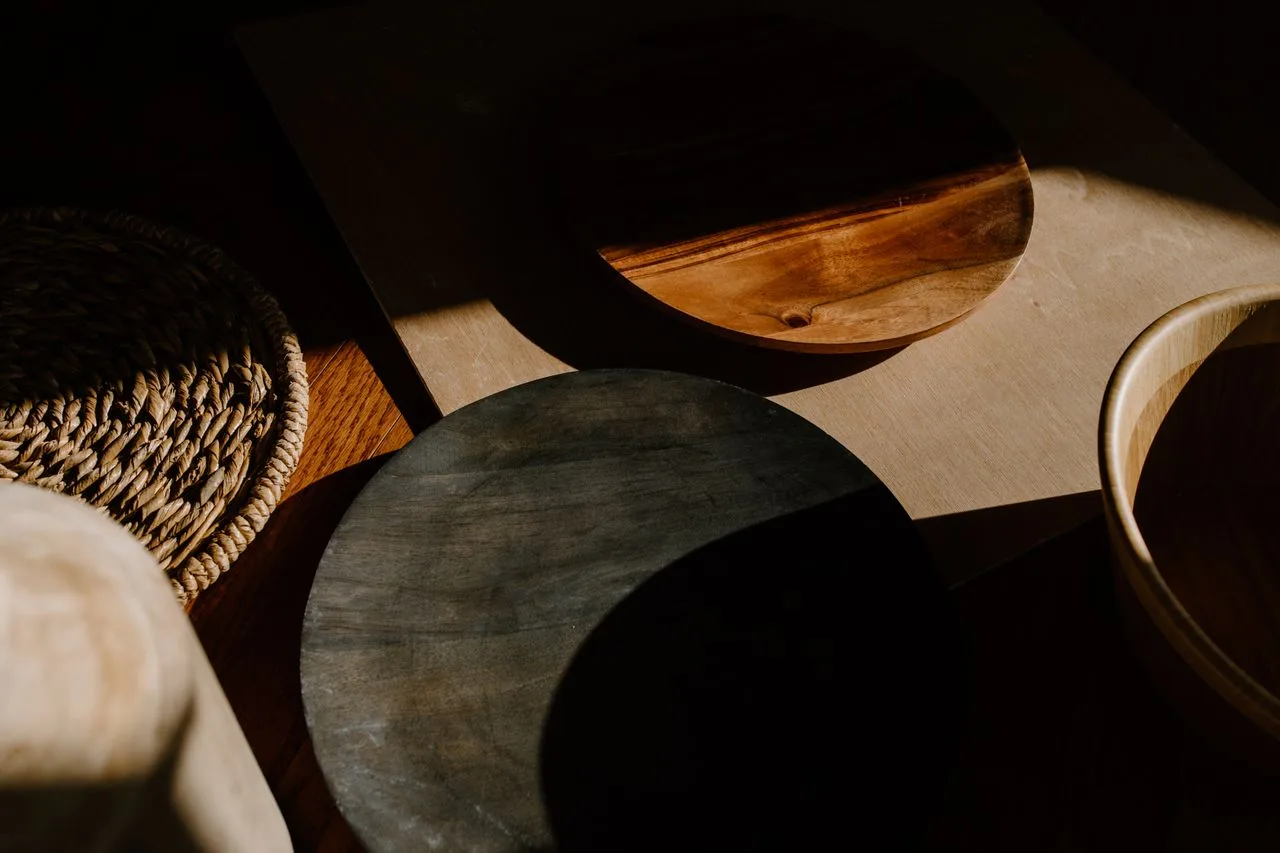
Dark rooms flatten quickly if every surface is smooth. Texture is what keeps Dark Japandi feeling rich rather than heavy.
- Wood with visible grain: walnut, smoked oak, or charred-wood panels.
- Stone and clay: honed slate, basalt, unglazed ceramics, a stoneware lamp base.
- Lime and plaster: limewash or clay plaster gives dark walls soft movement.
- Natural fibers: linen, wool, jute, rattan, paper (shoji-style screens or paper lanterns).
- A little metal: blackened steel frames or one aged-brass accent per room.
Lighting: the make-or-break detail
A dark room with the wrong lighting looks like a basement. Get these right:
- Warm bulbs only: 2200K–2700K. Cool white light turns charcoal walls grey and lifeless.
- Light in layers, low down: floor lamps, table lamps and a paper lantern instead of one ceiling light.
- Wash the walls: a lamp or LED strip grazing a textured wall shows off the limewash or wood grain.
- Use dimmers: the style is designed for evening; dimmers let one room work for daytime and night.
- Keep daylight soft: linen curtains in sand or oat let light through without killing the mood.
Furniture: low, solid and few
- Low sofas and platform beds keep the room calm and make ceilings feel higher.
- Choose solid wood over veneer where you can; it ages better and matches the “honest materials” idea.
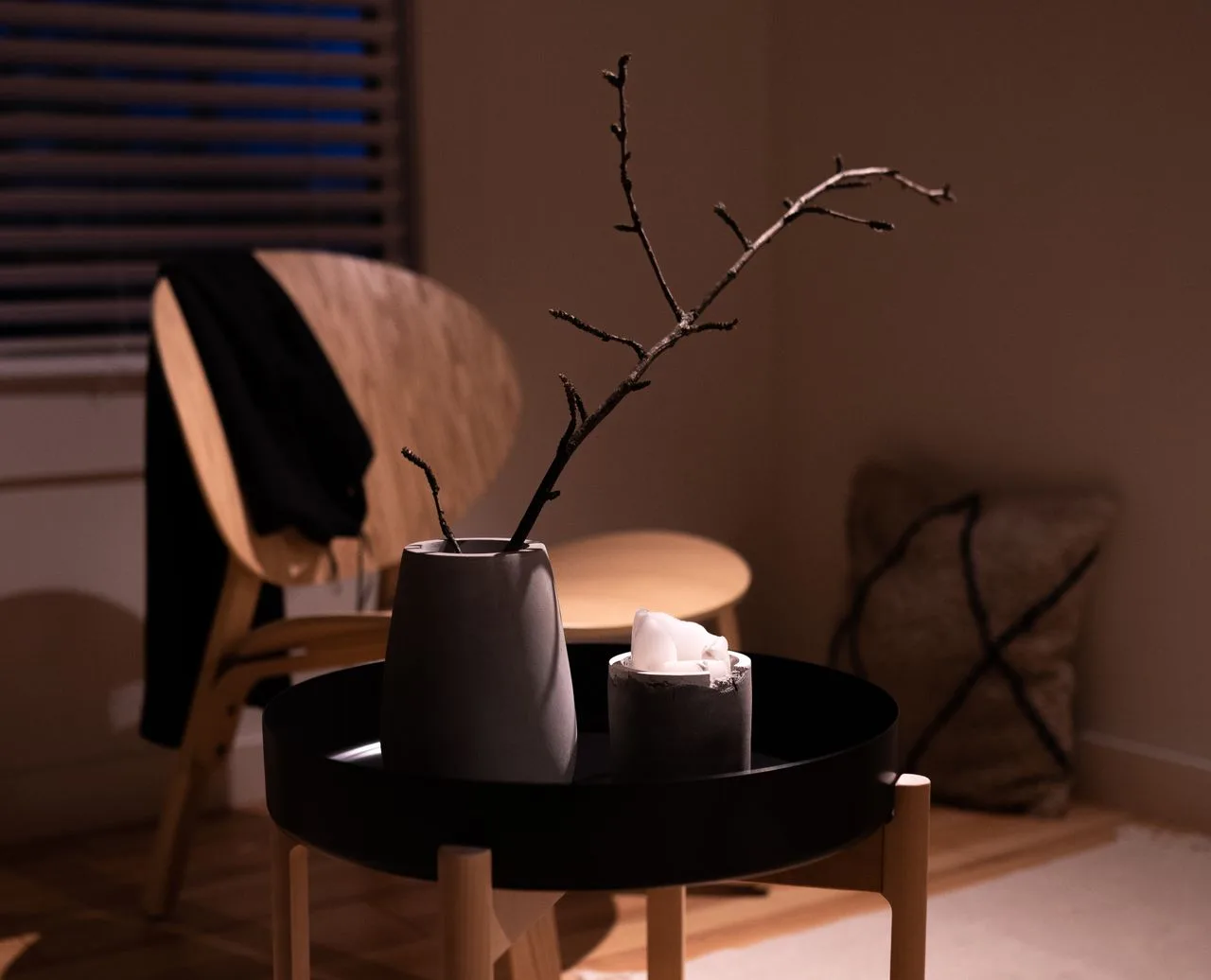
- Rounded edges and organic shapes (a round coffee table, a curved armchair) soften the dark palette.
- Leave negative space. If a corner looks empty, add a single plant or a floor vase, not more furniture.
Dark Japandi living room ideas
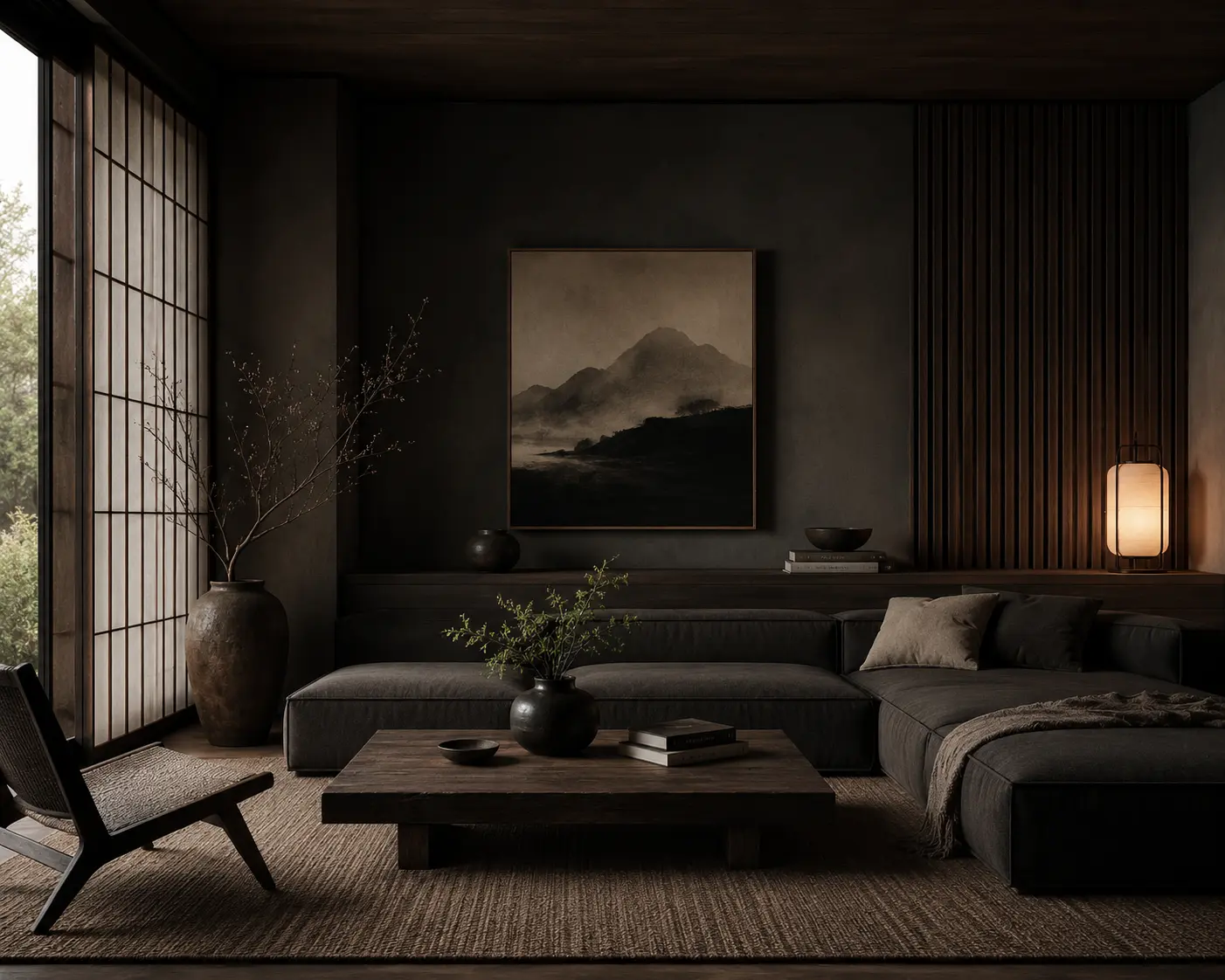
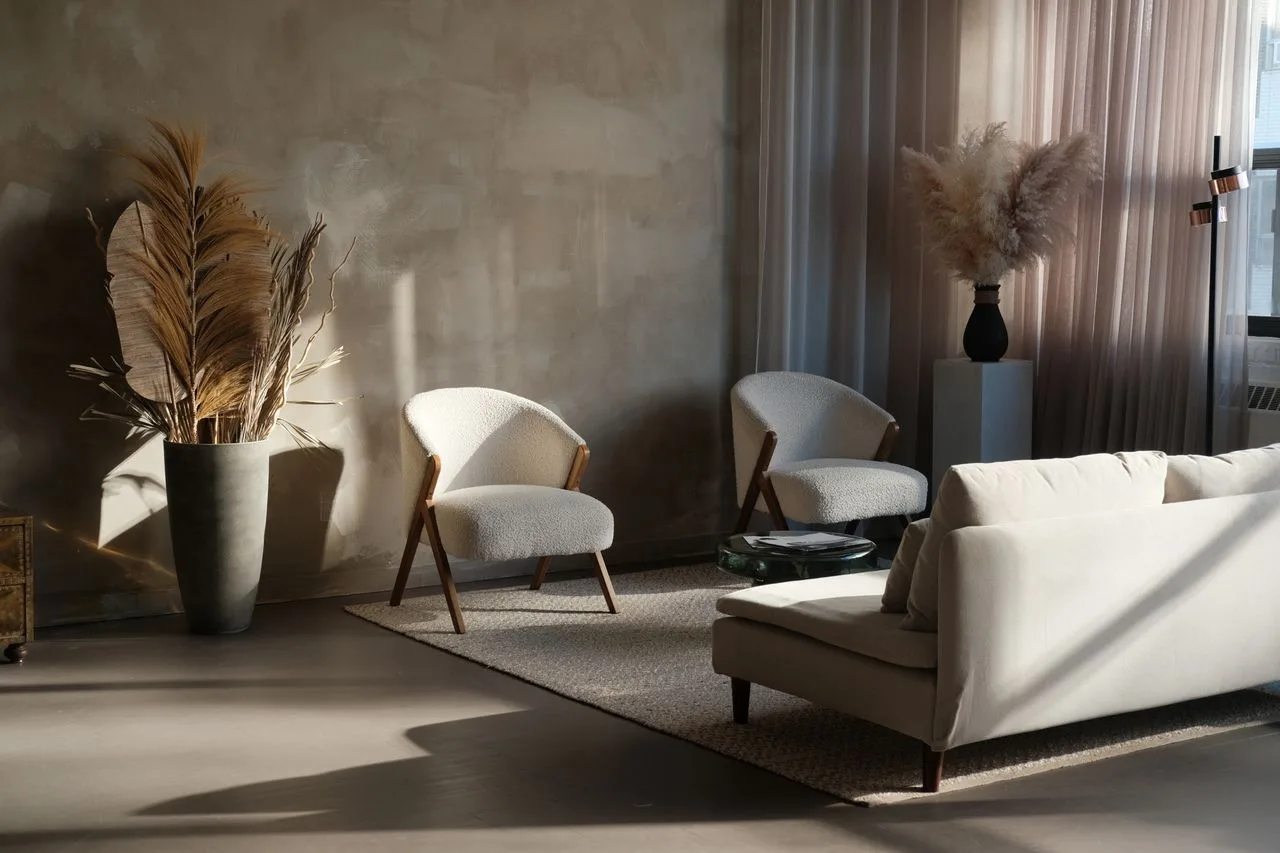
- Paint one wall, not four if your living room gets little daylight. A charcoal or olive feature wall behind the sofa gives the mood without closing the room in.
- Sofa: a low sofa in charcoal, mushroom or chocolate fabric, styled with two or three textured cushions in rust, moss or oat. See our throw pillow guide for combinations.
- Coffee table: a round walnut or stone table with one object on it, such as a stoneware bowl or a single branch in a vase.
- Rug: a flat-weave wool or jute rug in a mid-tone, so furniture doesn’t disappear into a dark floor.
- Storage: closed, handleless cabinets keep clutter out of sight, which matters even more in a dark room.
Dark Japandi bedroom ideas
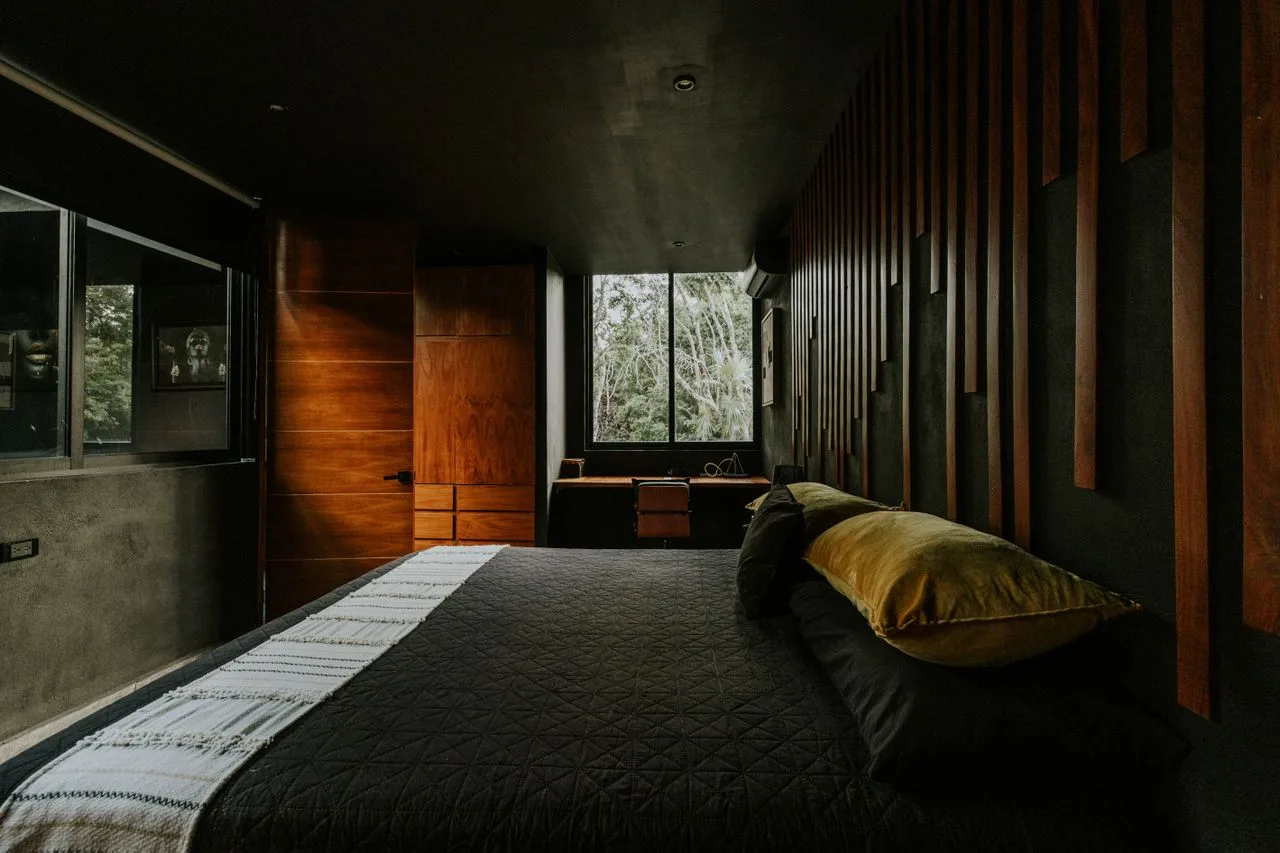
- Platform bed in walnut or smoked oak, kept low to the floor.
- Bedding in layers: washed linen in charcoal or clay, with an oat or sand throw for contrast.
- Paint behind the bed: deep olive or espresso works well; it reads as a headboard without needing one.
- Bedside lighting: paper or ceramic lamps with warm bulbs, or wall-mounted plug-in sconces.
- Nothing extra: one book and one small object on each nightstand.
If you like the moodiness but want something more bookish and ornate, compare it with our dark academia bedroom guide.
Dark Japandi kitchen ideas
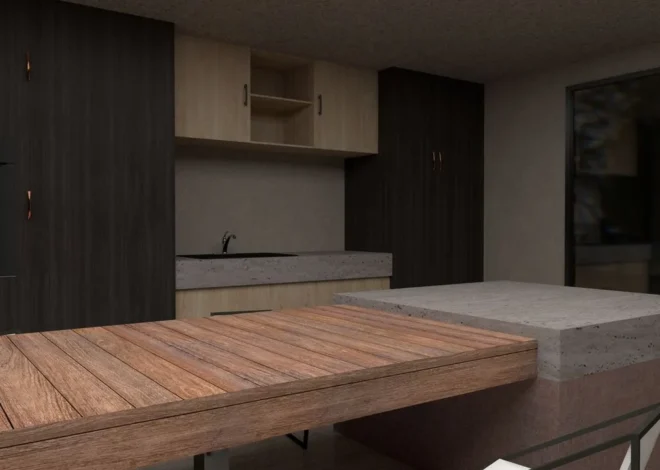
- Cabinets: flat-panel fronts in charcoal, black-stained oak or deep olive, ideally handleless or with slim black pulls.
- Counters: honed stone, concrete, or a dark quartz with a matte finish.
- Balance with wood: open walnut shelves or a wooden island stop the kitchen feeling like a black box.
- Task lighting: under-cabinet LEDs are essential with dark cabinets; keep them warm white.
- Display a few things: handmade ceramics, a wooden board and a plant. Put the rest away.
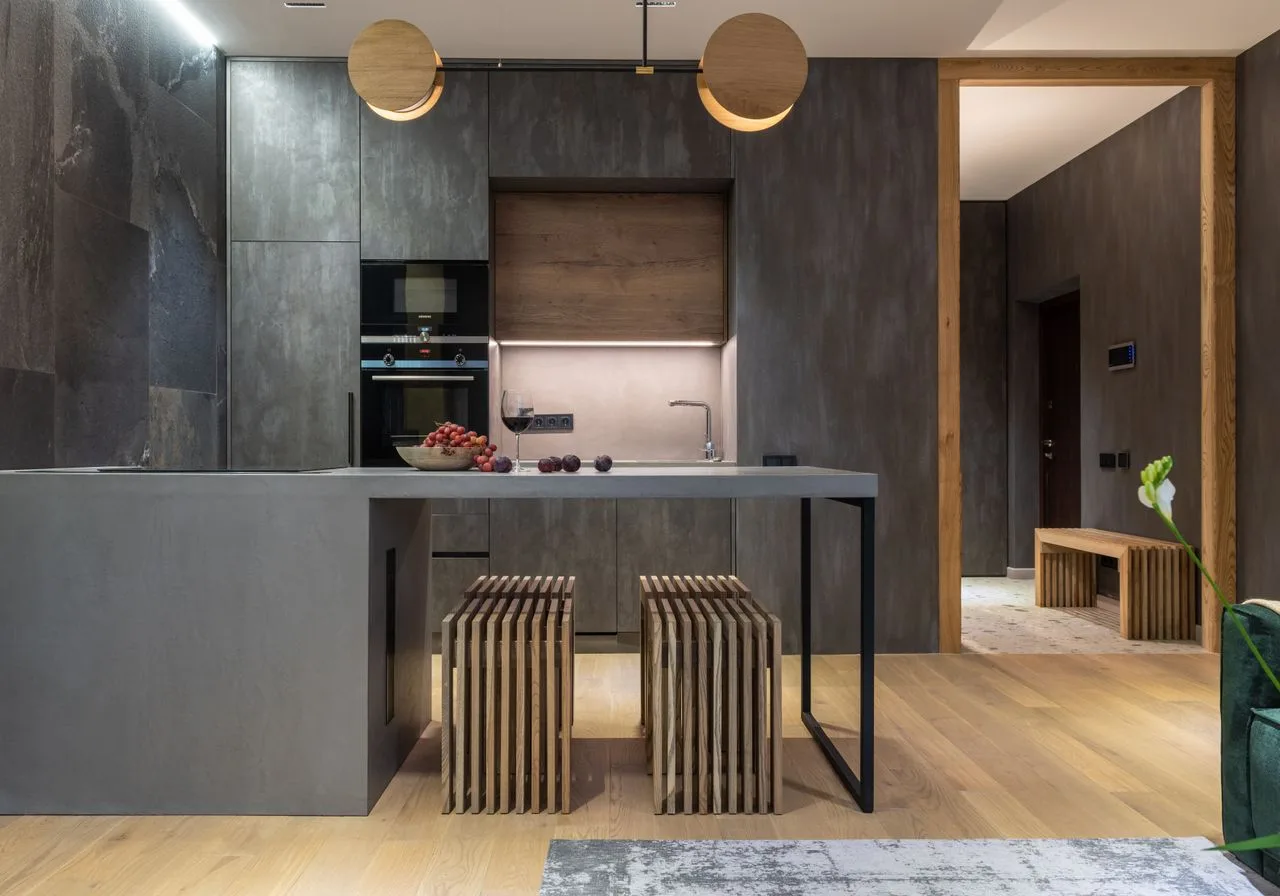
For cabinet colors, counters, lighting and a budget plan, read our full guide to Dark Japandi kitchen ideas.
Dark Japandi bathroom ideas
- Dark slate-look or zellige-style tiles in charcoal or green, with lighter grout for definition.
- A wooden vanity or teak bath mat to bring warmth.
- Black or brushed-bronze fixtures.
- Linen towels in sand and stone, and one plant that tolerates humidity.
Small spaces and rooms with little light
Dark colors can work in small rooms. They blur the corners, so the walls seem to recede. The key is commitment and lighting:
- Paint walls, trim and even the ceiling in the same or a close shade, so there are no sharp edges.
- Use mirrors sparingly but strategically, opposite a lamp or window.
- Keep furniture leggy or low, and keep the floor as clear as possible.
- If you’re unsure, start with a lighter dark (taupe, clay or mushroom) and go deeper later.
Dark Japandi on a budget
| Change | Rough cost | Impact |
|---|---|---|
| Paint one feature wall | $40–$80 | High |
| Swap to warm bulbs and add one floor lamp | $30–$100 | High |
| New cushion covers and a throw in linen or wool | $40–$120 | Medium |
| Stain an existing wooden piece darker | $20–$40 | Medium |
| Paper lantern pendant | $20–$60 | Medium |
| Declutter and clear surfaces | Free | High |
Second-hand furniture is ideal for this style: older solid-wood pieces often already have the deep tones you want. Our economy home decor tips have more ways to save.
Common mistakes to avoid
- Going dark everywhere at once. Start with one room or one wall and live with it for a few weeks.
- Cool lighting. It turns a warm, moody room into a cold one.
- Too many black things. Black furniture on black walls disappears. Use wood and mid-tones to create layers.
- Clutter. Visual noise is louder in a dark room. Hide what you can.
- No contrast at all. Keep that 10% of light relief: a pale rug, linen curtains or a cream ceramic.
How Dark Japandi compares with other moody styles
- Dark academia: ornate, bookish and layered; Dark Japandi is minimal and calm.
- Industrial: also dark, but colder and harder, with exposed brick, metal and concrete.
- Wabi-sabi: shares the love of imperfection, but is usually lighter and earthier.
- Moody maximalism: dark walls with lots of color and pattern; the opposite of Japandi’s restraint.
Still deciding? Our guide on how to find your home decor style can help.
FAQs
What is Dark Japandi style?
It’s a darker version of Japandi that combines Japanese minimalism and Scandinavian comfort with a palette of charcoal, walnut, deep olive and espresso, plus natural textures and warm, low lighting.
Does Dark Japandi work in a small room?
Yes. Dark, matte walls make corners less noticeable, which can make a small room feel cozier rather than smaller. Keep furniture low, surfaces clear and lighting warm and layered.
What colors go with Dark Japandi?
Pair a dark anchor (charcoal, soft black, deep olive or espresso) with warm mid-tones such as walnut, rust or clay, and a small amount of oat, sand or linen for contrast.
Can I do a Dark Japandi kitchen?
Yes. Use flat, dark cabinet fronts, honed stone or concrete counters, warm wood shelving or an island for balance, and plenty of warm under-cabinet lighting.
Is Dark Japandi just Japandi with black walls?
No. Simply painting walls black usually feels heavy. Dark Japandi relies on texture, warm wood, layered lighting and restraint to make darker colors feel calm.