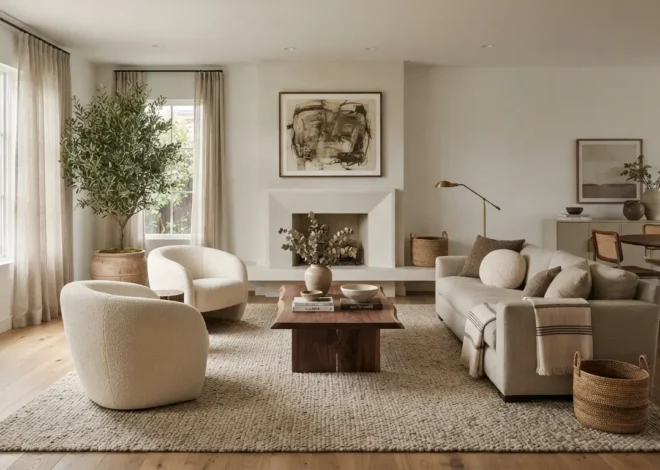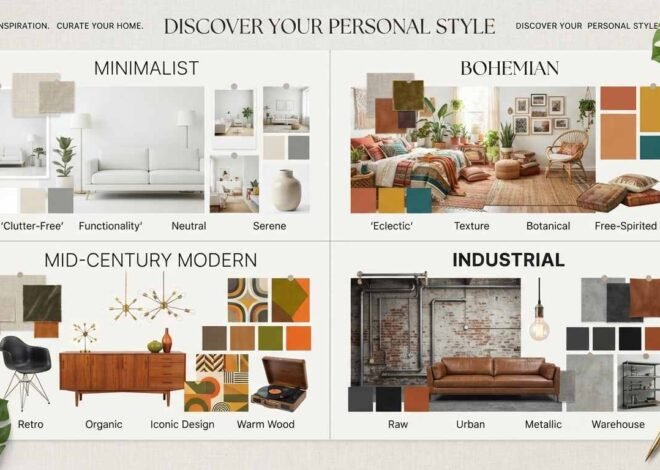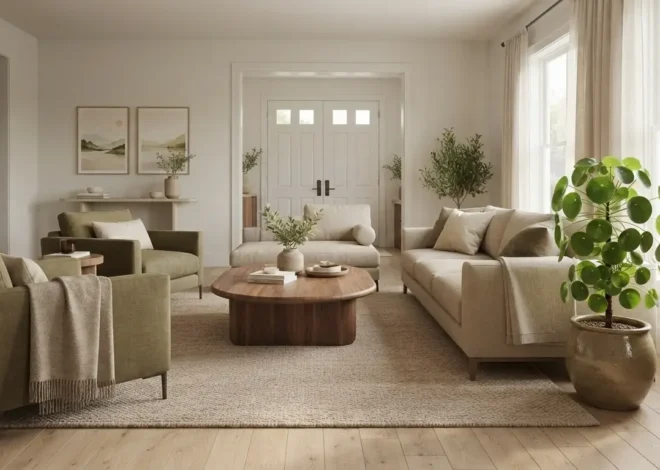
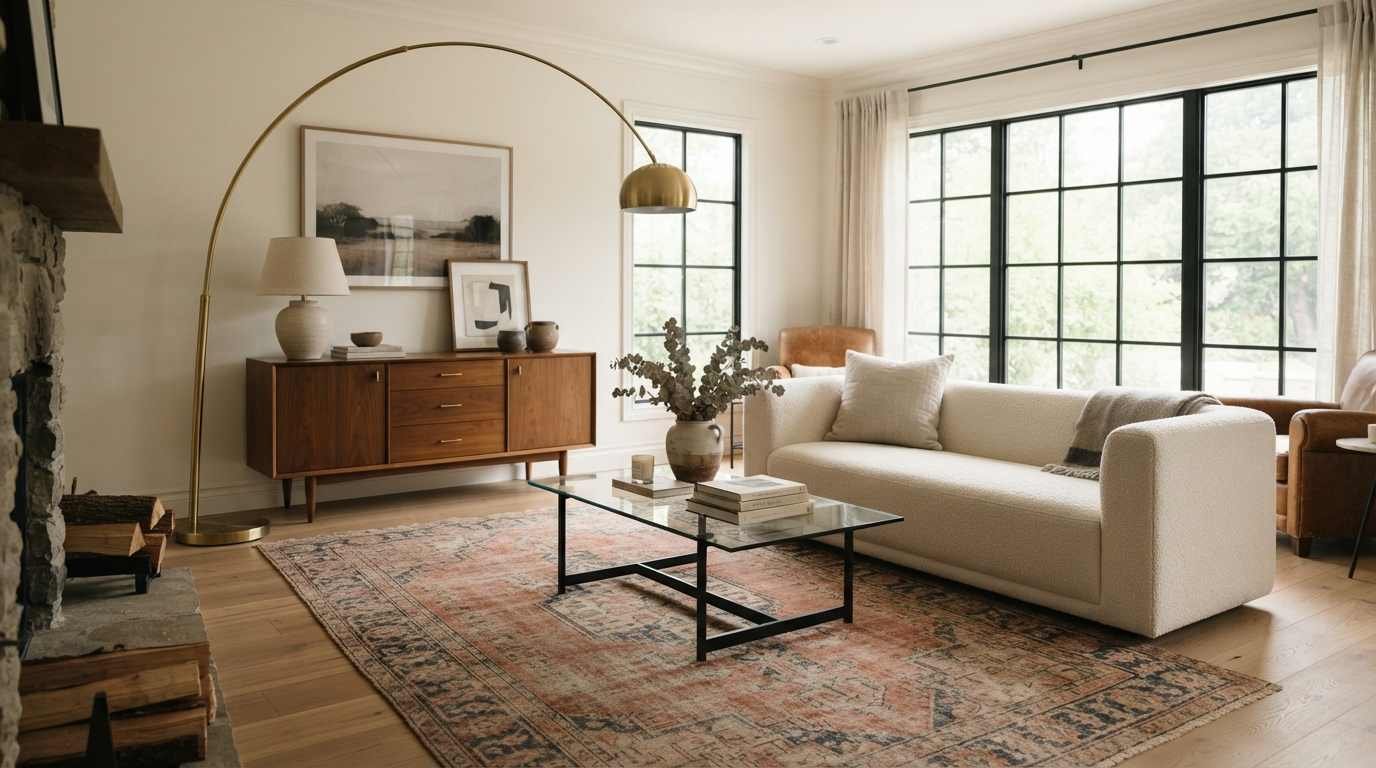
How to Mix Modern and Vintage Decor?
The first time I walked into a newly finished condo for a client back in 2016, every single object in it was under six months old. Grey sofa, grey rug, grey walls, a glass coffee table that had never once held a coffee. She told me the place felt like a hotel lobby — pleasant, expensive, and completely forgettable. She was right.
Knowing how to mix modern and vintage decor is what fixed that room, and we did it in a weekend with three objects: her grandmother’s walnut sideboard, a slightly dented brass floor lamp from a Sunday flea market, and a stack of foxed old hardbacks. Nothing structural changed. The room simply got a pulse.
That is the whole argument for modern vintage decor in one story. New furniture gives you comfort, clean lines, and proportions built for how people actually live now — deep seats, hidden storage, low sightlines. Old furniture gives you patina, joinery nobody mass-produces anymore, and the quiet evidence that someone had a life here before you did. Put the two in one room and each makes the other look better.
Over the past decade I have styled everything from 400-square-foot rentals to nine-room country houses, and the rooms that people remember are never the ones bought in a single afternoon. They are the layered ones. The trouble is that layering looks effortless and is not, which is why so many attempts end up reading as cluttered rather than collected.
This guide is the working method I use with clients — the ratios, the palette logic, the material rules, the room-by-room decisions, and the specific mistakes I see most often. No mood-board vagueness. Just what actually works when you are standing in your living room with a piece of furniture in your hands, wondering where it goes.
How Do You Mix Modern and Vintage Decor?
Mix modern and vintage decor by keeping roughly 70% of a room in one era and 30% in the other, then linking them with a shared color palette, repeated materials, and consistent furniture scale. Use modern pieces for large upholstery and storage, and vintage pieces for statement furniture, lighting, mirrors, and accessories.
What Is Modern and Vintage Decor?
Before you can blend two styles, it helps to be precise about what each one actually is. Most confusion in modern vintage interior design comes from vague labels, not bad taste.
What Counts as Modern Decor
Modern decor, in everyday use, means clean-lined, minimal-ornament furniture with visible function. Think low profiles, unfussy silhouettes, matte finishes, and restrained hardware. Contemporary design overlaps heavily with it — the practical difference barely matters at home.
What modern pieces bring to a room is *air*. They take up visual space without shouting, which is exactly why they make excellent supporting cast members for older, busier objects.
What Counts as Vintage Decor
Vintage generally means 20 to 100 years old. Anything past the century mark is properly an antique. Below 20 years, you have secondhand furniture, which can still be wonderful but carries none of the same weight.
Vintage decorating ideas work because older pieces were built with different priorities: solid timber instead of veneered particleboard, hand-cut joinery, brass that develops a living finish instead of chipping. That craftsmanship reads even to people who cannot name it.
Antique, Vintage, or Reproduction?
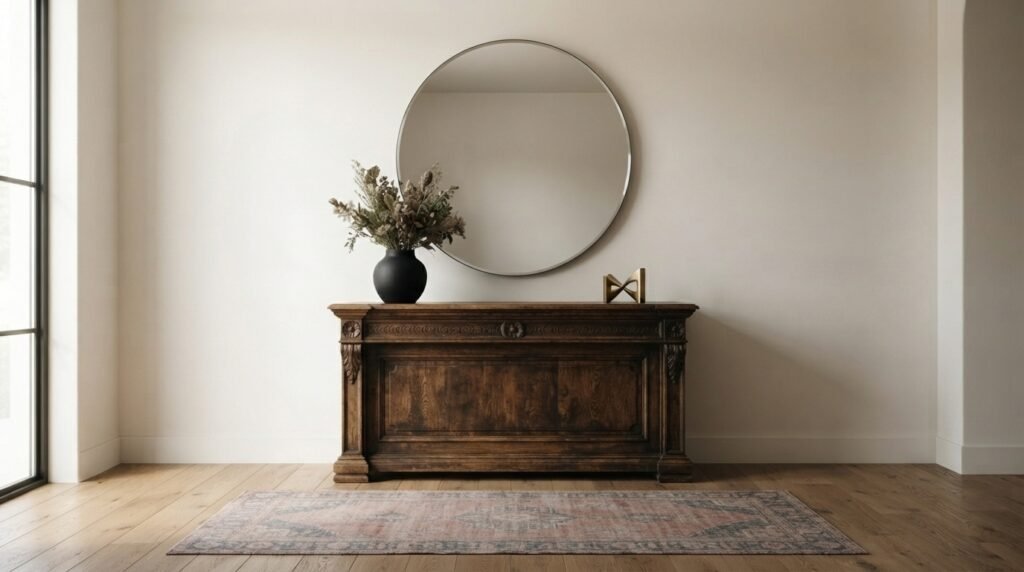
Knowing which one you are buying protects both your budget and your room. Reproductions are not villains — a well-made repro of a classic form can be a smart choice in a high-traffic family space — but they should be priced and used accordingly.
| Category | Typical Age | What You’re Paying For | Best Use in a Mixed Room | Price Behavior |
| Antique | 100+ years | Rarity, provenance, craftsmanship | One hero piece per room | Holds or gains value |
| Vintage | 20–99 years | Character, patina, mid-century form | Statement furniture and lighting | Stable, often rising |
| Reproduction | New build, old design | Design language without the wear | High-use pieces, kids’ spaces | Depreciates like new |
| Secondhand Modern | Under 20 years | Function at a discount | Sofas, storage, desks | Depreciates fastest |
| Faux-Distressed New | New | Surface effect only | Use sparingly, if at all | Depreciates fastest |
Why Mixing Modern and Vintage Works
There is a reason vintage and contemporary decor has outlasted every trend cycle since the 1970s. It solves three problems at once.
It creates depth. A room furnished entirely from one catalogue has a single visual texture, and the eye reads it in about two seconds. Add a piece with age and the eye slows down, because it now has to process contrast.
It fixes the “showroom” problem. Brand-new rooms often feel staged because everything shares the same finish quality and the same degree of wear — which is to say, none. A worn armrest or a foxed mirror gives the rest of the room permission to be lived in.
It is genuinely more sustainable and often cheaper. A solid oak dresser from 1965 usually costs less than a laminate one from a big-box store and will outlive it by fifty years. That is not a moral argument, it is a practical one.
There is also a fourth reason, less measurable but more important to how a home feels: old objects carry story. A client’s brass carriage clock, a market find from a trip, a chair from a grandparent’s kitchen. Eclectic modern decor gives those things somewhere to sit without turning the house into a museum.
How to Mix Modern and Vintage Decor: The Five Core Principles
Everything else in this guide is application. These five principles are the actual method, and they hold in any room, any budget, any square footage.
1. Commit to a 70/30 Ratio
Pick a dominant era and give it about 70% of the room’s visual weight. The other 30% becomes the accent. A room split evenly between old and new decor styles reads as indecisive — the eye cannot tell which one is the point.
In most homes I recommend modern as the 70%, because modern upholstery is more comfortable and modern storage is better engineered. But a 1920s apartment with original mouldings often wants the reverse: vintage-dominant with modern relief.
2. Repeat Everything Three Times
A single vintage brass lamp in a modern room looks like a mistake. Three brass moments — the lamp, a picture frame, a drawer pull — look like a decision. This is the fastest way to make mixing modern and vintage furniture feel intentional rather than accidental.
Apply the rule of three to your accent metal, your accent wood tone, and any strong color. Spread the three points across different heights and distances so the eye travels.
3. Match Scale Before You Match Style
Two pieces from different centuries will sit together happily if their proportions agree. A chunky Victorian armchair beside a spindly modern side table will not, no matter how good each one is alone.
Before buying, measure the height of the seat, the depth of the frame, and the visual mass. Pieces of similar bulk read as a family even when they are a hundred years apart.
4. Let One Room Have One Hero
Every mixed room needs a single piece that wins. An eighteenth-century secretary desk, a sculptural modern sofa, a genuinely good chandelier. Everything else supports it.
Two heroes create a tug-of-war. If you own two extraordinary pieces, put them in different rooms and let each one have its moment.
5. Leave Negative Space Around Old Pieces
Antique furniture is usually more ornamented than modern furniture, so it needs breathing room to be seen. Pushing an ornate piece into a tight corner between two other objects flattens it into visual noise.
Give a vintage statement piece an empty wall behind it or a clear metre in front. Emptiness is what makes it read as important.
| Attribute | Modern Furniture | Vintage Furniture | How to Combine Them |
| Silhouette | Clean, low, geometric | Curved, ornamented, tall | Alternate: modern sofa, curved vintage chair |
| Materials | Engineered wood, steel, glass | Solid hardwood, brass, cane | Repeat one metal across both |
| Finish | Matte, uniform, sealed | Patina, wear, hand-rubbed | Let wear show; don’t over-restore |
| Comfort | Engineered for lounging | Firmer, more upright | Modern for seating, vintage for accents |
| Scale | Lower, deeper | Taller, shallower | Match visual mass, not exact height |
| Cost per piece | Predictable, new-price | Highly variable | Splurge vintage, save modern |
| Best Role | Sofas, beds, storage | Sideboards, mirrors, lighting | 70% modern, 30% vintage |
Finding the Right Balance Between Old and New Decor Styles
Balance in vintage and contemporary decor is not a feeling, it is an audit. When a room is not working, I walk through these five checks in order and the problem usually surfaces within two of them.
- Count your eras. Stand in the doorway and tally how many distinct periods are visible. Three is comfortable. Five or more and the room stops reading as curated.
- Check the corners. Old and new should be distributed across the room, not clustered — all the vintage on one wall creates an antique-shop corner and a showroom corner.
- Look at the eye line. Between roughly 90cm and 170cm is where people actually look. Both eras need representation in that band.
- Test the removal. Take out the single busiest object for a day. If the room improves, it was competing with your hero.
- Photograph it in black and white. Color hides imbalance. Greyscale exposes it instantly — you will see mass and contrast, nothing else.
That last one is the trick I use most. A phone photo with the saturation dropped to zero will tell you in three seconds what an hour of rearranging will not.
Choosing a Color Palette That Bridges Both Eras
Color is the single strongest unifier in vintage modern home decor. Two pieces from different centuries in the same tonal family will always look related, no matter how different their shapes.
The rule I work to: choose one neutral base, one warm mid-tone that appears in both your old and new pieces, and one accent used no more than three times. Old wood tends to skew warm — walnut, mahogany, oak with amber in it — so a cold white or blue-grey base will fight it. Warm off-whites, putty, and greige are safer ground.
Sampling from Your Oldest Piece
Take your most important vintage item and pull the palette from it. A faded Persian rug typically hands you a warm neutral, a rust, and a muted indigo — that is a complete scheme without any guesswork.
Paint the walls in the lightest tone from that piece, buy modern upholstery in the second, and use the third only in accessories.
| Palette | Base Wall Color | Modern Pieces | Vintage Pieces | Accent (Use 3×) | Best For |
| Warm Neutral Classic | Soft putty / greige | Cream or oatmeal upholstery | Walnut, aged brass | Terracotta | Living rooms, whole-home schemes |
| Ink & Oak | Warm off-white | Charcoal linen sofa | Light oak, cane, rattan | Deep navy | Bedrooms, studies |
| Sage & Amber | Muted sage green | Pale grey or bone | Honey-toned pine, brass | Burnt amber | Kitchens, dining rooms |
| Plaster & Rust | Limewash beige | Boucle, natural linen | Mahogany, patinated copper | Rust red | Living rooms with big windows |
| Monochrome Warm | Chalk white | Black steel, matte black | Dark walnut, iron | Camel leather | Small apartments, lofts |
| Moody Heritage | Deep olive or clay | Bone-white modern seating | Antique gilt, dark wood | Ochre | Dining rooms, north-facing spaces |
A note on trend colors: use them in the accent slot only. The base and the furniture should be decisions you would still make in ten years, because they are the expensive ones.
Mixing Modern and Vintage Furniture Without the Clash
This is where most people get stuck, because furniture is the expensive part and mistakes are hard to undo.
Which Pieces Should Be Modern
Buy new for anything your body touches for hours: sofas, beds, dining chairs you will actually sit in through a long meal, desk chairs. Modern engineering genuinely wins here — better foam, better ergonomics, better warranties.
Also buy new for storage that must fit a specific dimension. Vintage cabinetry rarely accommodates a television, a router, and a games console gracefully.
Which Pieces Should Be Vintage
Reserve your vintage budget for pieces where character does the heavy lifting and comfort is irrelevant: sideboards, credenzas, bar carts, occasional chairs, chests of drawers, desks, mirrors, and lighting.
These are also the categories where blending modern and antique furniture pays best financially. A 1960s teak sideboard costs roughly what a mid-range new one does and is built four times better.
Making a Single Vignette Work
The tightest test of a mixed room is one small grouping. Here is the formula I use for a console, a sideboard, or a hallway table:
- One large vintage anchor (the piece of furniture itself)
- One tall modern object, roughly one-third the width of the surface
- One low grouping of two or three small items at varied heights
- One organic element — branches, a plant, dried grasses
- One reflective surface, either a mirror above or glass within the grouping
- Roughly 40% of the surface left completely empty
Keep the tallest object under two-thirds the height of whatever hangs above it. That single measurement prevents the crowded look more reliably than anything else.
Blending Different Materials: Wood, Glass, Metal & Stone
Material mixing is the invisible layer. Get it right and a room feels rich; get it wrong and it feels random.
The working rules are simple. Limit yourself to two wood tones and one accent metal per room. Repeat each at least twice. Let hard and soft alternate as the eye moves — stone, then textile, then wood, then glass.
Wood-on-wood is the anxiety most people carry, and it is overblown. Two wood tones sit together happily as long as their undertones agree: warm with warm, cool with cool. What actually fails is two woods that are *almost* the same shade, which reads as a failed match rather than a deliberate contrast. Go clearly different or genuinely identical.
| Material Pair | Works Because | Best Application | Watch Out For |
| Walnut + Blackened Steel | Warm wood softens cold metal | Modern shelving on vintage-heavy walls | Too much black flattens the room |
| Oak + Aged Brass | Both share amber undertones | Kitchens, dining, bedroom lighting | Mixing brass with chrome nearby |
| Glass + Antique Wood | Glass disappears, wood shows | Coffee tables over a vintage rug | Fingerprints; needs daily wiping |
| Marble + Rattan | Hard/soft, cool/warm contrast | Console tops, side tables | Marble stains — seal it |
| Cane + Matte Black | Texture against flat surface | Dining chairs, cabinet fronts | Cane sags in dry heat |
| Linen + Patinated Copper | Both age visibly, together | Living room upholstery + accessories | Copper needs no polishing — leave it |
| Terrazzo + Dark Mahogany | Modern speckle vs solid depth | Bathrooms, entry floors | Keep the palette tight |
Lighting, Rugs, and Wall Art: The Three Fastest Wins
If you change nothing else, change these three. They deliver more transformation per pound than any furniture purchase.
Mixing Lighting Styles
Never buy a matching lighting set. A three-piece bedroom lamp set is the single clearest signal that a room was bought rather than built.
Instead, layer three sources at three heights: an overhead fixture, a mid-height floor or wall light, and a low table lamp. Make one of the three clearly older than the others. A vintage brass table lamp under a modern linear pendant is a combination I have used in a dozen homes and it has never once failed.
Rewiring an old lamp costs very little and is worth doing properly — take it to an electrician rather than trusting fifty-year-old cloth flex.
Choosing Rugs
A worn antique rug is the most efficient shortcut in this entire style. It brings age, pattern, and a full color palette in one purchase, and it sits under modern furniture without competing.
Size matters more than pattern. In a living room, the front legs of every seating piece should sit on the rug — a small rug floating in the middle of the floor makes even beautiful furniture look temporary. If a genuine antique is out of reach, look for a distressed or overdyed reproduction rather than something aggressively new-looking.
Wall Art Ideas
Mix framing eras the way you mix furniture. A gallery wall of ornate gilt frames and slim modern black frames looks collected; a wall of identical frames looks like a hotel corridor.
Three approaches that consistently work: one oversized modern canvas above a vintage sideboard, a salon-style gallery mixing old oil paintings with contemporary prints, or a single antique portrait hung deliberately off-centre on a large empty wall. Hang the centre of every piece at roughly 145–150cm from the floor, regardless of ceiling height.
Styling the Details: Shelves, Coffee Tables, Mirrors & Accessories
Furniture sets the structure. Details are what make people ask who did your house.
Decorating Shelves
Work in groups of three and alternate vertical and horizontal. Books flat, books upright, one object, repeat. Leave at least a third of every shelf empty — the negative space is what separates styled from stuffed.
Pull items forward to the front edge of the shelf rather than pushing them back. It creates shadow and depth, and it is the difference between a bookcase and a display.
Styling Coffee Tables
The reliable formula is four elements: something tall, something stacked, something organic, and something with a tray to corral the rest. A modern glass or steel table styled with vintage books and a brass bowl is a complete look.
Keep the tall element under 35cm so people can see each other across it. A coffee table you cannot talk over has failed at its actual job.
Vintage Mirrors
Old mirrors are the cheapest luxury in this style. Foxed, spotted glass has a softness that no new mirror replicates, and the frames are often the best-carved thing you will own.
Lean a large one against a wall rather than hanging it. Hang smaller ones in clusters. Position any mirror to reflect something worth looking at — a window, a plant, a good corner — never a blank wall.
Antique Accessories and Modern Objects
The most useful trick here is to pair one antique with one obviously modern object on the same surface. A Victorian brass candlestick beside a matte ceramic sphere. A carved wooden box next to a clean acrylic frame. The contrast makes both read as chosen.
| Layer | What Goes Here | Old or New | Common Mistake |
| Layer 1: Floor | Rug, flooring | Vintage rug preferred | Rug too small for the seating |
| Layer 2: Large furniture | Sofa, bed, dining table | Modern (comfort wins) | Buying a matching suite |
| Layer 3: Statement furniture | Sideboard, armoire, desk | Vintage hero piece | Two heroes competing |
| Layer 4: Lighting | Overhead, floor, table | Mix eras across all three | Matching lamp sets |
| Layer 5: Textiles | Cushions, throws, curtains | Mix — new fabric, old kilim | All the same texture |
| Layer 6: Wall | Art, mirrors, shelving | Mixed frames, one gilt | Everything hung too high |
| Layer 7: Objects | Books, ceramics, brass | One antique per grouping | Too many small things |
Layering Textures and Mixing Patterns Successfully
Texture is what makes a neutral room interesting. In a mixed-era space you should be able to count at least five distinct tactile surfaces: something woven, something smooth, something rough, something soft, something reflective.
Pattern is the more dangerous variable, and it is where eclectic modern decor most often tips into chaos. The formula that has never failed me is three patterns at three scales in one shared palette — one large (usually the rug), one medium (curtains or a chair), one small (cushions or a lampshade). Different scales stop them from vibrating against each other.
Keep at least one large solid surface in the room as a resting place for the eye. A plain sofa or plain curtains earn you the right to be bold everywhere else.
Stripes and florals get along better than people expect. Two florals of similar scale rarely do.
How to Mix Modern and Vintage Decor in Every Room
The principles hold everywhere, but the ratio shifts by room.
Modern Vintage Living Room
This is where the style shows best. Anchor with a modern sofa in a solid neutral, then bring in a vintage armchair, an old rug, and a sideboard with real age. Mix your lighting across three heights.
The one thing I would fight for in any modern vintage living room: a vintage coffee table or sideboard with visible wear. It gives the whole room permission to relax.
Bedroom
Bedrooms want more softness and fewer competing objects. Modern bed, modern mattress, no compromise. Then mismatched vintage nightstands — deliberately different, not almost-matching — and an antique mirror or a single old painting above the bed.
Skip the vintage bedframe unless you have measured the mattress. Old bed dimensions rarely match modern sizing.
Dining Room
The most forgiving room in the house. Pair a modern table with vintage chairs, or a vintage table with modern chairs — both work, and neither requires the chairs to match each other.
Bentwood, cane, ladder-back, or Windsor chairs around a clean modern table is a combination that has been reliable for forty years and shows no sign of tiring.
Kitchen Styling
Keep the cabinetry and appliances modern for function, then layer age on the surfaces. An antique wooden cutting board, a vintage enamel canister, open shelving with old crockery, a marble-topped butcher’s trolley.
Swapping cabinet hardware to aged brass is the highest-impact, lowest-cost change available in a kitchen.
Bathroom Inspiration
Modern plumbing, vintage everything else. A gilt mirror over a clean modern vanity, a small antique stool holding towels, an old apothecary jar for cotton wool.
Watch the humidity. Solid wood and untreated brass survive it; veneered furniture and paper-backed frames do not.
| Room | Ratio (Modern : Vintage) | Buy New | Buy Vintage | Fastest Upgrade |
| Living Room | 70 : 30 | Sofa, media storage | Rug, sideboard, armchair | A worn antique rug |
| Bedroom | 80 : 20 | Bed, mattress, wardrobe | Nightstands, mirror, lamp | Mismatched nightstands |
| Dining Room | 50 : 50 | Table or chairs (pick one) | The other one, plus lighting | Bentwood or cane chairs |
| Kitchen | 90 : 10 | Cabinetry, appliances | Trolley, crockery, boards | Aged brass hardware |
| Bathroom | 85 : 15 | Vanity, fixtures, tiling | Mirror, stool, glassware | A gilt-framed mirror |
| Entryway | 40 : 60 | Lighting, hooks | Console, mirror, runner | An antique console |
| Home Office | 60 : 40 | Desk chair, tech storage | Desk, task lamp, art | A vintage brass desk lamp |
Small Apartment Decorating
Small spaces do not need less character, they need fewer objects with more presence. Vintage modern home decor scales down beautifully as long as you edit hard. One excellent vintage piece beats five mediocre ones, and it will not eat the floor.
Practical tactics that work in tight footprints:
- Choose vintage pieces with legs — visible floor underneath makes a room read larger
- Go vertical: a tall narrow antique bookcase costs the same floor area as a side table
- Use glass and mirror to bounce light; a leaning antique mirror is the best small-room investment there is
- Pick one accent metal only and repeat it everywhere
- Keep the walls light and put all the drama into two or three objects
- Choose modern furniture with hidden storage so vintage pieces do not have to work
Avoid the temptation to scale everything down. A single large piece feels intentional; six small ones feel like a waiting room.
Budget-Friendly Vintage Decorating Ideas
You can do this style on almost any budget, because the vintage half is a hunting game rather than a spending one.
Where to look, roughly in order of value: estate sales, charity and thrift shops, Facebook Marketplace at the end of the month, auction houses that livestream, architectural salvage yards, and finally curated vintage dealers — who charge more but have already done the sorting for you.
What to check before you buy anything old:
- Turn it over. Dovetail joints and solid timber on the underside mean it was built to last.
- Smell the drawers. Musty is fixable with a week of airing and charcoal; mildew is not.
- Push down on a corner. Wobble means loose joints — repairable, but negotiate on price.
- Look for veneer lifting. Small patches are fine, widespread bubbling is a project.
- Check for active woodworm. Fresh, pale dust below the holes means it is live. Walk away.
- Measure your doorway first. I have watched two beautiful sideboards go back on a van.
| Element | Budget Approach | Mid-Range | Luxury | Where to Spend First |
| Rug | Overdyed vintage-look reproduction | Semi-antique Persian, 40–60 yrs | Antique Heriz or Kilim | High — sets the palette |
| Sofa | Well-reviewed new mid-market | Custom fabric, hardwood frame | Bespoke, hand-tied springs | High — you sit on it daily |
| Sideboard | Thrifted teak, refinished | Restored 1960s Danish | Signed designer or antique | Medium — hunt, don’t buy |
| Lighting | Rewired flea-market lamp | Vintage brass, restored | Antique or designer fixture | Medium — huge visual return |
| Mirror | Charity-shop gilt frame | Restored antique glass | Period Venetian | Low cost, high impact |
| Art | Original thrifted oils | Framed vintage prints | Gallery pieces | Low — buy what you like |
| Accessories | Car boot brass, old books | Curated dealer finds | Collectible ceramics | Lowest — accumulate slowly |
DIY Vintage Makeovers
Restraint is the whole skill here. The most common DIY error is over-restoring — sanding a piece back to raw wood removes exactly the patina you paid for.
Projects worth doing yourself: rewiring lamps, replacing drawer hardware with aged brass, reupholstering a single chair seat in modern fabric, cleaning brass with lemon and salt rather than harsh polish, and waxing rather than varnishing old timber.
Projects worth outsourcing: full reupholstery, veneer repair, French polishing, and anything on a piece that might be genuinely valuable. A bad refinish can halve the worth of a good antique in an afternoon.
Modern and Vintage Decor Trends for 2026
The direction of travel is warmer, browner, and more textural than the last few years — which suits this style perfectly.
Brown furniture is back. Dark wood, dismissed for a decade, is being bought again by people in their twenties and thirties. Prices are still low. This is the window.
Unlacquered and patinated brass. Finishes that change over time are being specified deliberately, rather than being seen as a maintenance problem.
Limewash and plaster walls. Textured, slightly uneven wall finishes give modern rooms an aged softness that flatters old furniture.
Chairs as sculpture. A single characterful vintage chair used as an object rather than seating — in a bedroom corner, an entryway, beside a bath.
Ceramics with visible hands. Slightly irregular, matte-glazed pottery that reads as made rather than manufactured.
Fewer, better objects. The maximalist surge is settling into something more edited: still layered, but with real space between pieces.
Expert Decorating Tips
These are the notes I find myself repeating on almost every project.
- Buy the old thing first, then build the modern room around it — reverse that order and nothing fits
- Never restore a piece on the same day you buy it. Live with the patina for a month
- Hang art lower than instinct says. Almost everyone hangs too high
- One matching pair per room is charming; two pairs is a furniture showroom
- If a room feels flat, add age. If it feels heavy, add a clean modern line
- Rewire every vintage lamp before it goes near a socket
- Keep receipts and photographs of anything genuinely old, for insurance
- Rotate accessories seasonally instead of buying more
- Shop with a tape measure, a torch, and your ceiling height written on your hand
- When you cannot decide, remove something rather than adding something
Common Decorating Mistakes to Avoid
Almost every failed mixed-era room I have been called into shares at least three of these.
Matching too much. A vintage bedroom set or a full suite of modern furniture defeats the entire purpose. Break up any group of three or more identical pieces.
Distributing the eras unevenly. All old on one side, all new on the other, creating two rooms in one.
Over-restoring. Stripping, sanding, and sealing an old piece until it looks new. The wear was the value.
Mixing three or more metals. Two is the ceiling, and the second should appear at least twice.
Buying fake distress. Factory-applied “aged” finishes look wrong beside genuine wear. The eye catches it immediately.
Ignoring scale. Delicate antiques beside oversized modern sectionals never resolve, however good each piece is. Blending modern and antique furniture only works when the proportions agree.
Too many small objects. Fifteen small accessories create clutter. Five larger ones create a look.
Undersized rugs. The most common and most damaging mistake in the entire style.
Treating it like a theme. This is not a period recreation. Modern vintage interior design should look like a life accumulated, not a decade recreated.
Final Thoughts
Learning how to mix modern and vintage decor is really about learning restraint. The ratio, the repeated metal, the empty third of every shelf — none of it is complicated, and all of it is easy to abandon the moment you find something you love at a market.
Start with one old thing. Modern vintage decor rewards patience more than budget. A rug, a sideboard, a lamp with a good brass base. Live with it for a few weeks and notice how the modern pieces around it start to look better than they did on their own. Then add the second thing, and the third, and stop before you think you should.
The homes I have loved most were never finished. They had a chair that came from somewhere, a mirror that had clearly been looked into by other people, and enough clean modern surface to let all of it breathe. That balance is not a style you buy in an afternoon. It is one you build, slowly, and it is worth the wait.
Frequently Asked Questions
How much vintage furniture should a modern room have?
Aim for roughly 30% of the room’s visual weight in vintage pieces if modern is your dominant style. In practice that usually means two or three genuine older items in a living room — typically a rug, a statement furniture piece, and lighting. Going much beyond 40% starts to shift the room’s character toward period, which is a valid choice but a different one. Below about 15%, the vintage pieces read as accidental rather than intentional.
Can you mix modern and antique furniture in a small apartment?
Yes, and it often works better than a purely modern scheme because older pieces have more presence per square foot. The key is choosing fewer, taller items with visible legs so the floor stays readable and the room feels open. One antique console, one leaning mirror, and one vintage lamp will do more for a small flat than a dozen small accessories. Keep the walls light and let two or three older objects carry all the character.
What colors work best for modern vintage decor?
Warm neutrals are the safest and most flexible base, because most vintage wood carries amber undertones that cool greys and stark whites fight against. Putty, greige, limewash beige, and warm off-white all work as a foundation. From there, pull one accent directly from your oldest piece — a rust from a Persian rug, a muted olive from an oil painting — and repeat it exactly three times. Save trend colors for cushions and ceramics that are cheap to change.
How do I stop mixed old and new decor from looking cluttered?
Clutter is almost always a spacing problem rather than a quantity problem. Give every vintage piece empty space around it, leave a third of every shelf and 40% of every surface bare, and cap yourself at three distinct eras per room. Group small objects into odd-numbered clusters instead of spreading them evenly across a surface. If a room still feels busy, photograph it in black and white — the greyscale version will show you exactly which object is fighting for attention.