Tile Flooring Ideas for Living Room: A Practical Design Guide
Do you know About Tile Flooring Ideas for Living Room? Picking a new floor for the living room is one of those decisions that quietly shapes everything else in the space. Get the color or texture wrong, and even a beautifully decorated room starts to feel off. So before you commit to anything, it’s worth slowing down and actually exploring tile flooring ideas for living room spaces in some detail.
Tile has changed a lot since the days of cold bathroom floors an living indated kitchen patterns. Manufacturers now print wood grain, stone veining, even concrete texture onto porcelain so well that most people won’t know it’s tile until they’re standing on it. What follows are design directions that actually hold up in real homes, plus a few practical details most guides leave out.
Why Tile Makes Sense for Modern Living Rooms
Foot traffic, pets, the occasional spilled drink, sunlight pouring in through the windows for years on end. Tile shrugs off all of it better than most other flooring choices. It won’t warp the way solid hardwood sometimes does in humid climates, and scratches from furniture legs or a dog’s claws barely leave a mark.
There’s a comfort factor people don’t think about until they’ve already installed it. Pair tile with a decent underlayment or a radiant heating system, and the “cold floor” complaint mostly disappears, even in the dead of winter. That’s part of why so many homeowners now treat tile as a real option for everyday living spaces, not just entryways or bathrooms.
Popular Tile Flooring Ideas for Living Room Designs
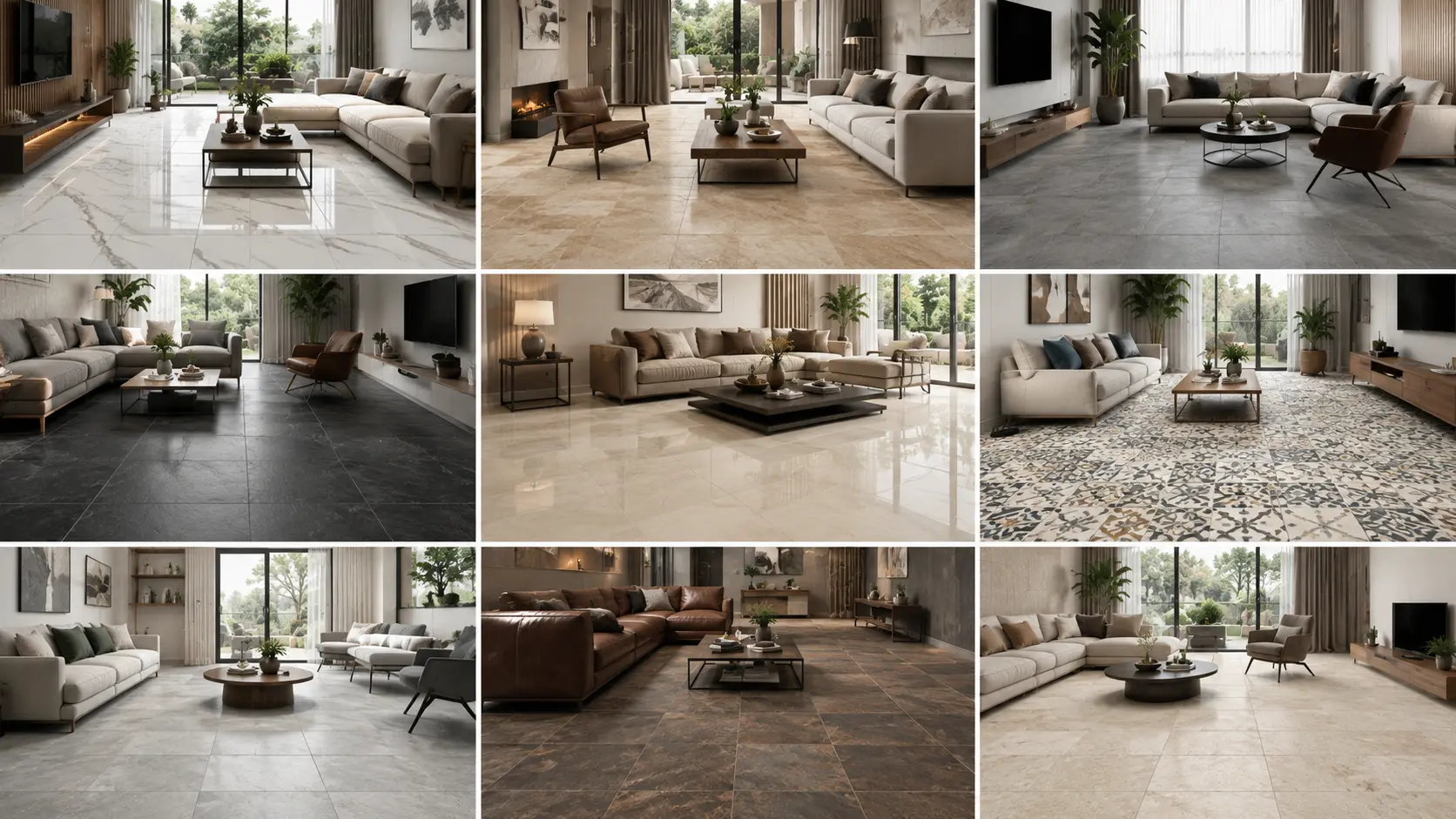
Most people get stuck right here, staring at dozens of finishes with no idea where to start. Below are the directions that consistently work in actual living rooms, not just in glossy showroom displays.
Wood-Look Porcelain Tile
This has quietly become the most requested style for living rooms over the last few years, and honestly, it’s not hard to see why. You get the warmth and grain of real hardwood without the upkeep that comes with it, no refinishing, no worrying about water damage near the patio door.
Most planks ship in long, narrow formats meant to mimic oak, walnut, or weathered barnwood. Lay them in a herringbone or brick pattern and the floor picks up a sense of movement, even in a smaller room where you’d expect things to feel flat.
Large-Format Tile for an Open, Seamless Look
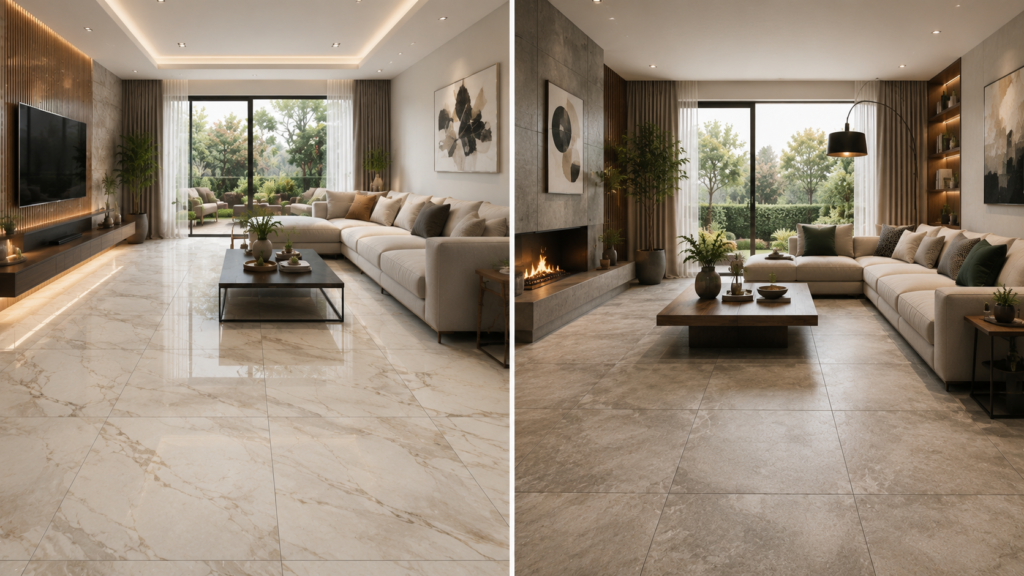
Go big, and the grout lines practically disappear. Tiles in the 24×24-inch range or larger cut down on seams across the floor, which means less visual noise and a cleaner, more contemporary feel overall, especially useful in open-concept homes where the living room flows straight into the kitchen.
There’s a side benefit too: fewer seams trick the eye into reading the room as bigger than it actually is.
Stone-Effect Tile for a Timeless Feel
Travertine, marble, slate, this category brings an almost architectural quality to a living room that’s hard to fake with anything else. It pairs naturally with neutral furniture, a leather sofa, maybe some brass or bronze accents scattered around.
What it doesn’t bring is the maintenance headache of actual stone. No sealing schedule, no polishing routine, just the look without the chores.
Patterned and Geometric Tile for a Statement Floor
Want the floor to do some of the talking? This is the route. Moroccan-style motifs, hexagons, bold geometric prints, all of it works especially well when the walls and furniture stay simple.
Here’s the rule worth remembering: let the floor be loud only if everything else stays quiet. Mix a patterned floor with patterned curtains or a busy accent wall, and the room starts looking cluttered fast rather than intentional.
Choosing the Right Tile Color and Tone
Color shapes how a room feels far more than most people expect before they walk into a showroom. Light tiles bounce natural light around and open the space up. Darker tones do the opposite, grounding the room and adding a sense of warmth.
A quick way to match tone with goal:
- Light gray or beige tile – best for small or dim living rooms that need extra brightness
- Warm wood-tone tile – best for cozy, traditional, or farmhouse-style spaces
- Dark charcoal or black tile – best for modern, dramatic, or industrial-style rooms
- Off-white or cream tile – best for coastal, minimalist, or Scandinavian-inspired interiors
- Terracotta or rust-toned tile – best for Mediterranean or sun-washed, earthy aesthetics
Tile Layout Patterns That Change the Whole Room
The pattern matters almost as much as the tile you choose. Herringbone adds energy and pulls the eye down the length of a room, which works in your favor if the living room runs long and narrow.
A straight-lay or grid pattern feels calmer and more orderly, fitting well in minimalist or transitional homes. Diagonal layouts, meanwhile, soften hard corners and can make a boxy square room feel a little less rigid.
Comparing Tile to Other Common Living Room Flooring Options
| Flooring Type | Durability | Maintenance | Comfort Underfoot | Average Lifespan |
| Porcelain Tile | Very High | Low | Moderate (with heating) | 25+ years |
| Hardwood | Moderate | Moderate to High | High | 20–30 years |
| Laminate | Moderate | Low | Moderate | 10–20 years |
| Vinyl Plank | High | Low | High | 10–20 years |
Tile wins on durability and long-term value almost every time, even though the upfront installation cost usually runs higher than vinyl or laminate.
Practical Tips Before You Install Tile Flooring
A handful of decisions made before installation day can save real money and frustration down the line. Order 10 to 15 percent more tile than your measured square footage; you’ll need the extra for cuts, mistakes, and future repairs you can’t predict yet.
Don’t skip the underlayment, especially over a concrete subfloor; it cuts down on noise and makes a noticeable difference in comfort. And talk to your installer about grout color before work starts. Darker grout hides everyday dirt far better in a high-traffic living room than anyone expects.
Final Thoughts
A floor does more work than most people give it credit for. It anchors the furniture, ties the color palette together, and sets the overall mood of a room whether anyone notices it consciously or not. Whether you lean toward wood-look porcelain, an oversized slab tile, or something bold and patterned, the right tile flooring ideas for living room spaces can take a tired room and make it feel finished. Just sample a few tiles in your actual lighting before deciding, since colors shift more than people expect between a showroom and your own living room.
FAQs
Is tile flooring good for a living room?
Yes. Tile is durable, easy to clean, and holds up to scratches and moisture far better than hardwood or laminate. With proper underlayment, it stays comfortable underfoot year-round too.
What is the most popular tile style for living rooms right now?
Wood-look porcelain tile leads the pack right now. It delivers the warmth of real hardwood with far less maintenance and much better resistance to scratches, water, and fading over time.
Does tile flooring make a living room feel cold?
It can, without insulation. But adding rugs, radiant floor heating, or a solid underlayment solves the issue almost completely, even making tile a comfortable option in colder climates.
How much does tile flooring cost for a living room?
Most homeowners spend $5 to $15 per square foot installed, depending on the tile type and size. Porcelain and large-format tiles generally land on the higher end of that range.