Cottagecore Living Room Ideas For 2026
The first cottagecore living room I ever designed belonged to a client who handed me a single photograph: her grandmother’s parlor in the Cotswolds, all faded chintz and honey-colored oak. “Make it feel like this,” she said. That brief taught me something I now tell every client — the best cottagecore living room ideas are never about buying a look. They are about layering comfort, memory, and nature until a room feels like it has always existed.
After more than a decade designing cottage style living rooms across city apartments and countryside homes alike, I can promise you this aesthetic is far more forgiving than the glossy magazine spreads suggest. You do not need exposed beams or a thatched roof. You need warm neutral decor, honest materials, a few genuinely old things, and the confidence to let a room look lived-in.
In this guide, I am walking you through everything I use in real projects: English cottage living room formulas, moody dark cottagecore living room ideas, playful ACNH-inspired schemes, color palettes, furniture choices, and the budget tricks that make the whole cottage aesthetic achievable on almost any spending plan.
What Are the Best Cottagecore Living Room Ideas?
The best cottagecore living room ideas combine warm neutral walls, vintage furniture, and floral or gingham textiles with natural wood, woven baskets, and abundant greenery. Add a cozy reading nook, handmade accessories, and soft layered lighting to create the nostalgic, nature-inspired comfort that defines the cottagecore aesthetic.
What Is Cottagecore Interior Design?
Cottagecore interior design is a nostalgic, nature-rooted style that romanticizes simple rural living. Picture an English countryside cottage: floral upholstery, natural wood furniture, handmade pottery, dried flowers, and rooms arranged for conversation and slow afternoons rather than screens. It borrows freely from vintage cottage decor, shabby chic, and traditional farmhouse styles, but softens all of them with a storybook quality.
What separates a true cottagecore home from a generic “cozy” room is intention. Every piece should feel like it was gathered over time — an inherited armchair, a flea-market landscape painting, a quilt someone actually stitched. Perfection is the enemy here. A slightly crooked lampshade or a chipped enamel pitcher adds more character than anything you could order new.
Why Cottagecore Living Rooms Are Trending
The style surged when people began spending more time at home and craving comfort over minimalism, and it has never really let go. Social platforms accelerated it — cottagecore content thrives on Pinterest and TikTok — while games like Animal Crossing: New Horizons introduced an entire generation to cottage aesthetics through virtual decorating. In 2026, the trend has matured: designers now treat cottagecore as a legitimate design language rather than an internet moment, blending it with modern layouts, better lighting, and more sustainable, handcrafted decor.
Essential Cottagecore Design Principles
Before you buy a single cushion, internalize the principles. These are the rules I check every cottagecore project against:
- Nature first: bring the garden indoors through indoor plants, botanical home wall, dried flowers, and organic materials like wood, stone, rattan, and clay.
- Softness everywhere: layered textiles — quilts, knitted throws, linen curtains, ruffled cushions — make the room feel embraced rather than decorated.
- Vintage over new: antique decor and secondhand furniture carry the patina that new pieces cannot fake.
- Warm, muted color: an earthy color palette of creams, sages, dusty roses, and browns keeps the space calm and timeless.
- Handmade touches: crochet, embroidery, hand-thrown ceramics, and DIY projects give the room soul.
- Comfort as the layout goal: arrange seating for reading, tea, and conversation — not around a television.
Notice what is missing: chrome, high-gloss finishes, stark white walls, and anything that photographs better than it lives. Cottagecore rewards rooms you can sink into.
Cottagecore vs. Farmhouse Style: What Actually Differs
| Element | Cottagecore | Rustic Farmhouse |
|---|---|---|
| Overall mood | Romantic, whimsical, storybook | Practical, rugged, utilitarian |
| Color palette | Soft pastels, sage, cream, dusty rose | Black, white, warm greige, barn red |
| Patterns | Florals, gingham, toile, botanicals | Buffalo check, stripes, minimal pattern |
| Furniture | Curved, vintage, slipcovered, painted | Straight-lined, chunky, raw wood |
| Signature decor | Dried flowers, teacups, embroidery | Signs, galvanized metal, shiplap |
| Best for | Dreamy, layered, personal rooms | Clean, family-proof, casual rooms |
Cottagecore Living Room Styles to Know
Cottagecore is a family of looks, not one formula. These four directions cover almost every client request I receive.
English Cottage Living Rooms
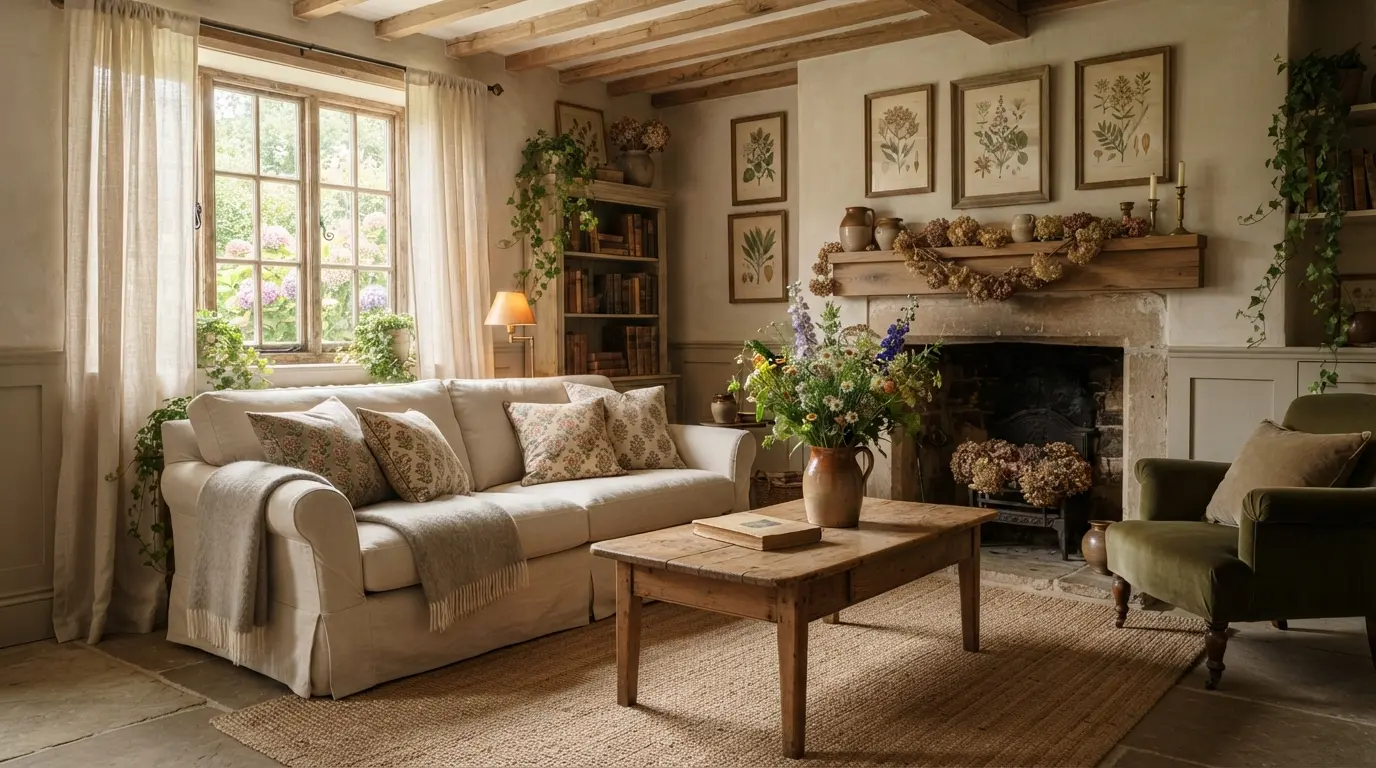
The original and, to my eye, still the most livable. An english cottage living room leans on chintz florals, skirted sofas, needlepoint cushions, and walls in warm cream or soft sage. Layer a worn Persian-style rug over wood floors, hang small gilt-framed landscapes in a loose cluster, and keep a tea tray permanently staged on the coffee table. The trick is density — English cottage rooms are collected, never sparse, but every object earns its place.
Modern Cottagecore Living Rooms
For clients who love the warmth but fear the clutter, modern cottagecore edits the look. Keep the linen slipcovers, natural wood furniture, and botanical prints, but simplify: fewer patterns, larger-scale florals, cleaner-lined sofas, and generous negative space. Warm neutral decor does the heavy lifting — oatmeal, mushroom, and clay tones — while one or two vintage statement pieces supply the nostalgia. This version photographs beautifully and suits open-plan homes.
Dark Cottagecore Living Room Ideas
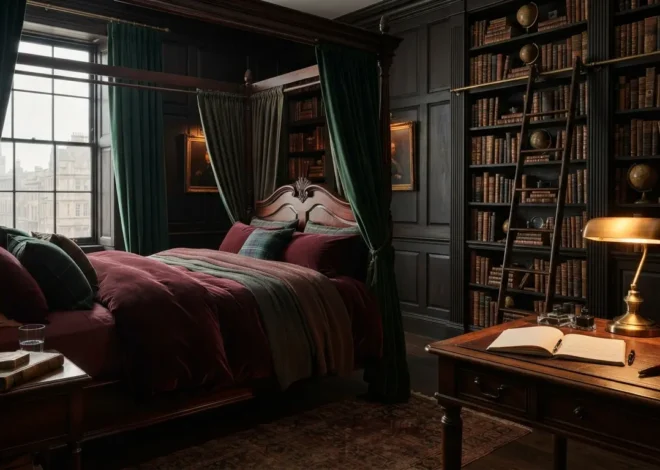
Dark cottagecore living room ideas trade the sunlit meadow for the forest at dusk — and the results are spectacular. Start with a deep, earthy wall color: forest green, aubergine, charcoal brown, or inky teal. Against it, layer aged brass candlesticks, moody oil paintings, dark floral fabrics, and plenty of candlelight. Woodland cottage decor — mushroom motifs, ferns, antlered silhouettes, pressed leaves — feels at home here.
The rule that keeps dark cottagecore romantic rather than gloomy is contrast: cream lampshades, unbleached linen, and warm 2700K bulbs against the dark envelope. I often paint the ceiling the same shade as the walls in these rooms; it wraps the space like a cloak and makes evening light glow.
ACNH Cottagecore Living Room Inspiration
Do not laugh — some of my favorite briefs began as screenshots. Searches for acnh living room ideas cottagecore exploded because Animal Crossing: New Horizons nails the fundamentals: log-frame furniture, patchwork rugs, potted plants in every corner, and a fireplace as the focal point. To translate the game into a real room, pick honey-toned wood furniture with visible grain, add a patchwork or braided rug, cluster potted herbs and flowers on windowsills, and choose simple gingham or ditsy-floral cushions. The result is cheerful, rounded, and instantly recognizable to anyone who has played.
Choosing the Right Cottagecore Color Palette
Color is where most cottagecore living rooms succeed or fail. The goal is an earthy color palette that looks pulled from a garden in late summer: nothing too bright, nothing too gray. I build palettes in three layers — a warm neutral base for walls and large furniture, one or two nature-drawn mid tones, and small doses of deeper accent color in cushions, art, and ceramics.
Undertones matter more than the color name. Choose creams with yellow warmth rather than stark whites, and greens that lean gray-sage rather than lime. If a swatch would look at home on a vintage seed packet, it will work.
Cottagecore Color Palette Guide
| Palette Role | Best Colors | Where to Use It | Mood Created |
|---|---|---|---|
| Base (60%) | Cream, ivory, warm oatmeal, pale sage | Walls, sofa, curtains | Soft, sunlit, calm |
| Mid tones (30%) | Sage green, dusty rose, butter yellow, faded blue | Armchairs, rugs, cushions | Garden-fresh warmth |
| Accents (10%) | Terracotta, mustard, berry, walnut brown | Ceramics, art, throws | Depth and nostalgia |
| Dark cottagecore base | Forest green, aubergine, charcoal brown | Walls, built-ins | Moody, enveloping |
| Grounding neutrals | Honey oak, jute, unbleached linen | Floors, baskets, wood furniture | Organic, timeless |
Cottagecore Furniture: Vintage, Wooden, and Wonderfully Cozy
Furniture carries the story in a cottage style living room. My sourcing order is always the same: family pieces first, then antique shops and estate sales, then quality new pieces with honest materials. A room furnished entirely from one catalog will never feel like a cottage.
Vintage Furniture and Antique Decor Pieces
Hunt for pieces with visible history: a spool-leg side table, a painted pine dresser, a caned bergère chair, a trunk that becomes a coffee table. Antique decor accessories — brass candlesticks, transferware plates, mantel clocks, silver-framed mirrors gone softly cloudy — cost surprisingly little at flea markets and do more for atmosphere than any new purchase. Check joints and smell for must before buying; wobble is fixable, rot is not.
Wooden Furniture That Anchors the Room
Natural wood furniture in honey, oak, and walnut tones grounds all the softness around it. Mix wood tones deliberately — two to three finishes look collected, five look chaotic. Waxed and matte finishes always beat high gloss in this aesthetic, and turned legs, carved aprons, and plank tops beat flat-pack minimalism every time.
Choosing a Cozy Sofa
The sofa sets the comfort level for the whole room. I steer clients toward slipcovered linen or cotton sofas with soft, sink-in cushions — skirted bases feel traditional, while English roll arms suit nearly every cottage direction. Washable slipcovers in cream or oatmeal are the practical hero: they survive children, dogs, and tea spills, and a second slipcover lets you shift the room seasonally.
Furniture Material Comparison for Cottagecore Living Rooms
| Material | Look & Feel | Durability | Price Range | Best Use |
|---|---|---|---|---|
| Solid oak | Warm, grainy, heirloom | Excellent (decades) | $$$ | Coffee tables, shelving |
| Painted pine | Soft, romantic, shabby chic | Good with care | $ | Side tables, dressers |
| Rattan & wicker | Light, airy, garden-room | Moderate | $–$$ | Accent chairs, baskets |
| Reclaimed wood | Rustic, characterful | Very good | $$ | Mantels, benches |
| Upholstered linen | Relaxed, breathable | Good (washable covers) | $$–$$$ | Sofas, armchairs |
| Velvet (dark cottagecore) | Rich, moody, plush | Good | $$$ | Accent chairs, cushions |
Floral Patterns, Curtains, Fabrics, and Rugs
Textiles are the fastest route to the cottage aesthetic — and the cheapest to change when you tire of them.
Working With Floral Patterns
Floral living room decor works when you vary the scale. Pair one large, blowsy floral (on curtains or an armchair) with a small ditsy print and a quiet stripe or gingham to rest the eye. Keep all patterns within your palette and repeat each fabric at least twice across the room so the mix reads as intentional. Botanical prints, toile scenes, and faded chintz all belong to the same happy family.
Curtains and Fabrics
Skip heavy blackout panels in the main living space. Sheer or midweight linen curtains, café curtains, and cotton florals let daylight filter the way it does in a real cottage. Hang them high and let them just kiss the floor. Then layer the seating: a knitted throw, a patchwork quilt over the sofa arm, embroidered and ruffled cushions in odd numbers.
Cottagecore Fabric Comparison
| Fabric | Texture & Drape | Care | Best For |
|---|---|---|---|
| Linen | Relaxed, softly crumpled | Machine wash, embrace wrinkles | Curtains, slipcovers |
| Cotton chintz | Crisp, lightly glazed florals | Gentle wash | Armchairs, cushions |
| Gingham cotton | Light, cheerful, structured | Easy machine wash | Café curtains, cushions |
| Wool & knits | Warm, chunky, tactile | Hand wash / dry clean | Throws, winter layers |
| Lace & crochet | Delicate, heirloom | Hand wash | Table runners, panels |
| Velvet | Dense, light-absorbing | Dry clean | Dark cottagecore accents |
Rugs That Soften the Floor
Braided rugs, faded Persian-style rugs, and natural jute are the three cottagecore staples. Jute grounds the room with texture; a worn floral or Persian rug layered on top adds color and instant age. Size up — the front legs of every seating piece should land on the rug, or the room will feel like furniture floating on a pond.
Walls, Plants, and Handmade Details
Cottagecore Wall Decor and Vintage Wall Art
Think gallery-of-a-life rather than gallery wall. Mix small oil landscapes, botanical plates, embroidery hoops, pressed-flower frames, and a timeworn mirror in varied vintage wall art frames — gilt, dark wood, painted. Hang pieces slightly lower and closer together than modern convention suggests; cottage walls feel gathered, not curated. Plate rails, hanging baskets, and dried flower bundles on hooks all count as wall decor here.
Indoor Plants and Botanical Decorations
A cottagecore living room without greenery is a stage set. Combine living plants — trailing pothos or ivy on shelves, ferns near the window, potted herbs like rosemary on the sill — with botanical decorations that never wilt: dried hydrangeas, bunches of lavender, wildflowers in mismatched jugs and enamel pitchers. Terracotta, aged ceramic, and woven cachepots keep the containers in character. Even three well-placed plants change the oxygen of a room.
Handmade Accessories
Handcrafted decor is the soul of the style: hand-thrown mugs on open shelves, a crocheted blanket, embroidered cushions, beeswax candles, a hand-painted tray. Buy from local makers or craft fairs where you can, or make your own — imperfection is precisely the point. One handmade object per surface is my quiet rule; it keeps the room personal without tipping into craft-fair clutter.
Cozy Corners: Reading Nooks and Fireplace Styling
Creating a Cozy Reading Nook
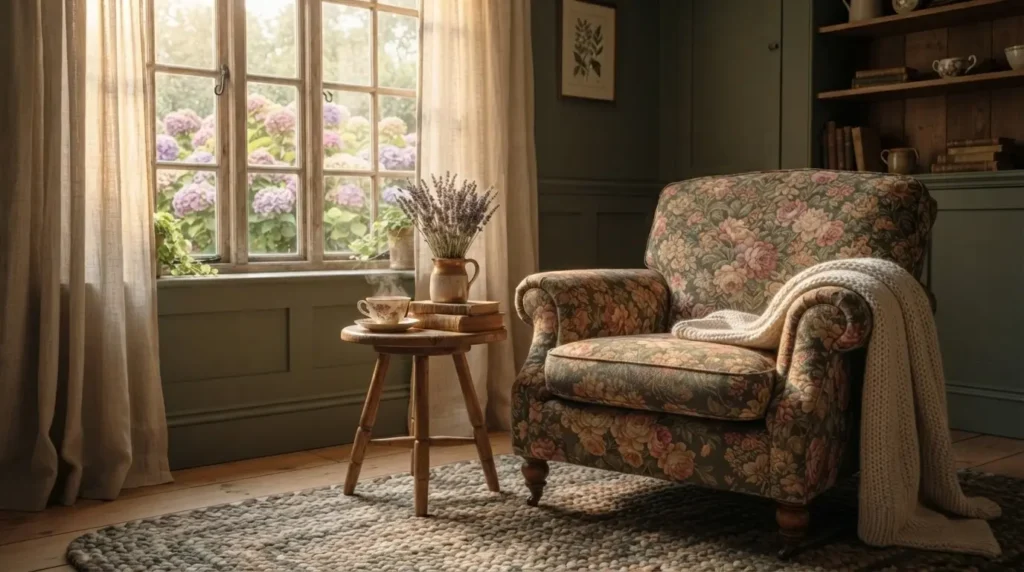
Every cottage living room deserves one selfish corner. A cozy reading nook needs only four things: a genuinely comfortable chair (vintage wingbacks and squashy floral armchairs excel), a side table big enough for tea and a book, a dedicated lamp with a warm fabric shade, and a throw within arm’s reach. Place it by a window if you can. Add a small basket of current reads and the nook will start pulling people in on its own.
Fireplace Styling
If you have a fireplace, it is the heart of the room — point the seating at it, not the television. Style the mantel in loose asymmetry: a leaning landscape painting or mirror, brass or ceramic candlesticks at one end, a jug of dried flowers or seasonal branches at the other. Stack real logs in or beside the hearth even if the fire rarely burns. No fireplace? A vintage sideboard styled the same way, or a cluster of pillar candles on a stone slab, delivers a convincing focal point.
Storage Ideas and Small Cottagecore Living Rooms
Storage That Belongs in a Cottage
Cottagecore storage hides modern clutter inside beautiful vessels. Lidded wicker baskets swallow remotes and cables; a vintage trunk coffee table stores blankets; a painted armoire or glass-front hutch displays the pretty things and conceals the rest. Open shelving works when you style it as display — books, ceramics, small plants — and keep the truly practical items behind doors.
Small Cottagecore Living Rooms
Small rooms and cottagecore are natural allies — the style was born in tiny cottages. Keep walls light (cream or pale sage), choose a loveseat plus one armchair instead of a bulky sectional, and go vertical: wall shelves, tall curtains, hanging plants. One large rug beats several small ones, and a well-placed vintage mirror opposite the window doubles the daylight. Let one wall or corner hold the density of pattern and keep the rest breathing.
Cottagecore Living Room Layout Ideas by Room Size
| Room Size | Seating Formula | Focal Point | Space-Saving Trick |
|---|---|---|---|
| Small (under 15 m²) | Loveseat + 1 armchair | Window or mirror wall | Trunk coffee table with storage |
| Medium (15–25 m²) | Sofa + 2 armchairs | Fireplace or hearth-style console | Nesting side tables |
| Large (25 m²+) | Sofa + armchairs + window seat | Fireplace + reading nook zone | Rug-defined zones |
| Open plan | Sofa floating mid-room | Sofa-back console with lamps | Bookcase as room divider |
Budget-Friendly Cottagecore Living Room Ideas and DIY Projects
Here is the honest secret of this style: money helps less than patience. Cottagecore actively favors the secondhand, the handmade, and the imperfect, which makes it one of the most budget-friendly aesthetics in interior design.
- Thrift and estate-sale first: sofas can be slipcovered, wood can be waxed, frames can be repainted.
- Swap hardware and lampshades: pleated fabric shades and brass knobs transform bland pieces instantly.
- Forage your decor: branches, wildflowers, pinecones, and pressed leaves cost nothing.
- Sew simple things: café curtains, cushion covers, and table runners are beginner-level projects.
- Paint strategically: one sage or cream feature wall delivers more mood per dollar than any purchase.
DIY Cottagecore Decor Projects Worth Your Weekend
- Pressed-flower frames: press garden flowers between book pages for two weeks, then mount on cream card in thrifted frames.
- Dried flower bundles: hang hydrangeas, lavender, or wheat upside down for three weeks; display in jugs or on the mantel.
- Hand-stitched cushion covers: simple envelope-back covers in gingham or floral cotton need only straight seams.
- Painted furniture rescue: sand lightly, apply chalk paint in a muted tone, and distress the edges for instant shabby chic charm.
- Beeswax candle pouring: melt, scent lightly with lavender, and pour into vintage teacups for gift-worthy decor.
Budget vs. Luxury Cottagecore Decor Choices
| Element | Budget Route | Luxury Route | Design Impact |
|---|---|---|---|
| Sofa | Thrifted + washable linen slipcover | Custom English roll-arm in Belgian linen | High either way |
| Rug | Jute + secondhand floral layer | Antique Persian wool rug | High |
| Wall art | Thrifted landscapes, pressed flowers | Original antique oil paintings | Medium–high |
| Curtains | DIY café curtains in gingham | Interlined floral linen drapery | Medium |
| Lighting | Rewired vintage lamps, warm bulbs | Aged-brass picture lights & sconces | High |
| Accessories | Flea-market ceramics & baskets | Artisan pottery & heirloom quilts | Medium–high |
Seasonal Cottage Styling and 2026 Trends
Styling Through the Seasons
Cottagecore is meant to move with the year. In spring, bring in fresh blossom branches, lighter linen throws, and pastel cushion covers. Summer calls for wildflower jugs, bare wood floors, and sheer curtains billowing. Autumn earns the deep layers — wool throws, amber candlelight, wheat and dried leaves on the mantel. Winter is dark cottagecore’s season: heavier plaids, evergreen boughs, and candles everywhere. Rotating a single storage basket of seasonal textiles keeps this effortless.
Cottagecore Trends for 2026
This year the style is deepening rather than fading. I am seeing five clear movements in client requests and showrooms: richer dark cottagecore palettes replacing all-cream schemes; a shift from mass-produced “vintage style” to genuinely secondhand and antique sourcing; handcrafted decor from small makers as the new status symbol; quiet tech integration, with speakers and screens hidden inside cabinets and baskets; and a merge with biophilic design — more living plants, natural light, and unpainted wood than ever. The direction is clear: more authenticity, less costume.
Expert Decorating Tips for a Cottagecore Living Room
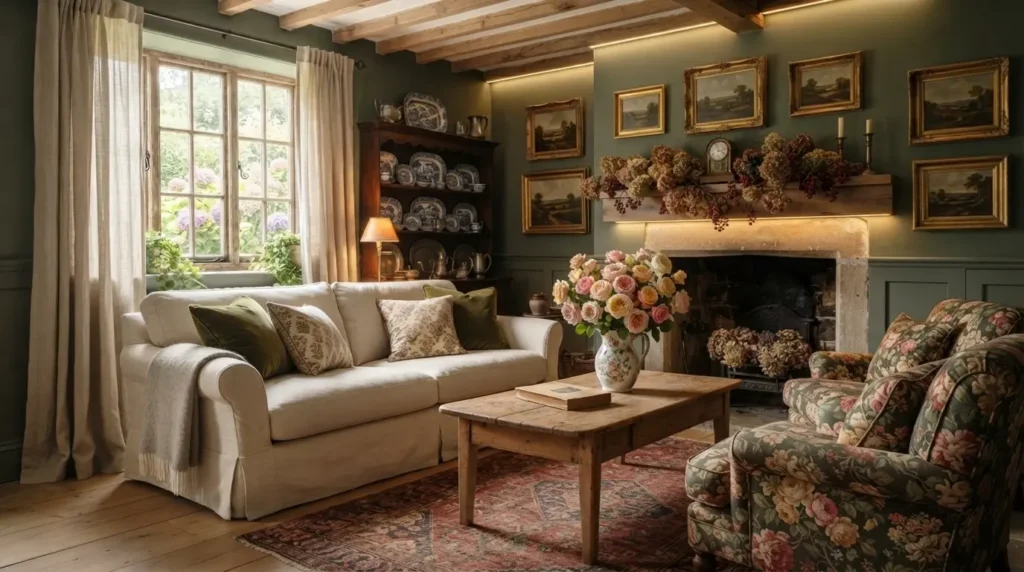
- Light in layers, never from the ceiling alone: three to five warm light sources at different heights — lamps, sconces, candles — create the glow this style depends on.
- Repeat every color and fabric at least twice so the room reads as composed rather than random.
- Age is a material: choose one genuinely old anchor piece per room and let newer items orbit it.
- Follow the 60/30/10 palette rule, then break it once — a single unexpected berry or mustard note keeps the scheme alive.
- Style surfaces in odd-numbered groups of three heights: something tall (jug of stems), something mid (stack of books), something small (ceramic dish).
- Leave evidence of life: an open book, a folded throw, a tea tray. Cottagecore rooms should look ten minutes from being used.
Common Cottagecore Decorating Mistakes
- Buying the whole look new: matching mass-market “cottage” sets read as costume; patina cannot be shipped in a flat pack.
- Pattern without a palette: florals, gingham, and toile only harmonize when they share the same muted color family.
- Cool white lighting: 4000K+ bulbs kill the warmth instantly — stay at 2700K or lower.
- Clutter mistaken for coziness: collected is curated; keep 20% of every surface empty.
- Ignoring scale: miniature rugs and undersized art make even charming pieces feel lost.
- Faux everything: one silk flower stem passes; a room of artificial plants and printed “vintage” art undermines the entire aesthetic
Conclusion
The best cottagecore living room ideas all lead to the same destination: a room that comforts you the moment you cross the threshold. Start with a warm, earthy palette and honest materials. Add one genuinely old piece, textiles you want to touch, plants you will actually water, and light that glows instead of glares. Whether you lean toward sunlit English florals, moody dark cottagecore, or a cheerful ACNH-inspired scheme, build slowly and personally — gathered over time is the entire point. Your living room should not look like a trend. It should feel like coming home to a story that was always yours.
Frequently Asked Questions
Q: How do I start a cottagecore living room on a small budget?
Begin with paint and light: a warm cream or sage wall color and 2700K bulbs transform the mood for very little money. Then shop secondhand for one wooden anchor piece and layer thrifted floral textiles, baskets, and jugs of foraged flowers. Slipcovers and DIY café curtains finish the look without new furniture.
Q: What colors make a living room feel cottagecore?
Warm creams, soft sage greens, dusty rose, butter yellow, and faded blues form the classic base, grounded by honey and walnut wood tones. For dark cottagecore living room ideas, switch the base to forest green, aubergine, or charcoal brown and balance it with cream linen and candlelight. Avoid stark white and cool grays, which drain the warmth.
Q: How can I recreate an ACNH cottagecore living room in real life?
Translate the game’s furniture logic: honey-toned log-style wood pieces, a patchwork or braided rug, and a fireplace or hearth-style focal point. Add potted plants and herbs in every corner, gingham and ditsy-floral cushions, and simple open shelving with ceramics. Keep colors cheerful and rounded shapes dominant, and the room will feel unmistakably Animal Crossing.
Q: What is the difference between cottagecore and shabby chic?
Shabby chic is one ingredient inside the broader cottagecore pantry. It focuses on distressed painted furniture, whites, and romantic ruffles, while cottagecore embraces a wider natural world: earthy greens, botanical decor, handmade crafts, and rustic wood alongside the painted pieces. Most successful cottage style living rooms borrow shabby chic touches without committing to its all-white palette.