Abstract Metal Wall Decor: A Designer’s Guide for 2026
D you know about abstract metal wall Decor? Blank walls are the design problem I get asked about more than any other, and abstract metal wall decor is the fix I recommend most often. It adds structure, shadow, and personality to a room without forcing you into a full makeover, and it works in almost every interior style I’ve decorated over the past decade.
What separates metal wall art from a framed print is dimension. A brushed steel or matte black piece sits off the wall, so light moves across it through the day and the artwork never looks quite the same twice. That constant, subtle change is why designers keep reaching for it.
This guide covers what I tell my own clients: which styles and finishes are worth your money, how to size a piece correctly, where to hang it room by room, and the buying mistakes that quietly cheapen a beautiful wall.
What Is Abstract Metal Wall Decor?
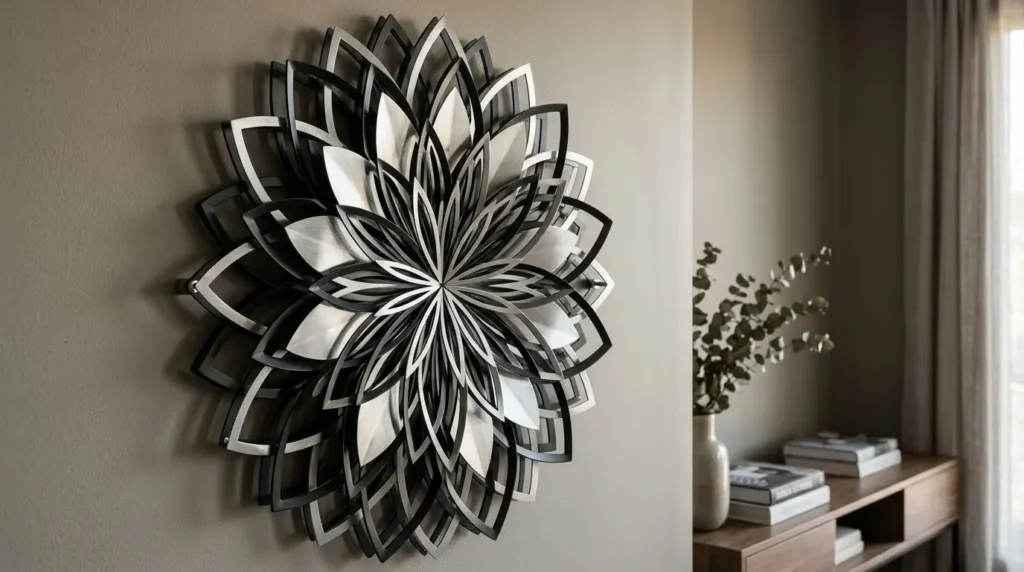
Abstract metal wall decor is non-representational wall art made from metals such as steel, aluminum, iron, copper, or brass. Instead of depicting a recognizable scene, the piece relies on shape, texture, negative space, and finish to create visual interest. Makers cut, weld, bend, and layer the metal into geometric patterns, flowing organic forms, or minimalist line compositions.
The category is broad. It runs from a small 24-inch accent panel beside a mirror to oversized metal wall decor spanning eight feet above a sectional. Some pieces are flat laser-cut silhouettes; others are true decorative metal wall sculptures with two or three inches of depth that throw real shadows.
That depth is the point. Where canvas art gives you color, metal gives you light behavior — reflections on brushed silver, soft absorption on matte black, warm glow on aged brass. You’re decorating with the room’s own lighting, not just pigment.
Why Metal Wall Art Dominates Modern Interiors
Ask ten interior designers why they specify metal wall art so often and you’ll hear the same handful of answers. The material solves several decorating problems at once:
- It survives real life. Metal doesn’t fade in sunlight, warp in humidity, or tear. A powder-coated piece looks the same in year eight as it did on day one, which makes it one of the few art categories safe for bathrooms, kitchens, and covered patios.
- It adds texture without clutter. Modern and minimalist rooms often feel flat because every surface is smooth. One sculptural piece introduces contrast without adding a single extra object to the room.
- It scales beautifully. Because most pieces are visually ‘light’ — full of negative space — you can go much larger than you could with a solid canvas without overwhelming the wall.
- It bridges styles. The same black metal wall decor piece can read industrial over a leather sofa, Scandinavian over pale oak, or luxury over marble. Few decor categories are that flexible.
There’s also a practical reason for its popularity: weight. Most aluminum and thin-gauge steel pieces weigh less than a framed mirror of the same size, so hanging them rarely requires professional installation.
Popular Styles of Abstract Metal Wall Decor
Geometric Metal Wall Art
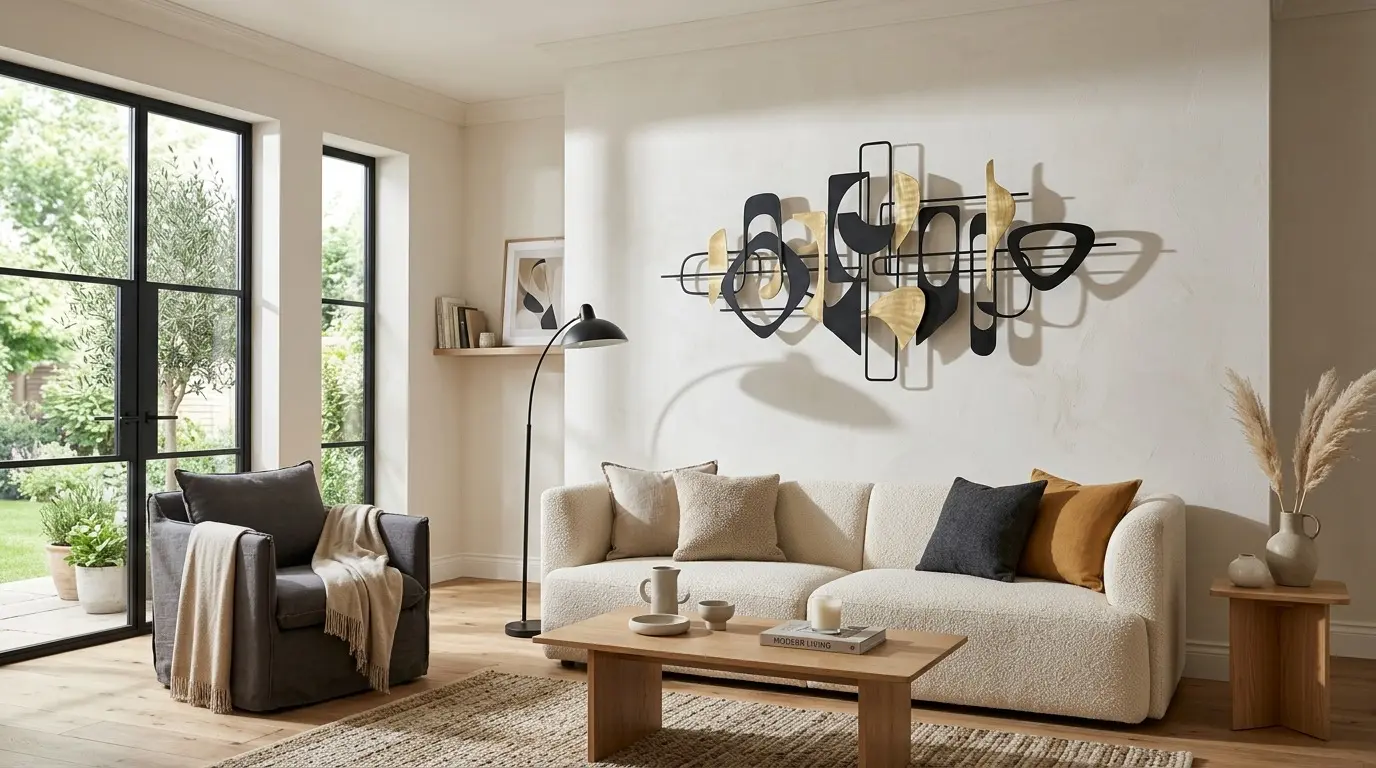
Repeating shapes — hexagons, overlapping circles, angular starbursts — give a room order and rhythm. Geometric metal wall art suits contemporary and mid-century spaces and pairs especially well with clean-lined furniture. Matte black geometric pieces are the safest first purchase in the entire category.
Organic and Fluid Forms
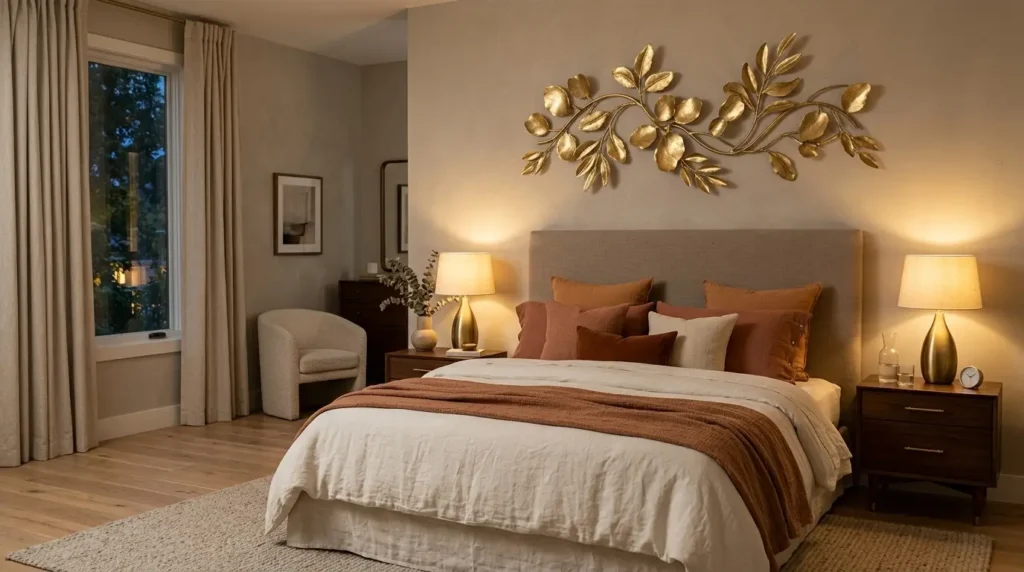
Think wind-swept ribbons, wave patterns, botanical silhouettes, and ginkgo-leaf clusters. These soften rooms that feel too rigid and work beautifully in bedrooms, where hard angles can feel cold. Gold and copper finishes dominate this style.
Minimalist Line Art
A single continuous line bent into a face, a figure, or pure abstraction. Minimalist wall art in thin black metal suits small walls, hallways, and offices, and it’s usually the most affordable entry point into contemporary wall art.
Layered 3D Sculptures
Multiple sheets of metal stacked at different depths, often mixing two finishes. These are the statement makers — the pieces guests comment on. They need side lighting to earn their price, so plan placement before you buy.
Finish Comparison
| Finish | Look & Feel | Works Best In | Care Level |
|---|---|---|---|
| Matte Black | Bold, graphic, modern; absorbs light | Contemporary, industrial, minimalist rooms | Very low — occasional dusting |
| Brushed Silver / Steel | Cool, sleek, reflective | Offices, kitchens, modern living rooms | Low — microfiber wipe |
| Gold / Brass | Warm, luxurious, glamorous | Luxury wall decor schemes, bedrooms, dining rooms | Medium — avoid abrasive cleaners |
| Copper / Rust Patina | Earthy, artisanal, warm | Boho, rustic, farmhouse interiors | Medium — patina evolves over time |
| Powder-Coated Color | Playful, durable, uniform | Kids’ spaces, patios, eclectic rooms | Very low — weather resistant |
Choosing the Right Size for Abstract Metal Wall Decor
Undersized art is the most common mistake I see in client homes. A 24-inch piece floating over a 90-inch sofa looks like an afterthought no matter how beautiful it is. Two rules prevent this:
- The two-thirds rule. Art hung above furniture should span two-thirds to three-quarters of the furniture’s width. Above a 72-inch sofa, aim for a piece (or grouping) 48 to 54 inches wide.
- The 57-inch rule. On an open wall, the center of the artwork should sit 57 to 60 inches from the floor — standing eye level. Resist the urge to hang higher; it’s the fastest way to make a ceiling feel low.
Because metal wall art contains so much negative space, you can safely size up. When in doubt between two sizes, buy the larger one.
Size Selection Guide
| Location | Recommended Art Width | Suggested Format |
|---|---|---|
| Above a standard 72″ sofa | 48″–54″ | Single wide piece or 3-panel set |
| Above a queen bed headboard | 40″–50″ | Horizontal organic form |
| Above a fireplace mantel | 60–80% of mantel width | Round or square sculpture |
| Entryway / console table | 30″–40″ | Vertical or round piece |
| Large open wall (10 ft+) | 60″+ | Oversized metal wall decor or gallery grouping |
| Hallway or small nook | 18″–30″ | Minimalist line art |
Best Rooms and Placement Ideas
Living Room
The wall above the sofa is prime territory, but don’t ignore the wall facing it — a sculptural piece opposite the seating gives everyone something to look at. In open-plan spaces, a large piece can visually define the lounge zone without a single wall being built.
Bedroom
Above the headboard, choose organic, flowing shapes in soft gold or bronze rather than sharp geometry. Keep at least 8 to 10 inches of clearance above the headboard so the piece feels connected to the bed, not floating away from it.
Entryway
First impressions happen here. A round metal medallion or sunburst above a console table works like functional jewelry for the home — and unlike a mirror, it never shows fingerprints.
Dining Room
Metal art shines near a chandelier or pendant lights because the reflections shift as people move around the table. Warm brass finishes flatter food and skin tones better than cool silver here.
Home Office
A geometric piece behind your desk chair upgrades every video call background instantly. Matte finishes prevent glare on camera.
Quick placement rules I give every client:
- Leave 6–10 inches between the top of furniture and the bottom of the artwork.
- Light the piece from the side, not head-on, to maximize shadow depth.
- On dark walls, choose gold, silver, or copper; on light walls, matte black delivers the strongest contrast.
- Never center a piece on the wall if the furniture below is off-center — center it on the furniture instead.
Color Combinations That Always Work
Metal finishes behave like neutrals, but each has natural allies:
- Matte black + white walls, warm wood, and one saturated accent (rust, olive, or mustard).
- Brushed silver + cool greys, navy, glass, and crisp white for a polished modern scheme.
- Gold and brass + emerald green, deep teal, cream, and velvet textures for a luxury look.
- Copper + terracotta, sage, rattan, and linen in earthy, boho-leaning rooms.
One reliable shortcut: repeat the metal finish somewhere else in the room — a lamp base, cabinet hardware, a picture frame. Two touches of the same metal make the artwork look intentional rather than incidental.
Matching Metal Art with Your Interior Style
Modern and contemporary rooms take geometric pieces in black or silver effortlessly. Industrial spaces favor raw steel, visible welds, and rust patinas that echo exposed brick and ductwork. Boho and eclectic interiors respond to hand-hammered copper, sunbursts, and botanical silhouettes layered among woven baskets and macrame.
Transitional homes — the majority of real households — do best with soft geometry in warm metallics, which reads current without clashing against traditional furniture. And in luxury schemes, oversized layered sculptures in mixed gold and black deliver the gallery effect designers charge handsomely to create.
Budget-Friendly Decorating Ideas
Contemporary wall art in metal doesn’t have to strain a decorating budget:
- Buy laser-cut aluminum instead of welded steel , the visual impact is similar at a fraction of the cost and shipping weight.
- Group three small panels into one composition; sets almost always cost less per square foot than single large sculptures.
- Shop end-of-season sales in January and July, when decor retailers clear wall art inventory.
- Check estate sales and secondhand marketplaces,metal art survives previous owners far better than canvas does.
- A can of matte black spray paint can modernize a dated brass piece in an afternoon.
Maintenance and Cleaning Tips
Metal art is nearly maintenance-free, which is half its charm. Keep it that way:
- Dust every few weeks with a dry microfiber cloth or a soft brush for layered pieces.
- For fingerprints on polished finishes, use a barely damp cloth followed immediately by a dry one.
- Never use abrasive pads, ammonia, or bleach — they scratch powder coating and strip lacquer from brass.
- For outdoor pieces, apply a thin coat of clear paste wax once a year to slow weathering.
- Check mounting hardware annually; seasonal humidity changes can loosen drywall anchors.
Common Buying Mistakes to Avoid
- Buying too small. The number one error. Measure your wall and furniture before browsing, not after.
- Ignoring depth. A piece with 3-inch projection may collide with door swings, headboards, or tall lamps.
- Mixing too many metal tones. Two finishes per room is the ceiling; three reads chaotic.
- Forgetting the lighting. A sculptural piece in a dim corner is money wasted — shadows are the product you’re paying for.
- Skipping the weight check. Most pieces are light, but welded steel over 40 inches may need wall studs, not adhesive hooks.
- Choosing trend over architecture. A farmhouse windmill piece will always fight a sleek city apartment, no matter how popular it is online.
Abstract Metal Wall Decor Trends for 2026
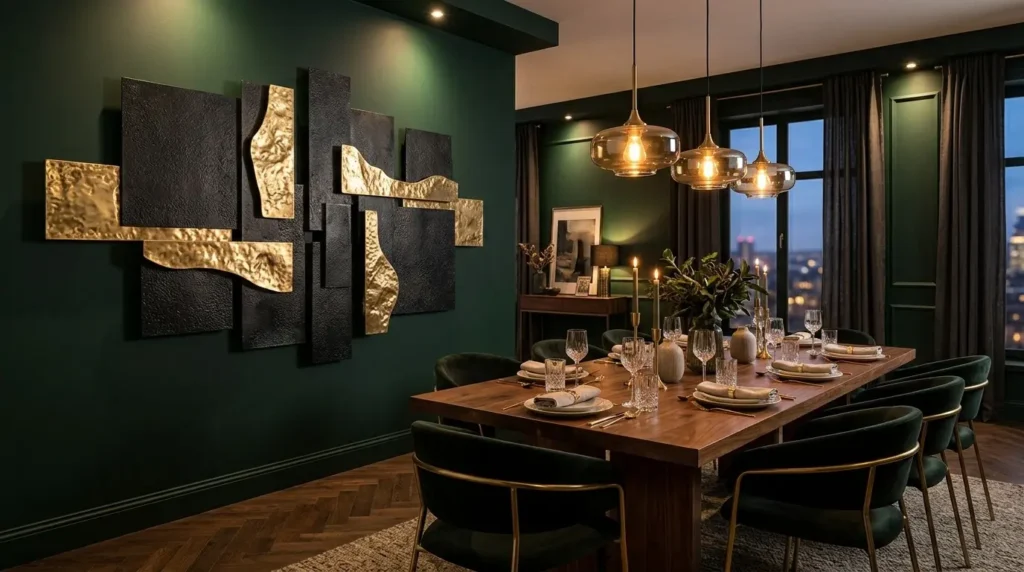
Three shifts are defining the category this year. First, mixed-finish layering — matte black paired with brushed gold in a single sculpture — has moved from custom studios into mainstream retail. Second, oversized single statements are replacing gallery walls; one six-foot piece now does the work that nine framed prints did in 2022.
Third, texture is trending toward the handmade: hammered surfaces, torch-colored steel with blue-and-bronze heat marks, and intentionally irregular edges. Buyers are also asking where and how pieces are made, so brands highlighting recycled aluminum and small-batch fabrication are gaining ground. Warm metallics continue to outsell cool silver, a reversal of the chrome-heavy late 2010s.
Conclusion
Abstract metal wall decor earns its popularity honestly: it’s durable, dimensional, and flexible enough to work in nearly any home. Get the size right, choose a finish that echoes something already in the room, and light the piece from the side so its shadows do the talking.
Start with one well-sized statement rather than several small pieces. A single confident sculpture over the sofa or bed will change how a room feels the moment it goes up — and unlike most decor purchases, metal wall art will still look exactly this good a decade from now.
FAQs
1. Will abstract metal wall decor rust indoors?
No, indoor pieces are almost always powder-coated, lacquered, or made from aluminum, none of which rust in normal household conditions. Even in bathrooms and kitchens, sealed finishes handle humidity without trouble. Only raw, unsealed steel develops rust, and it’s usually sold that way deliberately for the patina look.
2. How do I hang heavy metal wall art safely?
Weigh the piece first; most are under 15 pounds and fine on quality drywall anchors rated for double the weight. Anything heavier should go into wall studs or use a French cleat, which spreads the load and keeps large pieces perfectly level. Always use two mounting points on wide pieces to stop them shifting over time.
3. Can I mix metal wall art with framed prints and canvas?
Yes, and mixed-media gallery walls are among the most designer-looking arrangements you can create. Keep the color story tight, let the metal act as the texture element while prints supply the color. Placing one sculptural metal piece off-center within a grid of frames instantly breaks up the flatness.
4. What size abstract metal wall decor should I buy for above my sofa?
Aim for two-thirds to three-quarters of your sofa’s width — roughly 48 to 54 inches of art above a standard 72-inch sofa. Hang it so there’s a 6-to-10-inch gap above the sofa back, keeping the artwork visually connected to the furniture. If your ideal piece is smaller, flank it with sconces or pair two panels to reach the right total width.