Feng Shui Home Decorating: Room-by-Room Guide for Positive Energy
Walk into a room that simply feels right, and you can usually thank three things: light, order, and flow. Feng shui home decorating is the practice of arranging those three on purpose. After more than a decade of consulting on homes of every size, I can tell you the difference between a house that drains you and one that restores you often comes down to a handful of deliberate choices, not a bigger budget.
This guide walks through every major room in your home, from the entryway to the home office, and shows you exactly where to place furniture, which feng shui colors to use, which plants earn their keep, and which common mistakes quietly block positive energy. Nothing here requires renovation. Most of it you can do this weekend with the furniture and decor you already own.
By the end, you will have a clear, practical feng shui home layout plan and the confidence to apply it without second-guessing every candle and cushion.
What Is Feng Shui, Really?
Feng shui, which translates to wind and water, is a Chinese practice of arranging living spaces to support the smooth flow of chi, or life energy. Strip away the mystique and you find a surprisingly practical design philosophy: clear pathways, balanced proportions, natural materials, good light, and furniture positioned so you feel secure and in control of your space.
Modern designers use feng shui interior design language all the time without naming it. When a stylist tells you to anchor a room, avoid blocking a window, or create a focal point, they are echoing principles that are thousands of years old.
A Brief History of Feng Shui
Feng shui dates back more than 3,000 years to ancient China, where it began as a method for siting homes, farms, and burial grounds in harmony with landforms, waterways, and prevailing winds. Practitioners observed that settlements protected from harsh wind and close to gentle water thrived, and they codified those observations into formal schools of practice.
Two major traditions emerged. The Form School reads the physical landscape and the shapes within a space. The Compass School uses directional energy and tools like the bagua map, an energy grid that divides a home into nine life areas such as wealth, health, and relationships. Contemporary Western feng shui blends both with modern interior design, which is the approach this guide takes.
The Core Principles Behind Feng Shui Home Decorating
Every recommendation in this article traces back to five working principles. Understand these, and you can improvise confidently in any room:
- Chi (energy flow): Energy should move through a home the way a gentle breeze does, never rushing straight through and never stagnating in cluttered corners.
- The commanding position: Beds, desks, and sofas should face the door without being directly in line with it, giving you a clear view of who enters.
- Yin and yang balance: Every room needs both soft, restful elements (yin) and bright, active ones (yang) in proportions that match its purpose.
- The five elements: Wood, fire, earth, metal, and water each carry a distinct energy, and balanced home decor includes all five in some form.
- The bagua map: Overlaying this nine-zone grid on your floor plan tells you which life area each part of the home supports, and which element strengthens it.
Why Feng Shui Home Decorating Improves Daily Life
Skeptics often ask whether feng shui works. Here is the honest answer from years of client work: a home arranged with these principles is measurably easier to live in, whatever you believe about energy. The benefits show up quickly.
A positive energy home is really a low-friction home. When walkways are clear, you stop bruising your shins. When your desk faces the door, you stop startling at every sound behind you. When your bedroom holds fewer screens and softer light, you sleep more deeply. Feng shui simply gives you a coherent system for making dozens of these small decisions consistently.
- Better sleep, because the bedroom is designed for rest rather than stimulation.
- Lower daily stress, because clutter and blocked pathways are systematically removed.
- Sharper focus at home, because the office supports a commanding, distraction-light setup.
- Warmer gatherings, because seating arrangements invite face-to-face conversation.
- A home that photographs and shows beautifully, which matters if you ever sell or rent it.
The Five Elements: Your Feng Shui Decorating Toolkit
The five elements are the working vocabulary of feng shui decorating ideas. Each element expresses itself through specific colors, shapes, and materials, and each supports a different quality of life. A room that feels off usually has too much of one element and none of another; a room that feels complete usually carries a little of all five.
Use the table below as a quick-reference card whenever you decorate. If a space feels sluggish, add wood or fire. If it feels chaotic, add earth or metal. If it feels rigid, introduce water.
| Element | Energy It Brings | Colors | Shapes | Easy Decor Examples |
|---|---|---|---|---|
| Wood | Growth, vitality, new beginnings | Green, teal | Tall, columnar | Houseplants, wooden furniture, striped textiles |
| Fire | Passion, visibility, warmth | Red, orange, strong pink | Triangular, pointed | Candles, lamps, artwork with warm tones |
| Earth | Stability, nourishment, calm | Terracotta, sand, soft yellow | Square, flat | Ceramics, clay pots, low square ottomans |
| Metal | Clarity, precision, order | White, grey, metallics | Round, spherical | Brass frames, round mirrors, metal lamps |
| Water | Flow, wisdom, connection | Black, deep navy | Wavy, irregular | Small fountains, wavy-patterned rugs, art of water |
Table 1. The five feng shui elements with the colors, shapes, and decor that express each one.
Best Feng Shui Colors for Every Room
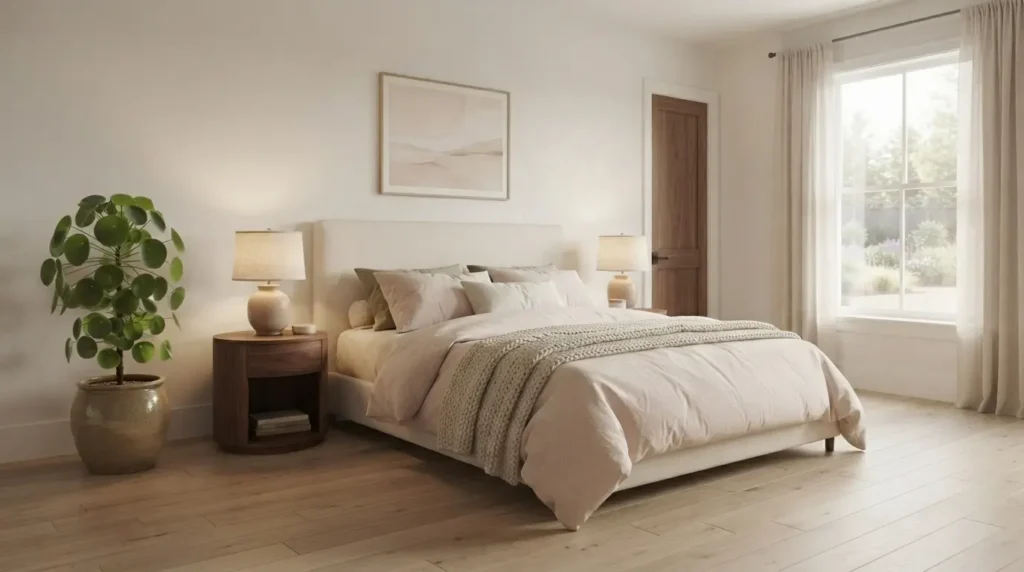
Color is the fastest, cheapest feng shui tool you own. A gallon of paint or a new set of cushions can shift the entire energy of a room in an afternoon. The rule of thumb: match the color to the room’s job. Restful rooms lean into muted, earthy, yin tones; active rooms can carry brighter, yang accents.
Avoid painting whole rooms in intense fire colors like saturated red. In feng shui, strong colors work best as accents, roughly twenty percent of a room’s palette, layered over calm neutral foundations.
| Color | Element | Feng Shui Meaning | Best Rooms | Use It As |
|---|---|---|---|---|
| Soft green | Wood | Renewal, health, growth | Living room, home office | Wall color, plants, textiles |
| Warm white / cream | Metal | Clarity and fresh starts | Kitchen, bathroom, entryway | Main wall color, cabinetry |
| Terracotta / sand | Earth | Grounding and stability | Living room, dining room | Rugs, pottery, accent wall |
| Soft blue | Water | Calm, reflection, trust | Bedroom, bathroom | Bedding, tiles, artwork |
| Blush / skin tones | Earth/Fire | Warmth and relationships | Bedroom | Bedding, throws, lampshades |
| Deep navy / black | Water | Depth, career, wisdom | Office, entry accents | Small doses: frames, vases |
| Red / burnt orange | Fire | Energy, fame, appetite | Dining room, social spaces | Accents only, never whole rooms |
Room-by-Room Feng Shui Home Decorating Guide
Now for the heart of this guide. Work through your home one room at a time rather than attempting everything at once. In my experience, clients who fix the bedroom and entryway first feel the biggest change fastest, because those two rooms shape how you start and end every single day.
Feng Shui Living Room Ideas
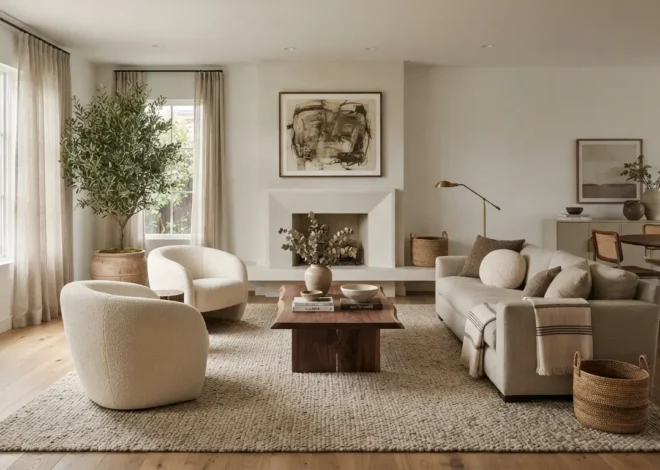
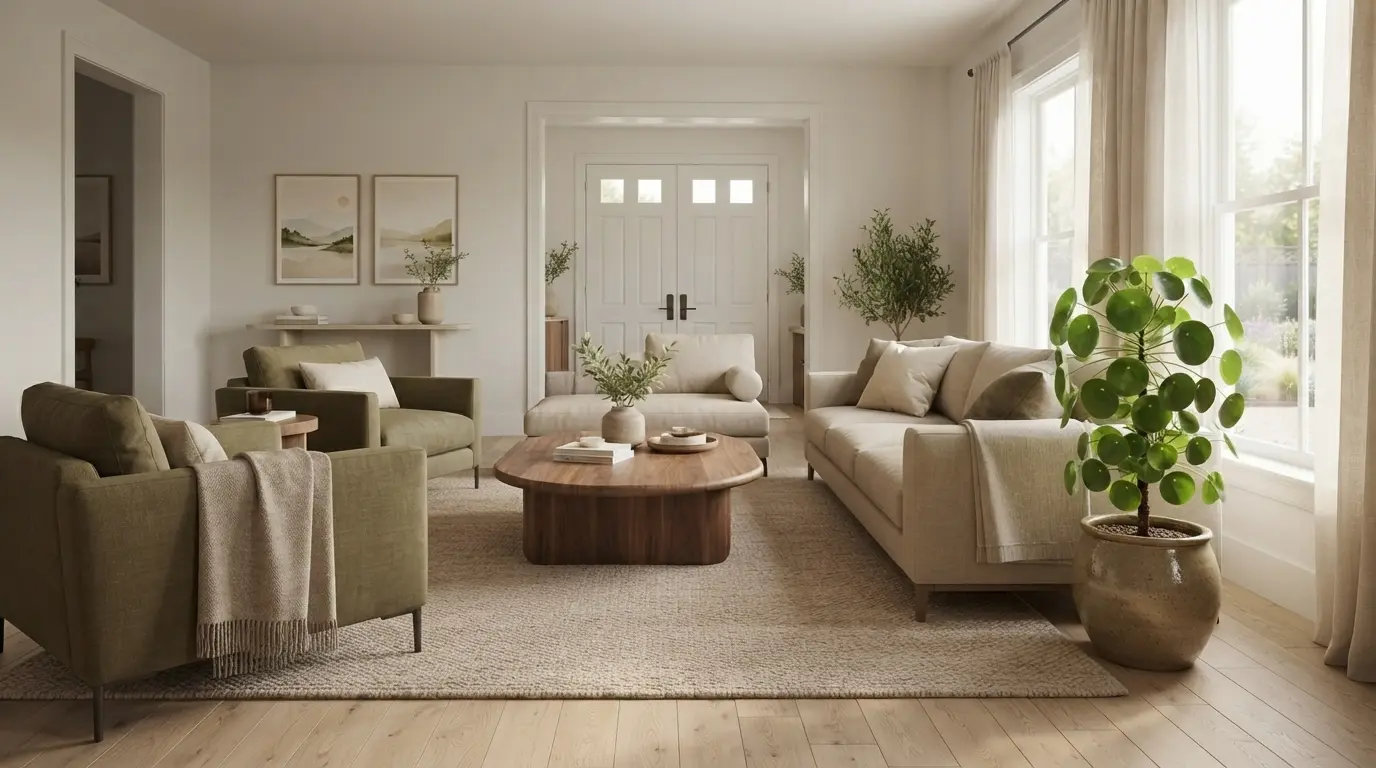
The living room is your home’s social engine, so it should carry more yang energy than the bedroom: brighter light, livelier colors, and seating that pulls people toward each other. Place the sofa against a solid wall with a clear view of the main entrance. This is the commanding position, and it makes everyone seated there feel settled rather than exposed.
Arrange chairs and the sofa in a loose circle or L-shape so no one’s back faces the door. Choose a round or oval coffee table if the room feels sharp or cramped; curved feng shui furniture placement softens the energy and improves traffic flow. Layer in wood through plants and furniture, earth through ceramics and warm rugs, and a touch of fire through candlelight or warm-toned art.
Keep the pathway from the doorway to the seating completely clear. If people have to sidestep an ottoman to sit down, chi has to sidestep it too.
Feng Shui Bedroom Decorating
The bedroom deserves the most care of any room, because it is where your body repairs itself. The bed rules everything. Position it diagonally across from the door, headboard against a solid wall, never directly in line with the doorway and never under a window if you can avoid it. A solid upholstered or wooden headboard gives the sleeper symbolic and literal support.
Symmetry matters here more than anywhere else. Two nightstands and two lamps, even if they do not match exactly, signal equality and partnership. Choose calm, skin-tone and earth palettes: cream, blush, mocha, soft sage. Keep mirrors out of the direct line of sight from the bed, remove exercise equipment and work materials, and store nothing but soft linens beneath the bed frame.
Screens are the modern bedroom’s biggest energy leak. If a television must live there, house it in a cabinet you can close at night.
Feng Shui Dining Room
In classical feng shui, the dining table symbolizes the family’s wealth and nourishment, so it should never double as a permanent storage surface or mail dump. A round or oval table is ideal because it lets conversation and energy circulate with no hard corners pointed at any seat.
Light the table generously, ideally with a fixture centered above it, and add fire-element warmth through terracotta, deep orange, or red accents, which are traditionally believed to stimulate appetite and lively conversation. An even number of chairs, kept pushed in when not in use, keeps the room feeling ready to welcome people.
Feng Shui Entryway
Practitioners call the entryway the mouth of chi, because every bit of energy, and every guest, enters your home through it. A cramped, dim, cluttered entry throttles the whole house. Start with light: a warm lamp or well-lit fixture, a mirror placed on a side wall to expand the space, and a clear line of sight into the home.
Give everything that lands here a dedicated place. A closed shoe cabinet, wall hooks, and a small tray for keys prevent the pile-up that entryways attract. Add one living plant and one beautiful object you love seeing, because your entry sets your emotional tone twice a day, on the way out and on the way in.
One firm rule: never hang a mirror directly facing the front door. In feng shui it reflects incoming energy straight back outside.
Feng Shui Kitchen
The kitchen holds a built-in element clash: fire (the stove) and water (the sink) working side by side. You cannot remodel that away in most homes, and you do not need to. Bridge the two with wood energy, the element that sits between water and fire in the productive cycle. A wooden cutting board displayed between stove and sink, green towels, or a small herb garden on the windowsill all do the job.
Keep the stove spotless and use every burner in rotation; in feng shui the stove represents prosperity, and a neglected burner is symbolically neglected income. Clear the counters down to daily-use items, fix dripping taps promptly, and keep the bin concealed. A kitchen that looks cared for reads as abundance.
Feng Shui Bathroom
Bathrooms get a bad reputation in feng shui because water, and symbolically wealth, literally drains out of them. The fixes are simple and worth adopting even if you take the symbolism lightly: keep the toilet lid closed, keep the bathroom door shut, and keep drains clean and closed when not in use.
Counter the heavy water energy with earth and wood: stone trays, ceramic accessories, bamboo accents, and a humidity-loving plant such as a fern or pothos. Soft towels in cream, sand, or sage keep the palette grounded. Good ventilation and a spotless mirror finish the room.
Feng Shui Home Office
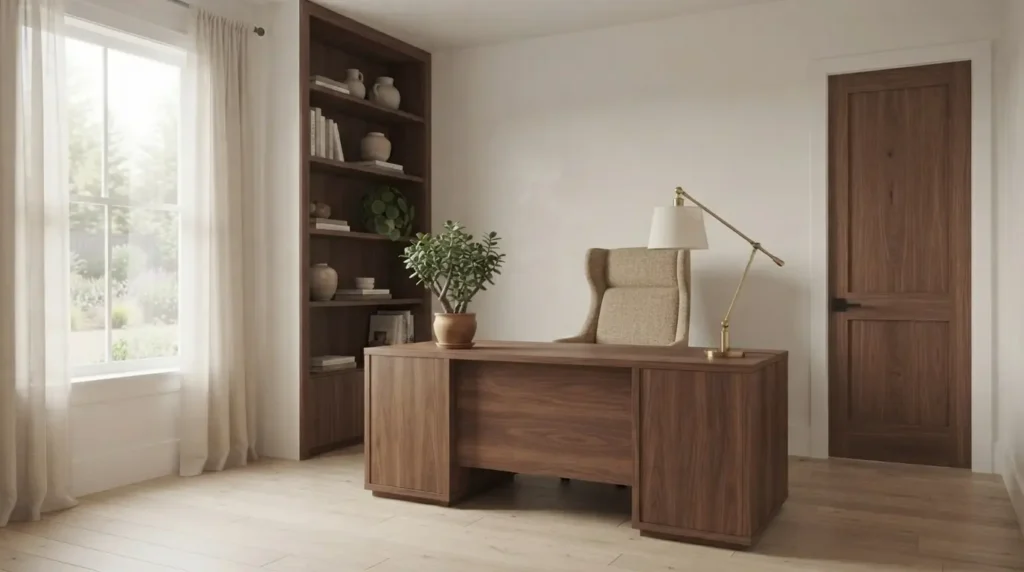
Since so many of us now earn a living at home, the office has become the most requested room in my consultations. The desk takes the commanding position: facing the door, backed by a solid wall, never facing a blank wall with your back to the entrance. If the room’s layout makes that impossible, place a small mirror on your desk or monitor edge so you can see the doorway behind you.
Choose a solid, stable desk and a high-backed chair, which symbolize support for your career. Add wood energy for growth, a healthy plant is perfect, and metal energy for focus through a brass lamp or metal frames. Keep cables managed and paperwork filed; visual chaos at your desk becomes mental chaos in your work.
If your office shares space with a guest room or bedroom, use a screen, curtain, or bookcase to give work its own defined zone.
| Room | Priority Move | Best Colors | Add This Element | Avoid |
|---|---|---|---|---|
| Living room | Sofa in commanding position | Sage, cream, terracotta | Wood + earth | Seating with backs to the door |
| Bedroom | Bed diagonal to door, solid headboard | Blush, cream, mocha | Earth | Mirrors facing the bed, screens |
| Dining room | Round table, centered lighting | Warm neutrals, red accents | Fire | Clutter stored on the table |
| Entryway | Bright light, clear pathway | Warm white, green accents | Wood | Mirror facing the front door |
| Kitchen | Spotless stove, clear counters | White, green, wood tones | Wood | Broken appliances, dripping taps |
| Bathroom | Lids and doors closed | Cream, sand, sage | Earth + wood | Open drains, dead plants |
| Home office | Desk facing the door | Green, white, navy accents | Wood + metal | Back to the entrance, cable chaos |
Table 3. A room-by-room feng shui quick guide you can act on in a single weekend.
Furniture Placement and Mirror Rules That Change Everything
If you remember only one concept from this entire guide, make it the commanding position. It applies to the three pieces of furniture where you spend the most vulnerable hours of your life: the bed, the desk, and the sofa. Each should give you a view of the room’s entrance, a solid wall behind you, and a position out of the door’s direct line.
Mirrors are feng shui’s power tool, and like any power tool they can help or harm depending on where you point them. A well-placed mirror doubles light, expands a small room, and reflects a beautiful view deeper into the home. A badly placed one bounces energy out the front door, doubles a pile of clutter, or disturbs sleep.
Follow these placement rules and you will get mirrors right in every room:
- Hang mirrors perpendicular to the front door, never directly facing it.
- In dining rooms, position a mirror to reflect the table, symbolically doubling abundance.
- Keep mirrors out of the bedroom’s line of sight from the bed, or choose a wardrobe with internal mirrors.
- Reflect something worth doubling: a window view, artwork, or greenery, never clutter or the bathroom door.
- Use one generous mirror rather than many small ones, which fragment a room’s energy.
- Keep every mirror clean and undamaged; a cracked mirror distorts everything it reflects.
Best Feng Shui Materials and Plants for a Positive Energy Home
Materials That Support Good Energy
Feng shui consistently favors natural, honest materials over synthetic ones, and modern feng shui decor has made this easier than ever to shop for. Solid wood brings growth energy and warmth. Linen, cotton, and wool textiles breathe and soften a room. Ceramics, terracotta, and stone add grounding earth energy. Brass, copper, and steel supply metal’s clarity in frames, hardware, and lighting.
What to limit: hard plastics, aggressive glossy finishes in rest spaces, and sharp glass corners at body height. Where you do use glass, choose rounded edges. Where you use metal, warm it with wood nearby. The goal is balanced home decor in which no single material dominates the sensory experience of a room.
Best Feng Shui Plants, Room by Room
Living plants are the most direct way to add wood energy, and they clean the air while they do it. Feng shui prefers plants with soft, rounded, upward-growing leaves and penalizes spiky silhouettes and, above all, dead or dying plants, which broadcast neglect. Choose from the table below and you cannot go far wrong.
| Plant | Feng Shui Benefit | Best Room | Care Level |
|---|---|---|---|
| Money plant (pothos) | Prosperity, softens sharp corners | Living room, bathroom, shelves | Very easy |
| Snake plant | Protective upward energy, air purifier | Home office, hallway | Very easy |
| Jade plant | Classic wealth symbol, rounded leaves | Entryway, office, southeast corner | Easy |
| Peace lily | Calming yin energy, thrives in low light | Bedroom corner, bathroom | Easy |
| Rubber plant | Abundance, bold rounded foliage | Living room, dining room | Easy |
| Bamboo (lucky bamboo) | Resilience, flexibility, growth | Desk, kitchen windowsill | Very easy |
| Areca palm | Soft, lively energy for social rooms | Living room, large entryway | Moderate |
Table 4. The best feng shui plants, matched to the rooms where their energy works hardest.
Lucky vs. Unlucky Decor Choices
Clients often ask me to audit their accessories, and the same culprits appear in home after home. Use this comparison to run your own audit in ten minutes.
| Invite In (Lucky) | Phase Out (Unlucky) |
|---|---|
| Pairs of objects: lamps, cushions, nightstands | Solo items in relationship areas of the home |
| Rounded furniture and soft-edged decor | Sharp corners aimed at seating or the bed |
| Thriving plants with rounded leaves | Dead, dying, or aggressively spiky plants |
| Art showing water, gardens, open horizons | Artwork depicting conflict, isolation, or decay |
| A clear, well-lit entry with a living plant | Shoes, boxes, and mail piled at the front door |
| Full-length, clean, generous mirrors | Cracked, cloudy, or fragmented mirror walls |
| Closed storage that hides visual noise | Open storage overflowing with miscellany |
Decluttering: The Non-Negotiable First Step
Every feng shui consultant will tell you the same thing, and it is worth hearing plainly: no amount of clever furniture placement compensates for clutter. Chi behaves like water. It pools and stagnates around piles, stuffed corners, and overloaded surfaces. Decluttering is not a chore that precedes feng shui home decorating; it is the first act of it.
You do not need a brutal minimalist purge. You need a repeatable system:
- Work one room at a time, and within it one surface at a time, starting with the entryway.
- Apply the one-year rule to objects with no strong purpose or meaning: unused for a year, out it goes.
- Clear the hidden zones chi cares about: under the bed, behind doors, the tops of wardrobes.
- Repair or release anything broken, from chipped mugs to stopped clocks; broken objects carry stuck energy.
- Finish each session by cleaning the space, then keep a fifteen-minute weekly reset on your calendar.
Watch how a decluttered room changes your behavior. You linger in it. You breathe more slowly in it. That, in the most practical possible terms, is improved home energy flow.
Modern Feng Shui Decor and the 2026 Trends Worth Following
Feng shui in 2026 looks nothing like the red-tassels-and-figurines cliché. The current wave of modern feng shui decor is quiet, natural, and almost indistinguishable from high-end organic minimalism, which is precisely why editors and designers keep returning to it. Several trends stand out this year and align beautifully with classical principles.
First, warm minimalism has replaced stark minimalism: fewer objects, but softer ones, in wool, boucle, travertine, and pale wood. Second, curved furniture continues its dominance, with rounded sofas, arched doorways, and oval tables echoing feng shui’s long-standing preference for flowing lines over sharp corners. Third, biophilic design has moved from trend to standard, with layered plant groupings, natural light planning, and indoor-outdoor sightlines treated as essentials rather than accents.
Finally, wellness zoning is shaping floor plans: dedicated corners for reading, meditation, or slow mornings, each with its own light source and texture palette. That is the bagua map in contemporary clothing, assigning intention to every part of the home. If you adopt just one 2026 trend, make it this one; a home where every zone has a purpose is a home where energy has somewhere meaningful to go.
Expert Feng Shui Decorating Tips I Give Every Client
- Start where you sleep. Fixing the bedroom delivers the fastest, most noticeable improvement of any feng shui change.
- Walk your home like a first-time guest, from the street to your sofa. Every snag, dark patch, or squeeze point you notice is an energy block worth fixing.
- Buy fewer, better objects. One beautiful ceramic lamp outperforms five filler accessories in both style and energy.
- Layer your lighting in threes: ambient, task, and accent. Rooms lit from a single ceiling point always feel flat.
- Refresh doormats, dead bulbs, and squeaky hinges immediately. Small maintenance failures at thresholds have outsized effects on how a home feels.
- Use scent as an element: citrus and herbs lift yang energy in work zones, while lavender and sandalwood deepen yin energy in rest zones.
- Review your home seasonally. Energy needs shift with light and weather, and so should textiles, plants, and accent colors.
Common Feng Shui Mistakes (and Painless Fixes)
Most feng shui problems I encounter are not exotic. They are the same handful of mistakes, repeated in home after home, and every one has a fix you can apply this week.
The most damaging is the ignored entryway, treated as a dumping ground instead of the home’s first impression. Next comes the bed or desk with its back to the door, which keeps your nervous system quietly on alert. Mirror misplacement follows close behind: facing the front door, facing the bed, or reflecting clutter. Then there is the plant graveyard, where dying greenery does more harm than no greenery at all.
Two subtler mistakes deserve mention. Over-decorating is one; when every surface holds something, nothing has room to matter, and chi has nowhere to move. Treating feng shui as a one-time project is the other. A home is a living system. Habits, seasons, and life changes all shift its energy, and a light quarterly review keeps the balance you worked to create.
Final Thoughts
Feng shui home decorating is not a mystery, a religion, or a shopping list. It is a discipline of attention: noticing how light moves through your rooms, how furniture shapes your behavior, and how order, or its absence, shapes your mind. The principles in this guide, the commanding position, the five elements, honest materials, living plants, and relentless decluttering, have guided homes for three millennia because they keep working.
Start small this weekend. Clear the entryway. Turn the desk. Move the bed. Close the bathroom door. Then live with the changes for a week and pay attention to how differently the house treats you. A positive energy home is built exactly this way, one deliberate choice at a time, and the next choice is yours to make.
When you are ready to go further, revisit the room-by-room tables above and take on one new space each month. By this time next year, every room in your home will be working for you instead of against you.
FAQs
What is the first thing I should change when starting feng shui home decorating?
Start with the entryway and the bedroom, in that order. The entryway governs how energy, and your own mood, enters the home, so clear it, light it well, and give shoes and keys a proper place. Then move the bed into the commanding position with a solid headboard against the wall. These two changes deliver the most noticeable improvement for the least effort, and they build momentum for the rest of the house.
Can I practice feng shui in a small apartment or rental?
Absolutely, and renters are often my best students because they focus on placement rather than renovation. The commanding position, decluttering, mirror rules, plant choices, and color palettes all work identically in a studio and a six-bedroom house. Use freestanding shelves or curtains to zone multi-purpose rooms, choose lighter colors and one generous mirror to expand small spaces, and rely on textiles and plants for element balance instead of paint or construction.
Which feng shui colors are best for a bedroom?
Choose calm, earthy, skin-tone palettes: cream, blush, mocha, soft sage, and gentle blues. These yin colors lower stimulation and support deep rest, which is the bedroom’s entire job. Keep strong fire colors like saturated red to small accents, a throw or a single cushion at most, and avoid stark, cold white schemes, which read as clinical rather than restful.
Do I have to believe in chi for feng shui decorating to work?
No, and I tell skeptical clients this in our first meeting. Nearly every feng shui recommendation doubles as sound design practice: clear pathways, balanced lighting, commanding sightlines, natural materials, and ruthless clutter control. Follow the system and your home will function better and feel calmer regardless of your beliefs. The philosophy simply gives you a consistent, time-tested framework for making hundreds of small design decisions well.