Backyard Decorating ideas on a Budget That Look Anything but Cheap
The best backyard decorating ideas on a budget rarely start with a shopping cart. They start with a hard look at what you already own, a $40 can of exterior paint, and a willingness to spend a Saturday getting your hands dirty. After a decade of designing outdoor spaces for clients who ranged from first-time homeowners to landlords flipping rentals, I can tell you the backyards that photograph best are almost never the most expensive ones.
They are the ones where every dollar was pointed at the right thing. A $2,000 backyard makeover with good lighting, a defined seating area, and healthy plants will beat a $15,000 patio with none of those things every single time.
This guide walks through the exact strategies I use on real projects: cheap backyard ideas that hold up to weather and daily use, DIY backyard the that does not look homemade, and honest price comparisons so you know where to save and where spending a little more pays off.
Start With a Plan Before You Spend a Single Dollar
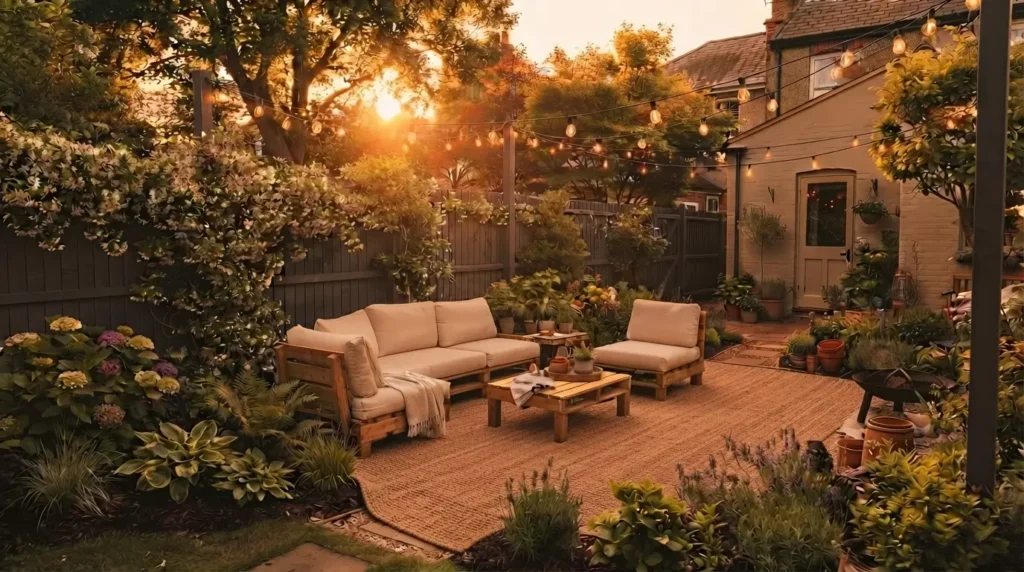
The most expensive mistake in budget landscaping is buying things one at a time with no plan. A solar lantern here, a clearance planter there — six months later you have spent $600 and the yard still feels random.
Walk your yard at three different times of day. Note where the sun hits at 5 p.m., because that is where people will actually want to sit. Note the sightline from your kitchen window, because that is the view you will see most. Those two spots deserve most of your budget.
Then pick one focal point. Not three. One. A fire pit, a dining table under string lights, or a lush planted corner. Everything else in the yard should quietly support that focal point rather than compete with it. This single decision is why professionally designed outdoor living spaces feel calm and DIY yards often feel busy.
Finally, set your number and split it roughly like this: 40 percent to seating and surfaces, 25 percent to plants, 20 percent to lighting, and 15 percent held back for the small things you will inevitably need — zip ties, gravel top-ups, replacement bulbs.
Table 1: What Different Budgets Realistically Buy in 2026
| Total Budget | What to Prioritize | Realistic Outcome |
|---|---|---|
| Under $150 | Paint, string lights, one outdoor rug, mulch refresh | A visibly refreshed patio and one styled corner |
| $150–$400 | DIY seating, solar path lights, 6–8 container plants | A defined seating zone that works for entertaining |
| $400–$800 | Gravel pathway, fire pit kit, privacy screen, layered lighting | A full backyard makeover with distinct zones |
| $800–$1,500 | Pergola kit or shade sail, built-in planters, upgraded furniture | A finished outdoor living space that adds resale appeal |
Backyard Decorating Ideas on a Budget: Seating That Looks Custom
Furniture eats budgets faster than anything else outdoors, so this is where DIY and secondhand strategies earn their keep. The good news: outdoor furniture is far more forgiving to build than indoor furniture, because chunky proportions read as intentional rather than clumsy.
Build a Pallet or Cinder Block Sofa
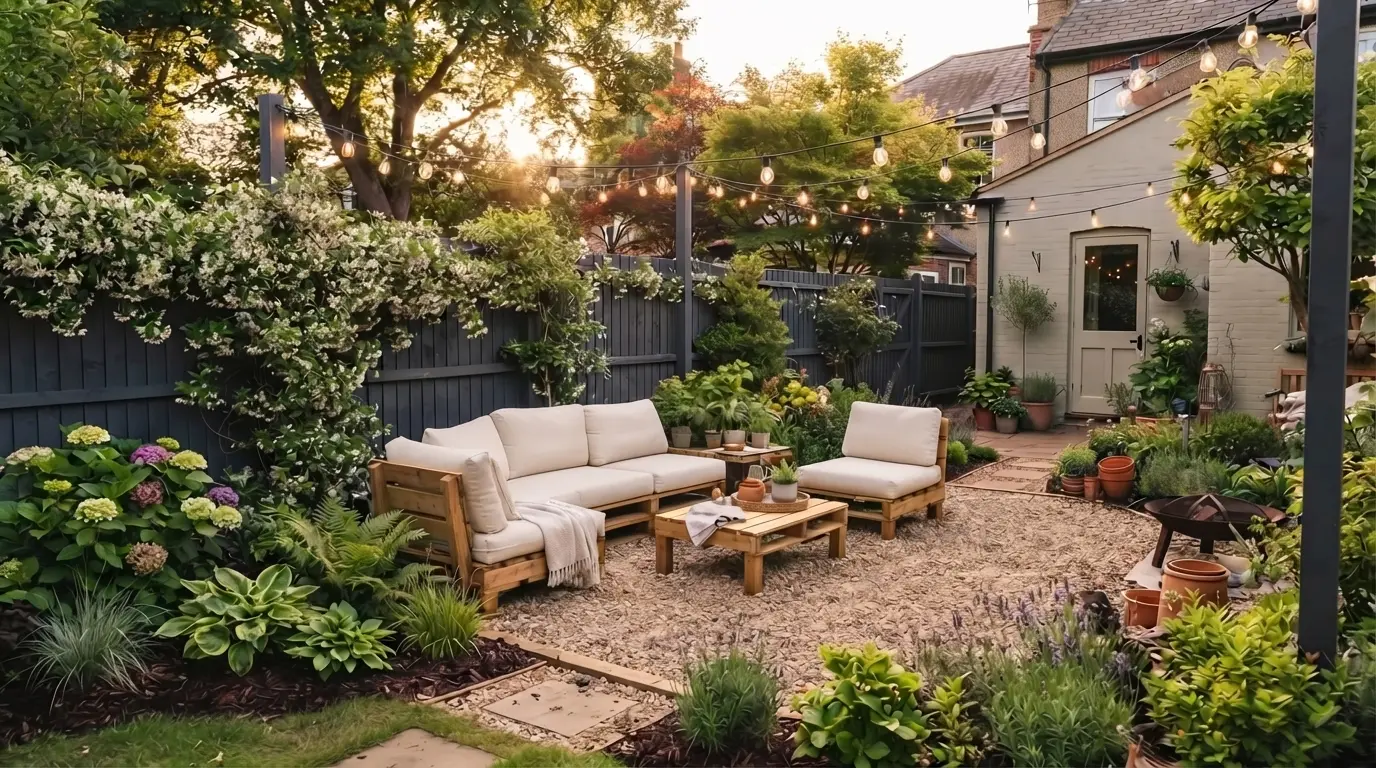
Two heat-treated pallets (look for the HT stamp), a sander, exterior stain, and a set of outdoor cushions produce a sofa that costs under $120 and outlasts most big-box sets. I built one for a client’s rental courtyard in 2019; it is still outside, still solid, and has been re-stained exactly once.
Cinder block benches are even faster. Twelve blocks, four 4×4 timber rails, adhesive, and paint give you modern, architectural seating in an afternoon. Paint the blocks a deep charcoal or warm white and they stop looking like a construction site and start looking like a design decision.
Refresh What You Already Own
Faded plastic chairs, rusting metal frames, and gray teak all respond dramatically to the right product. Spray paint formulated for plastic, a wire brush plus rust-converting primer, and teak oil respectively. Budget $50, expect furniture that looks two years old instead of ten.
Anchor It All With an Outdoor Rug
Nothing defines a seating zone faster than an outdoor rug. Flat-weave polypropylene rugs shrug off rain, dry fast, and start around $45 for a 5×7. Size up rather than down — a rug that fits fully under the front legs of every seat makes the whole arrangement feel deliberate.
Table 2: DIY vs Store-Bought — Where Each One Wins
| Item | DIY Cost | Store-Bought Cost | Verdict |
|---|---|---|---|
| Outdoor sofa | $100–$150 (pallets + cushions) | $450–$900 | DIY — savings are dramatic, durability is equal |
| Dining table | $130–$200 (timber + hairpin or block legs) | $350–$700 | DIY if you own a drill; otherwise buy floor models |
| Fire pit | $60–$90 (retaining wall blocks) | $120–$400 | DIY for wood-burning; buy for propane |
| Privacy screen | $70–$120 (lattice + frame) | $180–$350 | DIY — an easy afternoon project |
| Outdoor cushions | Not worth sewing | $25–$60 each | Buy — end-of-season sales hit 60–70% off |
Outdoor Lighting: The Highest-Impact $100 You Will Spend
If I could only spend money on one category, it would be backyard lighting. Lighting is why restaurant patios feel magical and most backyards feel like parking lots after sunset. It is also the cheapest category to do well.
The rule professionals follow is layering. One layer overhead, one layer at eye level, one layer at ground level. Overhead means string lights — choose warm white (2200–2700K) LED bulbs on a heavy-gauge cord, and hang them with a visible swag rather than pulled taut. At eye level, cluster lanterns with flameless candles on tables and steps. At ground level, solar path lights or spike spotlights angled up into a tree..
That uplight into a tree canopy is the single most underused trick in residential yards. One $15 solar spotlight turns an ordinary tree into nighttime architecture.
Skip anything cool-toned or color-changing unless you genuinely love the look. Blue-white light at 5000K flattens skin tones and makes even lush gardens feel clinical.
Table 3: Backyard Lighting Options Compared
| Lighting Type | Typical Cost | Best For | Lifespan / Notes |
|---|---|---|---|
| LED string lights (plug-in) | $25–$50 per 48 ft | Overhead ambience above seating | 3–6 years; warm white only |
| Solar path lights | $3–$8 per light | Walkways and garden edges | 1–3 years; buy amber-toned |
| Solar spike spotlights | $12–$20 each | Uplighting trees and walls | 2–4 years; highest impact per dollar |
| Flameless candle lanterns | $10–$25 each | Tables, steps, corners | Years; swap batteries seasonally |
| Low-voltage wired kit | $120–$250 | Permanent, reliable schemes | 10+ years; weekend install |
\
Gravel Pathways and Ground-Level Fixes That Transform the Whole Yard
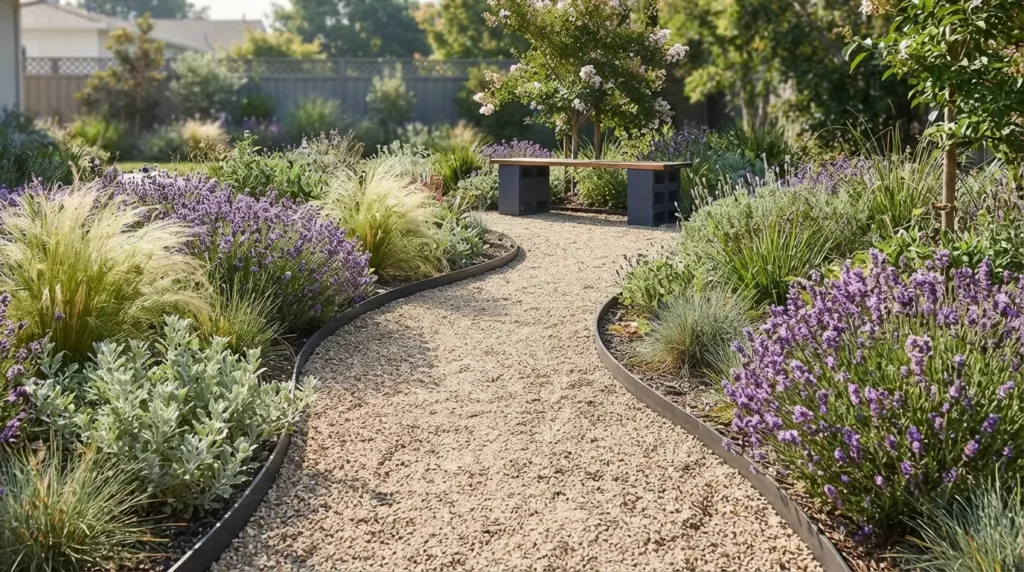
The ground plane is 70 percent of what your eye sees in a backyard, which is why patchy grass undermines every other decorating effort. The budget answer is rarely re-sodding. It is gravel, mulch, and honest editing.
A pea gravel path costs roughly $2 to $3 per square foot if you do the digging yourself: excavate three inches, lay landscape fabric, add a compacted base, edge it with steel or timber, and top with gravel. Edging is the step people skip and the reason DIY paths look messy within a year. Do not skip it.
For planting beds, a fresh three-inch layer of dark mulch is the cheapest instant facelift in all of budget landscaping — around $4 per bag, and a typical bed takes five to eight bags. It suppresses weeds, holds moisture, and makes every plant above it look healthier by contrast.
If part of the lawn simply refuses to thrive, stop fighting it. Convert the dead zone into a gravel seating pad or a native planting bed. Designers call this editing; your water bill calls it relief.
Table 4: Ground Cover and Pathway Materials Compared
| Material | Cost per Sq Ft (DIY) | Look and Feel | Maintenance |
|---|---|---|---|
| Pea gravel | $2–$3 | Soft, cottage-to-modern, crunchy underfoot | Rake and top up yearly |
| Decomposed granite | $2–$4 | Clean, contemporary, firm surface | Occasional compacting |
| Bark mulch | $0.75–$1.50 | Warm, natural, best in beds | Refresh every year |
| Concrete pavers | $5–$10 | Structured, formal, high resale appeal | Nearly none |
| Stepping stones in grass | $3–$6 | Charming, low commitment | Trim edges monthly |
Small Backyard Decorating Ideas on a Budget
Small yards are not a limitation; they are a discount. Every idea in this article costs less when you have 300 square feet instead of 3,000. The design rules just get stricter, because in a small space every object is visible from everywhere.
Go Vertical Before You Go Horizontal
Vertical gardens turn your least useful surfaces — fences and walls — into your most decorative ones. A cedar-slat wall planter, a repurposed ladder shelf stacked with terracotta pots, or a $30 grid trellis with a fast-growing star jasmine all pull the eye upward and make the footprint feel bigger.
Pocket planters made from felt cost about $20 for a dozen pockets and are perfect for herbs and trailing annuals. Hang them where you can reach them from the kitchen door and they earn their spot twice over.
Zone It, Even at This Scale
The counterintuitive trick with small backyard decorating ideas on a budget is division. One rug defining a coffee zone and one bistro set defining a dining nook makes a tiny yard feel like it has rooms. A single furniture arrangement floating in the middle makes it feel like a waiting area.
Use Scale and Reflection Tricks
Choose fewer, larger pots rather than many small ones — three oversized planters read as intentional while ten small ones read as clutter. An outdoor-rated mirror mounted on a fence doubles greenery visually for under $60. And keep the color palette to two or three tones so the space feels curated rather than crowded.
Fire Pits and Gathering Spots People Actually Use
A fire pit is the highest-gravity object you can put in a backyard — people orbit it without being asked. The DIY version is genuinely easy: about thirty retaining wall blocks arranged in a dry-stacked circle over a gravel base, with a steel insert ring if you want it to last a decade. Total cost lands between $60 and $120.
Give it a dedicated pad of gravel or pavers at least twelve feet across so chairs sit level, and check your local burn regulations before the first marshmallow. In smoke-restricted areas, a propane bowl around $130 delivers the same gathering pull with none of the permit anxiety.
Surround it with seating that does not match. Two Adirondack chairs, a bench, a couple of floor cushions on outdoor poufs — the slightly collected look is warmer and cheaper than a boxed set, and it is exactly what makes outdoor entertaining feel effortless.
Privacy Without Building a Fortress
Privacy is the request I hear most from clients, and the budget answers are better looking than the expensive ones. A solid eight-foot fence costs thousands and feels defensive. A layered screen costs a weekend and feels like a garden.
- Lattice panels ($25–$40 each) framed in stained 2x2s, planted with star jasmine or clematis, become a living wall within two seasons.
- Tall ornamental grasses like miscanthus give six feet of soft screening for about $15 a plant and grow in fast.
- Outdoor curtains on a wire between two posts add instant softness and can be closed only when you need them.
- A strategically placed pergola corner or shade sail blocks the specific second-story sightline that actually bothers you, rather than walling off the whole yard.
The principle: screen the sightline, not the property line. Stand where you sit most, find the one view that bothers you, and block exactly that. It is a fraction of the cost and it keeps light and breeze moving through the space.
Fences and Walls Are Free Decorating Real Estate
Most people treat the fence as the edge of the design. Treat it as the largest wall of an outdoor room instead. The fastest upgrade is paint or stain: a dark charcoal or black fence sounds risky and looks stunning, because green foliage pops against it the way art pops against a gallery wall.
From there, hang things with the same logic you would use indoors. Outdoor wall decor that survives weather includes powder-coated metal art, cedar slat panels, mounted planter boxes, vintage shutters, and thrifted architectural salvage sealed with exterior varnish. A gallery of three to five weatherproof pieces above a bench creates a focal wall for under $100.
One warning from experience: skip anything paper-based or framed under glass, no matter how well sealed. One humid season ends it.
Seasonal Styling and the Backyard Trends Worth Following in 2026
Seasonal decorating outdoors works best when 80 percent of the yard stays constant and 20 percent rotates. Keep the furniture, lighting, and hardscape steady; swap cushion covers, planter contents, and one or two accents. Spring bulbs give way to summer annuals, then ornamental kale and copper lanterns in autumn, then evergreen boughs and warm lights in winter.
As for 2026 trends, the ones worth your money are the ones that cut costs rather than add them. Native and drought-tolerant planting has moved fully mainstream — lower water bills, less maintenance, more pollinators. Gravel gardens in the European style are replacing thirsty lawns. Earthy, clay-toned palettes are edging out cool grays. And multifunctional pieces — benches with storage, fire pits that convert to tables — are the answer small-space designers keep reaching for.
The trend to ignore: fully outfitted outdoor kitchens. Beautiful in magazines, brutal on budgets, and a rolling bar cart delivers 80 percent of the function for 3 percent of the price.
More Backyard Decorating Ideas on a Budget Worth Stealing
A rapid-fire list of smaller moves I use on nearly every project, each under $50:
- Paint the front of a concrete step or planter in one bold accent color.
- Group three thrifted terracotta pots and unify them with one coat of limewash.
- Add a shepherd’s hook with a hanging fern beside the seating area for instant height.
- Run a $12 window box of trailing herbs along the deck railing.
- Lay a stepping-stone landing pad outside the back door so the transition feels designed.
- Hang a weatherproof clock or thermometer as functional wall decor.
- Wrap a plain tree trunk with a spiral of solar fairy lights.
- Replace mismatched hose and tools with a single wall-mounted holder so the working corner disappears visually.
- Set a galvanized tub of ice near the seating for parties — cheaper and more charming than any bar cart.
- Edge one flower bed crisply with a half-moon edger; sharp edges make even modest gardens look maintained.
Expert Tips From Ten Years of Budget Makeovers
- Shop the calendar, not the store. Outdoor furniture bottoms out in September and October; plants are cheapest at end-of-season nursery clearances, and perennials bought half-dead in fall come back triumphant in spring.
- Buy plants small. A one-gallon shrub costs a third of a three-gallon and catches up within two seasons. Patience is the biggest discount in gardening.
- Spend on what hands touch and skin feels: cushions, the dining surface, the path underfoot. Save on what eyes merely pass over.
- Repeat every material at least twice. If gravel appears in the path, echo it in a planter topping. Repetition is what makes cheap materials look chosen.
- Photograph your yard at night. The camera shows you dark holes and glare spots your adapted eyes ignore, and lighting fixes are the cheapest fixes there are.
Common Mistakes That Waste the Budget
Almost every disappointing DIY yard I have been called in to rescue made one of the same five mistakes:
- Buying furniture before measuring. A sectional that overwhelms a 10×10 patio makes the whole yard feel smaller and cannot be fixed with styling.
- Scattering rather than clustering. Ten decorative items spread evenly read as clutter; the same ten grouped into two vignettes read as design.
- Ignoring the ground plane. New cushions on a patio of weeds is a car wash on a flat tire.
- Choosing cool-white bulbs. It is a $15 mistake that undoes $500 of ambience.
- Skipping weather-rating checks. Indoor rugs, untreated pine, and paper lanterns all look fine for exactly one month. Buy once, cry once.
Conclusion
The through-line in every successful project I have touched is restraint. The best backyard decorating ideas on a budget are not about finding fifty cheap things to add — they are about choosing the eight or ten right moves and executing them well. Plan first, put real money into lighting and seating, let paint and mulch do the heavy cosmetic lifting, and build what is easy to build.
Start with one zone this weekend. A rug, two chairs, a strand of warm lights, and a swept path will change how you use your yard by Sunday evening — and every project after that gets easier, because you will finally be decorating a space you already love spending time in.
FAQs
How can I decorate my backyard for under $100?
Focus on three moves: a 48-foot strand of warm LED string lights (about $30), a fresh application of dark mulch on every visible bed (about $30), and one styled vignette — a thrifted bench, two pots of flowering annuals, and a lantern (about $40). Lighting, healthy-looking beds, and a single focal moment deliver more visual change than any single $100 purchase could.
What is the cheapest way to make a backyard look nice?
Editing and maintenance, which cost mostly time. Mow, edge the beds sharply, remove anything dead or broken, and pressure-wash the hard surfaces. Then add warm lighting. A tidy, well-lit yard with modest furnishings consistently looks better than a neglected yard full of expensive decor.
How do I decorate a small backyard on a budget?
Go vertical with fence planters and trellises, zone the space with one outdoor rug, and choose fewer, larger planters instead of many small ones. Keep the palette to two or three colors, add a fence-mounted mirror to double the greenery visually, and use folding or stackable furniture so the space can flex between dining and lounging.
Is it cheaper to DIY backyard furniture or buy it?
DIY wins decisively for sofas, benches, planters, and wood-burning fire pits, typically saving 60 to 75 percent. Buying wins for cushions, umbrellas, and anything with gas components, where end-of-season sales beat material costs. The best strategy mixes both: build the big structural pieces, buy the soft goods on clearance.