Living Room Floor Tile: 2026 Ideas, Costs & Expert Tips
The floor carries more visual weight than most people give it credit for. Every piece of furniture, every rug, and every ray of afternoon light lands on it first. That makes your choice of living room floor tile one of the most important decisions in the whole room.
Tiles have moved well beyond the cold, glossy squares people remember from older homes. They now come in warm wood looks, soft matte stones, and oversized formats that make a space feel calm and open. They handle daily traffic, spills, and pets without complaint, which is exactly what a living room needs.
This guide walks through the tile types worth knowing, the colors and layouts that flatter a living space, real cost ranges, and the trends shaping rooms in 2026. You will also find a designer’s tips, the mistakes to sidestep, and answers to the questions clients ask most.
By the end, you should know exactly which floor tiles for living room spaces fit your style, your budget, and the way you actually live.
Why Floor Tiles Are a Smart Choice for the Living Room
A living room takes more abuse than people expect. Foot traffic, dropped snacks, kids, pets, and rearranged furniture all leave their mark over the years. Tile shrugs most of it off.
Good living room floor tiles last for decades when installed well. They resist scratches, water, and fading, and a quick mop keeps them looking fresh. Compared with carpet or solid hardwood, the upkeep is minimal.
Design is the other big draw. Tile now mimics marble, oak, concrete, and natural stone so convincingly that guests often cannot tell the difference until they kneel down to check.
Here is why tile keeps winning living room floors:
- Durability: stands up to heavy furniture and constant foot traffic
- Easy cleaning: no shampooing, no refinishing, just sweep and mop
- Water resistance: spills wipe away instead of soaking in
- Design range: hundreds of colors, finishes, and sizes
- Resale value: a quality tiled floor adds to a home’s appeal
- Allergy friendly: it does not trap dust or pet dander the way carpet does
For families and anyone who entertains often, that combination is hard to beat.
Popular Types of Floor Tiles for Living Room
Not every tile suits a living room. Some materials feel too clinical, others too delicate. These are the options professional designers reach for most.
Porcelain Tiles
Porcelain is the workhorse of living room flooring. It is dense, hard, and almost impervious to water, which makes it ideal for high-traffic areas. It also takes on realistic wood and stone looks better than any other material, giving you the warmth of timber with the toughness of tile.
Ceramic Tiles
Ceramic is the budget-friendly cousin of porcelain. It is slightly softer and more porous, but for living rooms that see normal use it performs beautifully. The range of colors and patterns is enormous, so it suits both classic and modern interiors.
Marble Tiles
Few materials read as luxurious as marble. Its natural veining brings movement and depth to a floor, and book-matched slabs create a stunning centerpiece. Marble needs sealing and gentle care, so it rewards owners who do not mind a little maintenance.
Vitrified Tiles
Popular across South Asia and the Middle East, vitrified tiles are fired at high heat to create a near-zero-porosity surface. They are strong, available in glossy or matte finishes, and very low maintenance, which explains their wide use in modern apartments and villas.
Wood-Look Porcelain Tiles
For anyone who loves the feel of hardwood but worries about scratches and moisture, wood-look porcelain is the answer. Long plank formats and textured surfaces sell the illusion convincingly, and the floor stays warm in tone without the upkeep of real wood.
Terrazzo Tiles
Terrazzo is back in a big way. Chips of marble, glass, and stone set into a composite base give a playful, speckled finish that feels both retro and current. It works well in eclectic and contemporary spaces alike.
Table 1: Tile Material Comparison
| Tile Type | Durability | Maintenance | Best For | Cost (per sq ft) |
|---|---|---|---|---|
| Porcelain | Very High | Low | High-traffic family rooms | $3 – $10 |
| Ceramic | High | Low | Budget-conscious updates | $1 – $7 |
| Marble | Medium-High | Med-High | Luxury statement floors | $8 – $25 |
| Vitrified | Very High | Very Low | Modern apartments & villas | $2 – $8 |
| Wood-Look Porcelain | Very High | Low | Warm, cozy living rooms | $4 – $12 |
| Terrazzo | High | Medium | Eclectic, design-forward spaces | $6 – $20 |
Living Room Floor Tile Trends for 2026
Flooring fashion moves slowly, but a few clear directions stand out this year. These tile flooring ideas for living room spaces feel current without chasing fads that age badly.
- Large-format tiles. Oversized tiles (24×48 inches and up) mean fewer grout lines and a seamless, calming look that makes rooms feel larger.
- Warm, earthy tones. Terracotta, sand, clay, and soft taupe are replacing cool grays as the go-to neutrals.
- Matte and textured finishes. Low-sheen surfaces hide smudges, cut glare, and add a tactile, natural quality underfoot.
- Wood-look planks. Realistic timber-effect porcelain keeps its lead, especially in long, narrow plank formats.
- Book-matched marble. Mirrored veining across two or more tiles creates a dramatic, gallery-like floor.
- Terrazzo revival. The speckled classic is back, now in larger chips and bolder color mixes.
- Earth-toned grout. Designers are matching grout to tile for a softer, more unified surface.
Mixing one statement trend with a restrained backdrop usually ages better than layering several bold ideas at once.
Choosing the Right Tile Color and Layout
Color and layout shape how big, bright, and welcoming a room feels. Get these right and even a modest space looks designed.
Light vs. Dark Tiles
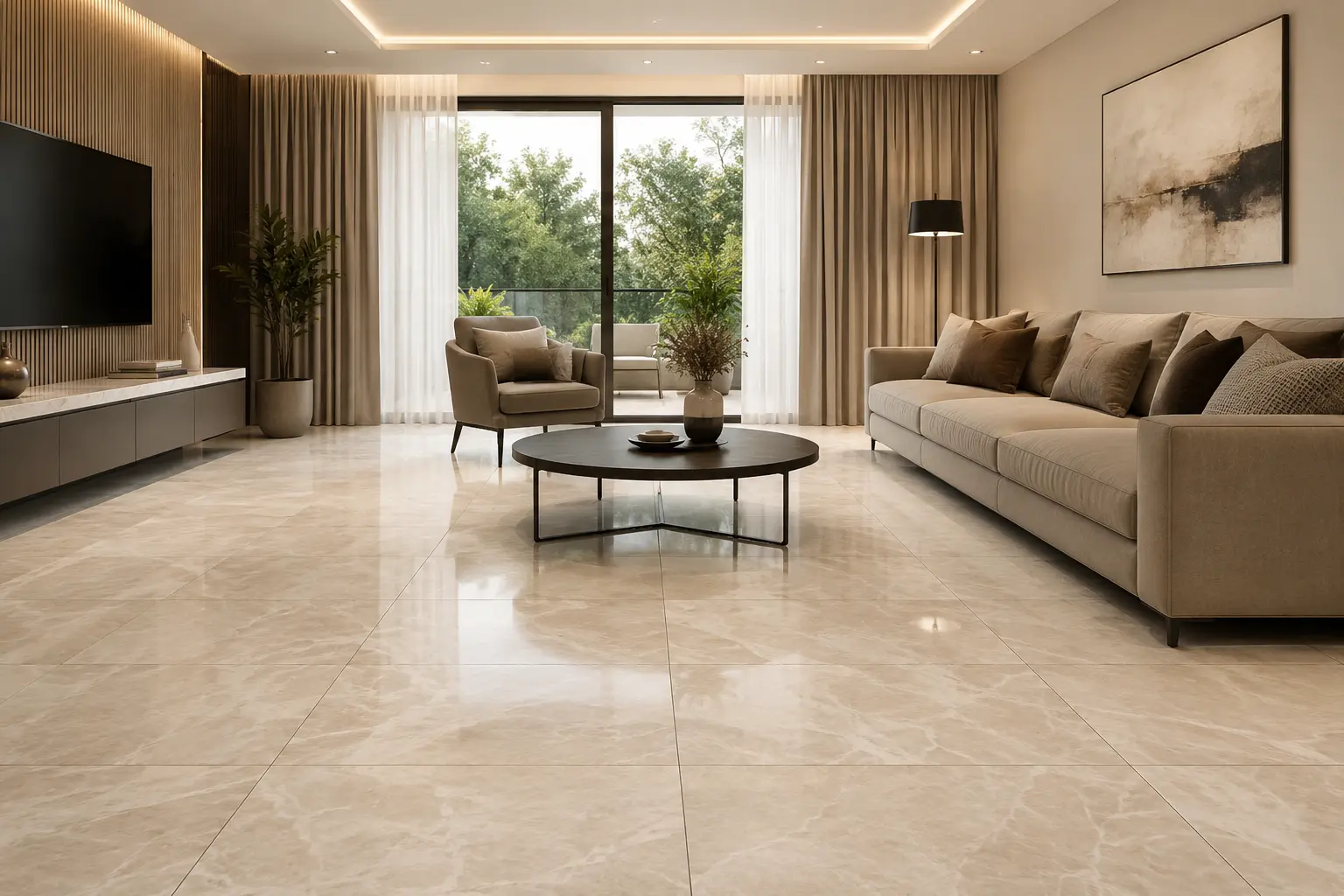
Light tiles bounce daylight around and make small living rooms feel open and airy. Dark tiles bring drama and coziness but show dust and footprints more readily. Mid-tones often strike the best balance for busy households.
Tile Size and Room Perception
Larger tiles suit larger rooms and reduce visual clutter from grout lines. In compact living rooms, a medium-to-large tile still works well, while very small mosaics tend to feel busy across a main floor.
Layout and Pattern
The way tiles are laid changes the whole mood. A straight grid feels clean and modern. A diagonal layout adds energy and can make a narrow room feel wider. Herringbone and chevron patterns, especially in wood-look planks, bring a tailored, high-end touch.
How Much Do Living Room Floor Tiles Cost?
Budget shapes most flooring decisions, so it helps to know where the money goes. Material is only part of the picture; installation, surface prep, and grout all add up.
Table 2: Cost Comparison
| Budget Level | Tile Choice | Material/sq ft | Install/sq ft | Overall Feel |
|---|---|---|---|---|
| Budget | Ceramic / basic vitrified | $1 – $4 | $4 – $7 | Clean and practical |
| Mid-Range | Porcelain / wood-look | $4 – $10 | $5 – $9 | Stylish and durable |
| Premium | Marble / large-format / terrazzo | $10 – $25 | $8 – $15 | Luxurious statement |
Budget-friendly ways to get a high-end look:
- Choose porcelain that mimics marble instead of the real stone
- Use a large-format tile to cut down on grout and labor lines
- Save splurge materials for a feature zone and use simpler tile elsewhere
- Buy slightly more than you need to avoid costly reorders later
A floor done well the first time almost always costs less than one redone in five years.
Expert Tips for Choosing Floor Tiles for Living Room
A few habits separate a floor that looks professional from one that looks rushed.
- Order samples and view them in your own light. Showroom lighting flatters; daylight at home tells the truth.
- Check the slip rating, especially in homes with elderly family members or young children.
- Match grout thoughtfully. Tight, color-matched grout lines look more refined than wide, contrasting ones.
- Plan transitions. Decide how the tile meets adjoining rooms so the change feels intentional.
- Buy from one batch. Tiles from different production runs can vary subtly in shade.
- Always order 10 to 15 percent extra for cuts, waste, and future repairs.
- Hire an experienced installer. Even premium tile looks cheap when laid poorly.
Common Mistakes to Avoid
Most flooring regrets trace back to a handful of avoidable errors:
- Choosing trendy colors that clash with your furniture within a year
- Picking glossy tiles in a sunny room, then fighting glare every afternoon
- Skimping on installation to save money up front
- Ignoring slip resistance in a household with kids or pets
- Forgetting to order spare tiles for future repairs
- Using tiny mosaic tiles across a large floor, creating a busy surface
- Matching the floor too closely to the walls, leaving the room flat
A short pause to plan saves years of quiet frustration.
How to Keep Your Living Room Floor Tiles Looking New
Tile is low-maintenance, not no-maintenance. A simple routine keeps it looking fresh for years.
Table 3: Maintenance Guide
| Task | How Often | Why It Matters |
|---|---|---|
| Sweep or vacuum | 2 – 3 times a week | Removes grit that scratches the surface |
| Damp mop | Weekly | Lifts dirt and keeps the finish bright |
| Clean grout | Monthly | Prevents staining and discoloration |
| Reseal (marble/stone) | Every 1 – 2 years | Protects against moisture and stains |
| Address spills | Immediately | Stops marble and grout absorbing liquid |
Avoid harsh acidic cleaners on natural stone, and use felt pads under furniture legs to prevent scratches.
Final Thoughts
The right living room floor tile does quiet, lasting work. It survives daily life, ties your furniture and lighting together, and sets a tone the moment someone walks in.
Start with how your family uses the room, then choose a material that matches that reality. Porcelain and vitrified tiles cover most needs, marble and terrazzo reward those chasing a statement, and wood-look planks deliver warmth without the upkeep.
Pair a smart material with a thoughtful color, a flattering layout, and a careful installer, and you end up with floor tiles for living room spaces that look just as good years from now as they did on day one.
FAQs
Which floor tile is best for a living room?
Porcelain is the most popular choice because it balances durability, low maintenance, and realistic stone or wood looks. For a luxury statement, marble is hard to beat, while ceramic suits tighter budgets.
Are floor tiles a good idea for the living room?
Yes. Floor tiles for living room spaces are durable, easy to clean, water-resistant, and available in countless styles, which makes them practical for busy households and stylish enough for formal rooms.
What size tile looks best in a living room?
Large-format tiles such as 24×24 or 24×48 inches suit most living rooms because they create fewer grout lines and a more open, seamless look. Medium tiles work well in smaller spaces.
Are tiled floors cold underfoot?
They can feel cool, which is welcome in warm climates. In colder regions, underfloor heating pairs beautifully with tile and removes the chill entirely.
Light or dark floor tiles, which is better?
Light tiles make a room feel larger and brighter and hide dust well. Dark tiles add warmth and drama but show footprints. Mid-tones are the easiest to live with day to day.
How much does it cost to tile a living room?
Costs vary by material and region, but most homeowners spend between $5 and $20 per square foot including installation. Marble and large-format tiles sit at the higher end.
Can I put floor tiles over an existing floor?
In many cases yes, provided the existing surface is level, stable, and properly prepared. An installer can confirm whether your subfloor is suitable before work begins.
Do wood-look tiles really look like real wood?
Modern wood-look porcelain is remarkably convincing, with textured surfaces and realistic grain. It offers the warmth of timber with far better resistance to water and scratches.
How do I stop floor tiles from looking cold or clinical?
Layer in rugs, warm lighting, natural textures, and earthy tile tones. Wood-look or terracotta tiles instantly feel cozier than stark white or gray.
What is the most durable floor tile for a living room?
Porcelain and vitrified tiles top the list for durability. Both resist scratches, stains, and heavy traffic, which makes them ideal for family living rooms.