Dark Japandi Style: The Moody Interior Trend Taking Over Homes in 2026
Dark japandi style is an evolved version of classic japandi design. It keeps the same clean lines, natural materials, and clutter-free philosophy but replaces pale oak and cream tones with walnut, charcoal, deep olive, espresso brown, and inky dark shades. The result is a space that feels intimate, cinematic, and deeply calming rather than bright and airy.
What Is Dark Japandi Style?
Dark japandi is the look of classic japandi that grows up and gets more mature. What was all-light ash wood and white walls is now darker, moodier, more cocooning hues. The same philosophy lies beneath all of them: natural materials, intentional living, wabi-sabi imperfection, hygge warmth. Only the palette changes, and that one shift alters the entire vibe of a room from spa-bright to film-still-furnishings, yes in true subtle fashion luxe.
The Popularity of Dark Japandi: 2022 Style Guide
The world is honestly tired of looking at washed out, cold rooms staged for social media. For a while, the all-white minimalist interior had its dayBut it was sometimes too sweepingly clinical for home living. Dark japandi can remedy that by introducing depth, shadow and visual heft without the clutter or complexity. The trend in designers’ language now is an approach toward earthy, moody interiors that feel personal private sanctuaries, what has been called—and debated—a kind of cave. This is precisely the feeling that people yearn for in 2026.
The Core Philosophy BehindThis Design Direction
At the core of dark japandi interior design is the Japanese practice of shadow praise. Japanese aesthetics do not see shadow as something to counter with more light. You celebrate it, you design around it. The magic of this approach is that the relationship between light and shadow creates contrast, which in turn create elements that catch the eye and soothe the mind. And this is what distinguishes dark japandi from just painting your walls black and hoping for the best. Using darkness consciously, not as a default.
The Color Palette Behind Japandi Looks Good
In moody japandi design, the color story is not about consistency but rather contrast and depth. The anchor tones that define the look are charcoal, walnut brown, deep olive, plum ink navy, smoked oak and espresso. Those darker hues coordinate beautifully with mellower neutrals like warm sand, greige, and oat beige so the space never tips into feeling basement-ish. The biggest rule that designers tend to adhere to is: one dark anchor whether it be a wall, floor or large piece of upholstery surrounded by softer and lighter supporting tones. That balance is also what keeps the space feeling rich, not constraining.
A GUIDE ON HOW TO DO IT RIGHT
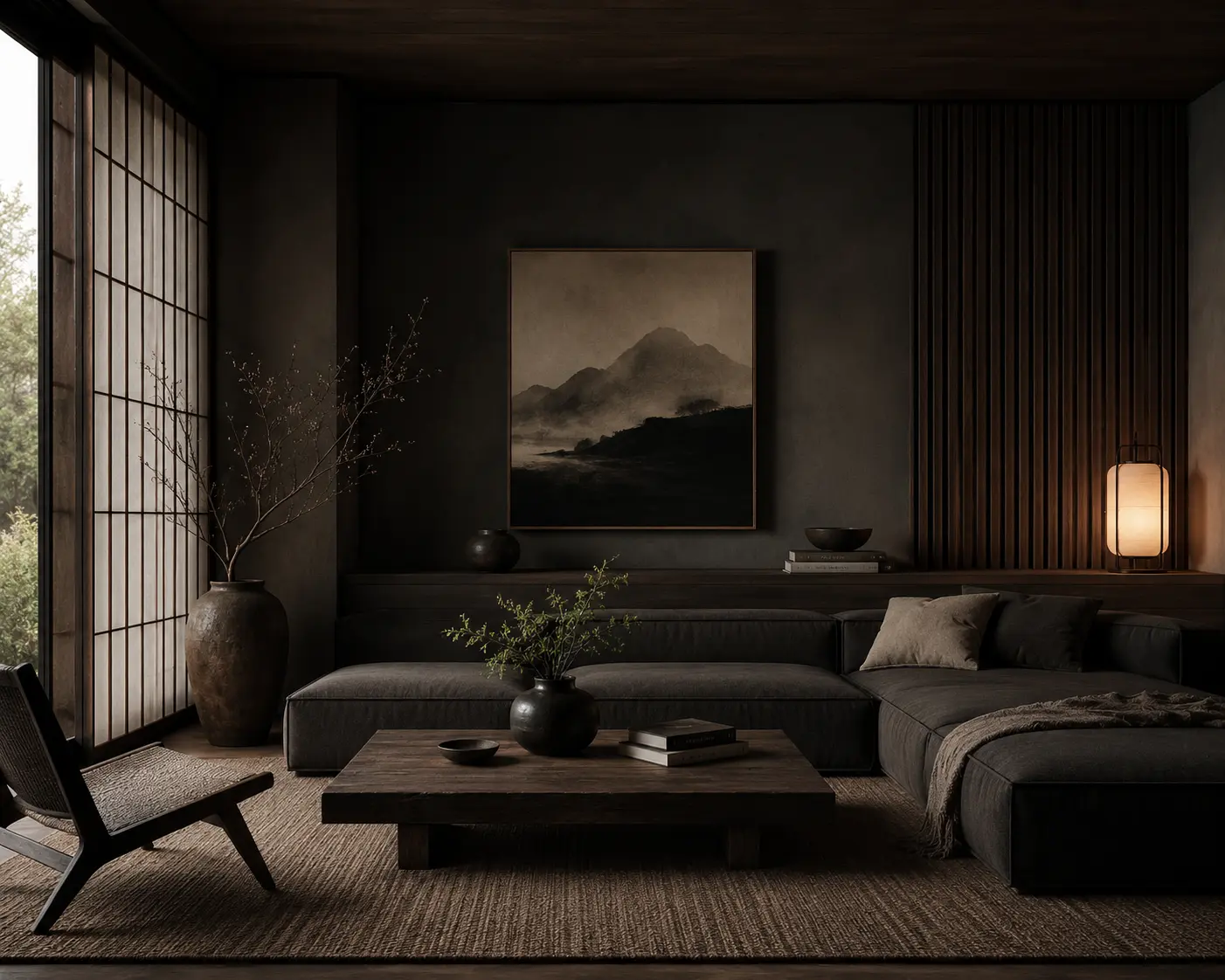
This more minimal live room dark japandi style, bases the whole live room on a single bold although heating natural textured objects. Think charcoal wall/low walnut sofa/smoked oak floor/sand jute rug or deep olive velvet chair/pale ceramic lamp: the contrast principle works perfectly in practice here. Choose furniture silhouettes that are low and clean versus ornate, let the nature of the room create drama (rather than decorating for it) and be sure to not over-accessorise a dark space. One dark wall here, however, does ten times more than any carefully placed accessory ever could.
Kitchen Moodiness Turns Functional With Dark Japandi Style
When done correctly, dark japandi kitchens are the most chic room in the home. Matt black hardware with charcoal or dark green cabinetry, honed stone in a dark finish, and walnut open shelving create that distinctive moody yet functional feel. A dark japandi style kitchen actually gets better with age, in contrast to bright white kitchens which show every mark and feel mercilessly clinical. The surfaces develop a character with time that plays well into the wabi-sabi philosophy of finding beauty in things that have actually been used. Hide appliances, keep surfaces clear, and use warm layered lighting.
Japandi-style coffee-table designs
In a dark japandi living room, the japandi style coffee table is meant to be the heaviest visual element on floor level. Use a rich walnut coffee table with that raw oil finish, some smoked oak piece with vaguely organic edges or perhaps even a heavy dark travertine stone table on flat wood feet. Do not use glass tops at all as it shatters the organic, grounded nature of what this aesthetic relies on. Accessorize the surface with a matte black tuffet tray, one stem in a deep raku pottery vase, and one or two of these cloth covered books. Minimal, purposeful, and totally aligned with the loser but better principles of japandi.
Moody Japandi on service: textures and materials
It has all the ingredients of Japandi in terms of contrast with dark colors which alludes to existing interior decorating challenges. Texture does the rest of the heavy lifting to keep these spaces feeling deep and rich, not oppressive and flat. Think oat or warm grey bouclé fabric, coarse linen in deep sage, patinated leather in tobacco brown, artisanal ceramics with matte dark glazes, raw concrete surfaces and textured plaster walls to give touchable tones that ensure a moody space remains warm and engaging. The wabi-sabi principle promotes imperfection, so a bit off-kilter and happily hand-formed ceramic or timber with broad swathes of visual grain variation is always more at home in this design world than anything factory-made smoothly homogenous.
The Right Lighting in a Dark Japandi Home
Moody japandi lighting, in this case, has more consideration than a brighter room since by design you are working with less ambient light. The aspiration is for warm pools of light, not dreary washed-out ceiling brightness. She has paper hanging lights, warm bulbs in ceramic table lamps, wooden wall-mounted sconces, basically floor lamps with fabric shades existing happily in this space. Candles are another important part of the same hygge warmth with which Scandinavian design enriches the japandi philosophy. Pump the cool white LED lighting altogether as it kills the very warm, intimate atmosphere dark japandi design is what its constituent — not an infusion of strong blueish-white light into surroundings.
The Most Relevant Room to Change
Dark japandi design makes its biggest mark in the bedroom. Gorgeous sleeping space with a low profile walnut or smoked oak bed frame, charcoal linen bedding, dark plaster wall behind the headboard, warm pendant lighting flanking either side and just one indoor plant in matte dark ceramic pot. The Japanese idea of ma, which is the conscious application of empty space, stops the darker palette from feeling heavy in the room. Keep most of the floor clear, surfaces sparse, and just let the darkness and warmth make all of your points for you.
Avoiding Dark Japandi Interiors
Likewise, the single most common mistake made with this particular style is to go too dark all over. If the room is all done in dark tones, justified by the joys of intimacy, but it ends up here being very oppressive: paint-painted walls in charcoal and accompanying dark floors, dark furniture, textiles. Contrast is the air that dark japandi breathes. The other common mistake is to completely avoid the texture and only use the color to achieve that moody look. A dark room without layered textures simply looks incomplete. Glossy surfaces are another issue here, as they would gleam that draws you out of the serene, matte nature that is inherent in all appeals of japandi decor.
Kinda Dark Japandi On A Budget
No, you do not have to remodel your entire house in order to get this look. You begin with one space and a single dark wall. A moody deep olive or charcoal single wall behind your sofa or bed is close to free and changes the entire vibe of the room. Swap your usual cushion covers for dark linen or buclé in low key shades. Picked up a walnut side table at the second hand shop. Switch your bulbs to warm-tone and add a floor lamp with fabric shade. Observe these small changes do not generally charge a lot of cash, but what they learn about offer naturally in any japandi temple dark inner common sense bedroom home, including this.
Dark Japandi vs other dark interior styles
Many mistake dark japandi with gothic interiors, industrial style or moody maximalism. The difference is restraint. Dark japandi brings together the deep shadows as just one component of an unfussy but well-edited interior. No clutter, no imposing embellishment, no extreme wallpaper layouts, no overabundance. Each dark tone countered with a natural material, a warm texture, or an empty void of fixed intention. The room still breathes. It still feels calm. It simply does it in a fuller, darker, more brooding style than the ostensible leaner version of the style.
Final Thoughts
Dark japandi interior is not a moment in time in the world of home decor. It’s the organic evolution of a philosophy that was always predicated on stillness and artistry and living on purpose. The darker tones just build upon something that was already functioning quite well. The same rules apply whether you use it in a japandi style living room, create a moody japandi kitchen or simply ground your area with the perfect japandi style coffee table. Be purposeful about the dark and intersperse warm natural textures, learn from cleared surfaces; intent on subliminal effect that lets the material do the talking. For it, your home will feel richer, calmer and more authentically you.
FAQs
Q1. In essence, what is Dark Japandi Style?
More of the moody side of japandi-design is dark japandi style. It retains, however, this combination of natural materials, simple & straight lines and white wall minimalism but in darker tones than white walls & pale wood — instead charcoal, walnut, deep olive & espresso. This made for a very inviting, filmic and peaceful environment.
Q3. Q1: Is Dark Japandi good for a small room?
Yes, when done correctly. The trick is not to darken all surfaces, but only the one element,suspended like a ‘dark anchor’ element in this here just 1 wall or sufficiently big dark velvet sofa (elmotion). Scroll down to strip your space of anything not necessary by limiting furniture to only low-slug and minimal, layering all lighting in warm tones first from the ground then building up into your ceiling while leaving as much floor space clear as possible. Ma, the Japanese idea of empty space with intent, ensures that even the tiniest dark space breathes and is tidy rather than cramped.